 Intellect Plus
Cards starting with F
10,056 cards. Page 28 of 168.
 Folklore fairies rarely had wings; the Victorians added themThe winged, tiny fairy of children's books is a late invention. In older European folklore fairies were human-sized or shape-shifting, flew by magic or rode on birds, got blamed f…
 Folklore is far more than just old stories and dusty legendsWhile we often associate folklore with ancient myths, it is actually a living, breathing part of our modern identities. From the way we celebrate birthdays to the unique slang of …
 Folklore vampires were bloated and ruddy; the pale, elegant version dates from 1819Forget the gaunt aristocrat in a cape. The vampires Balkan villagers feared were swollen, dark-faced corpses in burial shrouds, often without fangs, blamed for deaths among their …
 Following a quarter-century away, Coventry City has rejoined the elite divisionAfter a long absence from the top flight, Coventry City enters its 143rd season. Returning to the Premier League for the first time since 2001, the club is preparing for a major c…
 Following the collapse of the Assad regime, Israel has occupied a buffer zone in Syria.After the fall of the Syrian government in December 2024, Israel launched a military campaign to secure a new defensive perimeter. By declaring the 1974 disengagement agreement vo…
 Following the Russian Revolution, a new offensive emerges alongside the Women's Battalion of Death.This episode examines the state of the Russian front following the revolution, highlighting a renewed push for military action. It also covers the arrival of the first American tr…
 Fomalhaut: The star that fooled astronomers into seeing a planet where none existedFomalhaut, the 18th brightest star in our night sky, is a celestial landmark 25 light-years away. For years, it was famous for hosting a planet visible to the naked eye. Recent an…
 Fonio is the ancient, lightning-fast grain that could transform global food securityKnown as the cereal of the poor, this resilient West African grass matures in just eight weeks. It thrives in poor, dry soil without irrigation, offering a nutritional powerhouse …
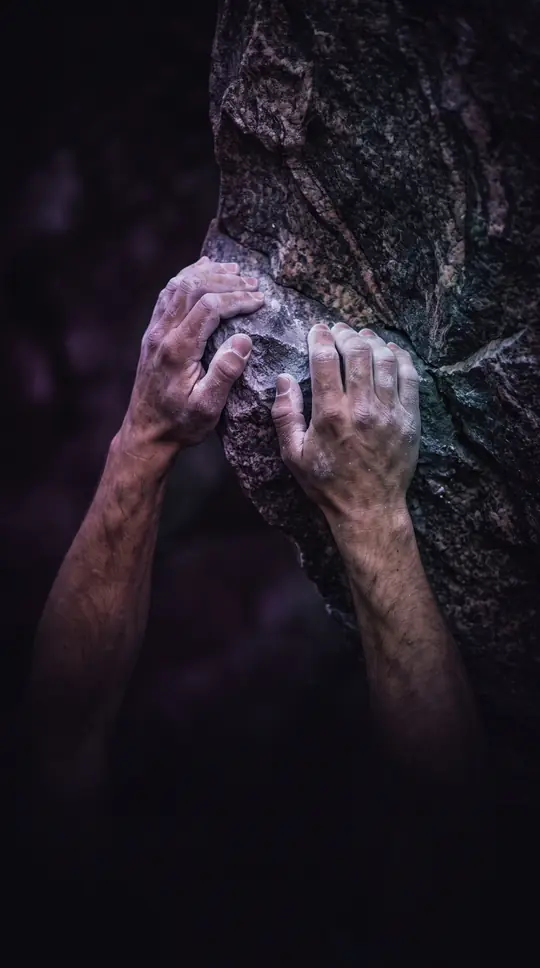 Fontainebleau boulders helped invent modern climbing stylesRock climbing ascends natural crags or indoor resin walls, with routes logged in guides and databases noting beta and first ascents. Lines run from a few metres to over 1,000 m hi…
 Fontainebleau: The French Royal Retreat That Shaped Centuries of European Power and ConflictBeyond its scenic forest and elite business school, Fontainebleau served as the stage for the French monarchy’s most consequential decisions. From the revocation of religious free…
 Foo Fighters Launch the Take Cover Tour with a New Drummer and Global AmbitionThe Foo Fighters kicked off their expansive Take Cover Tour in early 2026, marking a significant transition for the legendary rock group. Featuring a new lineup and a massive itin…
 Food as a portal into the ancestral histories of humankindArtist Jon Gray explores how culinary traditions serve as bridges between cultures. This residency highlights how food connects disparate people and honors historical narratives t…
 Food chemistry is the hidden science governing everything from your morning coffee to shelf-stable snacks.Food chemistry explores the complex interactions between biological and non-biological components in what we eat. By manipulating chemical processes—like fermentation or enzymatic…
 Food security is about much more than just having enough to eatWe often equate food security with a full stomach, but the reality is far more complex. It requires a delicate balance of availability, economic access, nutrition, and stability. …
 Food smoking began as Paleolithic preservation technologyExposing meat, fish, or tea to wood smoke flavors, browns, cooks, or helps preserve it. Europe favored alder and later oak; North America reaches for hickory and mesquite. Smoke a…
 Food systems contribute up to nearly one third of global greenhouse gas emissionsA review of environmental data found that food systems released between 9,800 and 16,900 megatonnes of carbon dioxide equivalent in 2008. This represents approximately 19% to 29% …
 Fool's gold is a sophisticated semiconductor with a history of sparking human innovationKnown for its brassy luster and tendency to deceive prospectors, pyrite is far more than a geological curiosity. From ancient fire-starting tools to modern lithium batteries and p…
 Foot-and-mouth virus spreads before symptoms show, which makes it a farmer's nightmareFoot-and-mouth disease rarely kills adult livestock, yet countries will cull healthy herds and ban meat exports to stop it. The reason is its sheer ease of travel: on boots, lorri…
 Football clubs are more profitable but more indebted than everUEFA's Financial Fair Play rules were designed to stop clubs from spending beyond their means. While they succeeded in making teams more profitable, a recent study reveals a start…
 Football in the shadow of sirens: the complex reality of Ukraine's 2026–27 seasonAs the 36th top-level competition since the Soviet Union's fall approaches, the Ukrainian Premier League faces more than just sporting challenges. From shifting player quotas to m…
 Football may be named for being played on foot, not for kickingThe obvious story is that football got its name because players kick the ball. Another explanation holds that the word simply meant a game played on foot rather than on horseback.…
 Football or entertainment? The high-stakes hybrid blurring the lines of sportTraditional football is meeting influencer culture in a frantic, six-a-side experiment. Born in Germany and expanding globally, the Baller League swaps conventional rules for high…
 Football was the battering ram that built Sky into Britain's pay-TV giantIn 1992 BSkyB paid £304 million for exclusive live Premier League football, outbidding ITV, which had raised its offer to £34 million a year. Rupert Murdoch called sport a batteri…
 Football's famous number 9 shirt began as an accident of numbering in 1933When shirt numbers first appeared at the 1933 FA Cup final, one side wore 1 to 11 and the other 12 to 22. By chance, Everton's powerhouse Dixie Dean, record holder for goals in an…
 Footless-looking flyers faster than most birdsApodidae swifts share the sky with swallows but not their family tree; they sit with hummingbirds in Apodiformes. The Greek ápous—“footless”—mocks their tiny legs. Large needletai…
 For 1,300 years, medical science relied on a Greek physician who dissected monkeys, not humans.Galen’s anatomical teachings dominated medicine from the second century until the Renaissance. Because he lacked human specimens, he extrapolated findings from apes and oxen, embe…
 For 1,400 years anatomists kept finding holes in the heart that weren't thereGalen's theory needed tiny openings between the heart's two ventricles, and generation after generation of anatomists dutifully reported seeing them. Andreas Vesalius simply admit…
 For 130 years, the kilogram was a single metal cylinderFrom 1889 until 2019, the world's kilogram was a specific lump of platinum and iridium: whatever it weighed was, by definition, exactly one kilogram. Now the unit rests on a const…
 For 21 years, a Somali resistance movement defied three imperial powers in the Horn.Led by the charismatic Sayid Muhammed Abdullah Hassan, the Dervish movement sought to unify Somali clans against British, Italian, and Ethiopian colonial expansion. Through strate…
 For 210 million years, giant amphibians dominated the earth before their final decline.Temnospondyls were a remarkably diverse group of amphibians that thrived for over two centuries of millions of years. This video explores their long reign and the two primary envi…
 For 33 years scientists confidently miscounted human chromosomes as 48In 1923 Theophilus Painter peered through his microscope and counted 24 pairs of human chromosomes, 48 in all. Others repeated his figure for decades. Only in 1956 did the Indones…
 For 370,000 years, the early universe was a blinding, opaque soup of light.Following the lepton epoch, the universe entered the photon epoch, a period defined by a hot, dense plasma where light dominated all energy. During this time, the cosmos was essen…
 For 57 years, Helen Thomas was the relentless, singular voice of the White House press.As the first woman to lead the White House Correspondents' Association and the only reporter with a permanently assigned seat in the briefing room, Helen Thomas defined the role o…
 For 7,000 years, humanity has poured molten potential into hollow cavities to shape civilization.Casting is the ancient art of turning liquid into legacy. From 3,200 BC copper frogs to modern industrial components, this manufacturing process enables the creation of complex sh…
 For 70 years, scientists have been looking at this ancient fossil the wrong wayDickinsonia, a mysterious, quilted organism from over 550 million years ago, has long baffled researchers. Once mistaken for a jellyfish or fungus, this Ediacaran creature is now …
 For 800 years, this town has celebrated by throwing hot coins at crowds.The Honiton Hot Pennies ceremony is a centuries-old tradition where coins are tossed from windows to the people below. While the practice has evolved, it remains a surprisingly ph…
 For 99.8 percent of human history, the state did not exist at all.The state is a recent invention, emerging less than 6,000 years ago. Before then, humans lived in autonomous bands and villages, managing disputes through community consensus rath…
 For a century, American cities criminalized the mere presence of people with visible disabilities.From the mid-19th to mid-20th century, so-called ugly laws barred individuals with visible disabilities from public spaces. These ordinances, which emerged as urban centers grew c…
 For a century, Magyar warriors reshaped the map of Europe through relentless, mobile warfare.Between the 9th and 10th centuries, the Magyars launched dozens of campaigns across the continent, from the Atlantic coast to the Byzantine Empire. Their tactical mobility and str…
 For a century, scholars have used a unique method to save Egypt’s vanishing historySince 1924, the University of Chicago’s Epigraphic Survey has worked to record the inscriptions of ancient Egypt before they are lost to erosion and time. By blending photography …
 For a century, scientists wrongly pictured duck-billed dinosaurs wading in swampsDuck-billed dinosaurs were among the most successful plant-eaters of the Late Cretaceous, grinding their food with stacked batteries of teeth. Yet from the 1850s until 1964, exper…
 For a century, the Āfāqī Khojas waged a relentless holy war against Qing rule.After the Qing dynasty conquered the Altishahr region in 1759, the displaced Āfāqī Khojas launched a hundred-year campaign to reclaim their territory. From guerilla raids to full-…
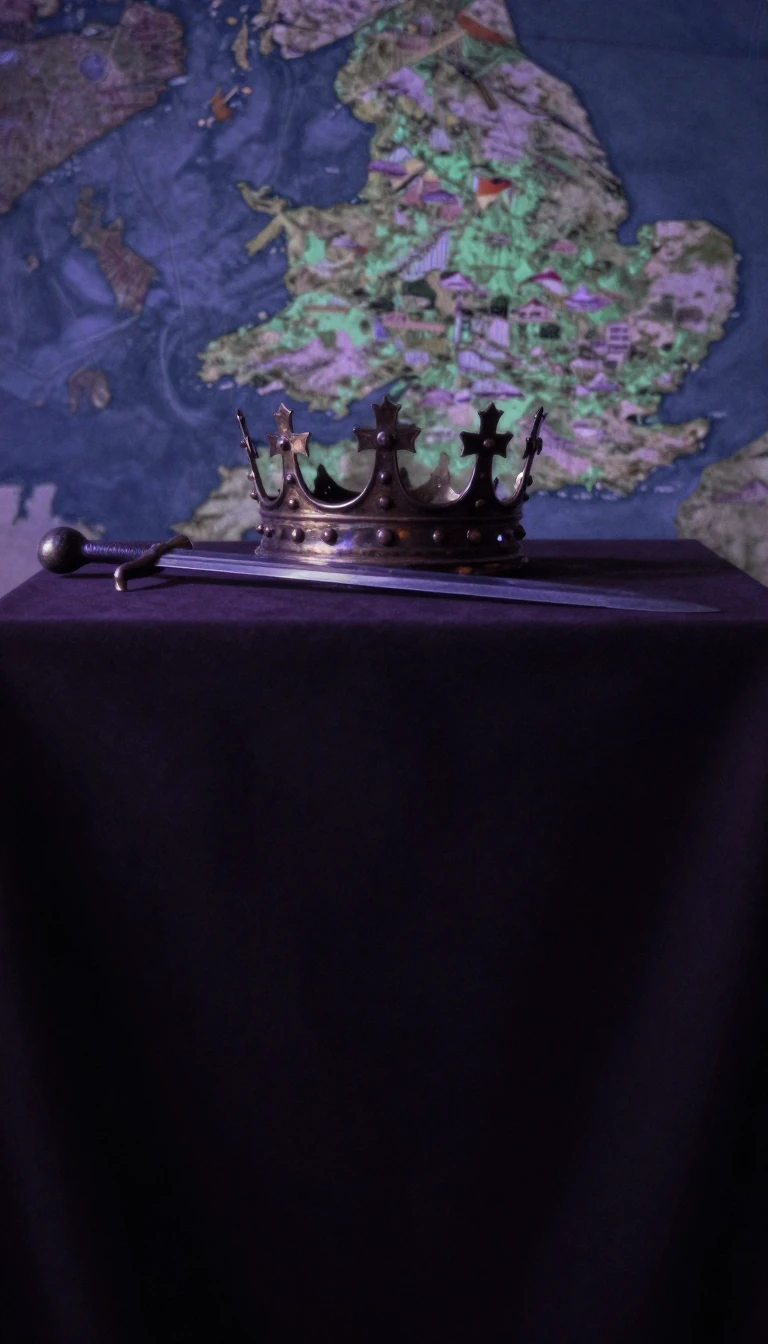 For a few Viking years, England, Denmark and Norway shared one kingBetween 1013 and 1042, England, Denmark and Norway were mostly ruled as one realm held together only by the sea. At its peak under Cnut the Great, from 1028 to 1035, only the Holy…
 For a millennium, Greeks lived in secret underground cities beneath the volcanic plains of Cappadocia.In the heart of Anatolia, a resilient Greek community thrived for thousands of years, carving elaborate, multi-level cities deep into volcanic rock to survive centuries of invasio…
 For almost four thousand years doctors blamed a wandering wombAn Egyptian papyrus from 1900 BCE attributed women's odd behaviour to a uterus roaming the body, and physicians tried to coax it home with smells. The idea gave us the word hyster…
 For ancient Greeks, the polis was not a city but the entire homelandTranslating polis as city misses its meaning. For an ancient Greek, the polis was the native land itself, with its own constitution and a claim on supreme loyalty. Greece was not …
 For ancient Romans, 'religio' could describe an elephant gazing at the skyThe world has roughly 10,000 distinct religions, yet four of them plus the nonreligious cover 97.6 percent of humanity. Stranger still, the word itself once had little to do with …
 For Aristotle, anything alive that was not an animal counted as a plantThe ancient Greek scheme was simple: living things with a sensitive soul were animals, and those with only a vegetative soul were plants. Under that view the plant kingdom swept i…
 For billions of years, Earth's most advanced life was a slimy microbial matEarth is about 4.54 billion years old, and clear signs of life appear by 3.7 billion. Yet animals with left and right sides only show up around 555 million years ago. Most of life…
 For centuries Christian scholars studied Avicebron without realising he was a Jewish poetMedieval Christian thinkers admired a philosopher called Avicebron, author of the Fons Vitae, and assumed he was a Christian or Muslim. Only in 1846 did Solomon Munk prove that Av…
 For centuries Gnosticism was known mainly through the people who hated itEarly Gnostics believed the material world was built by a flawed lesser god and that salvation came through secret, personal knowledge of a hidden higher one. Church leaders brand…
 For centuries, a handful of German princes chose the Holy Roman EmperorThe Holy Roman Emperor was not simply born to the job. A small college of princes, the Kurfürsten, voted for him, first by loose custom and from 1356 under a charter called the Go…
 For centuries, Carthage and Greek city-states fought a brutal, indecisive war for Sicily.Between 580 and 265 BC, the Mediterranean was defined by a series of conflicts between Carthage and Greek powers like Syracuse. These wars over Sicily were not just local skirmish…
 For centuries, Chinese Indonesians have anchored the economy while navigating a shifting national identity.Chinese Indonesians represent a small but vital portion of the population, serving as a pillar of the national economy. While often categorized by their ancestry, most are of mixe…
- For centuries, doctors blamed almost every illness on four bodily juicesBlood, phlegm, yellow bile and black bile: Greek and Roman physicians believed health meant keeping these four fluids in balance, and illness came from too much or too little of o…
 For centuries, doctors prescribed chocolate as a serious medical treatment for various ailments.Before it became a sugary dessert staple, chocolate was a medicinal substance. This video explores the historical shift of chocolate from a therapeutic remedy to the sweet syrup f…
 For centuries, European and American citizens were the primary targets of North African slave raids.From the 16th to the 19th century, Barbary corsairs terrorized coastal towns from Italy to Iceland, capturing over a million people. These raids were not merely piracy; they were …
- For centuries, Faroe Islanders have driven pilot whales into shallow bays for communal harvest.Known as the grindadráp, this ancient practice involves herding pods of pilot whales and Atlantic white-sided dolphins into designated bays to be beached and slaughtered. While de…
 For centuries, Finland served as the eastern frontier and strategic buffer for the Swedish realm.Long before its independence, Finland was an integral part of Sweden, shaped by crusades, colonial settlement, and constant warfare. While Finns eventually gained equal legal stat…
 For centuries, half a war fleet might be borrowed merchant shipsUntil the seventeenth century, navies routinely pressed trading vessels into service, and more than half a fleet could be merchant ships, because a cargo carrier and a fighting sh…