 Intellect Plus
Cards starting with F
10,056 cards. Page 29 of 168.
 For centuries, history's most famous rubies were actually a different, brilliant mineral called spinel.Spinel has long been mistaken for ruby, gracing royal crowns under false pretenses. Beyond its historical identity crisis, this mineral is a geological chameleon, found in meteori…
 For centuries, humanity believed magnetic mountains and garlic fumes dictated the behavior of compasses.Before modern science, the Earth's magnetic field was a profound mystery. Early thinkers blamed celestial poles, magnetic islands, or even the smell of onions for confusing compas…
 For centuries, humanity believed the stars and planets were embedded in rotating, physical spheres.Before modern physics revealed the vast, empty vacuum of space, scholars envisioned the universe as a series of nested, solid orbs. From Aristotle to the Renaissance, this elegant…
 For centuries, humanity viewed electricity and magnetism as entirely unrelated, mysterious natural phenomena.Long before modern physics, ancient civilizations observed the strange pull of magnetite and the static charge of rubbed amber. While these forces were documented as early as 800 …
 For centuries, humans and animals have shared the intimate, life-sustaining act of breastfeeding.Across history and cultures, the lines between human and animal nursing have blurred. From abandoned infants suckled by goats in European hospitals to women nursing puppies to mai…
 For centuries, Hungary and Bulgaria fought a brutal, shifting war for Balkan dominance.From the 9th to the 14th century, the First and Second Bulgarian Empires clashed repeatedly with the Magyar tribes and the Kingdom of Hungary. These conflicts were not merely terr…
 For centuries, Korea’s elite wrote literature in Chinese while speaking their native tongue.Before the invention of the Hangul alphabet in the mid-15th century, Korean scholars relied on Classical Chinese to record their thoughts. Even after a national script emerged, th…
 For centuries, mapmakers populated the oceans with islands that never actually existed.From the dawn of cartography until the modern era, phantom islands haunted our maps. Born from optical illusions, navigational guesswork, and outright fabrication, these ghost lan…
- For centuries, sailors were lost at sea because they could not measure east-west position.While latitude was easily determined by the stars, longitude remained a deadly puzzle for navigators. Without a way to synchronize time across vast distances, ships relied on dang…
 For centuries, scientists believed heat was a weightless, self-repelling fluid called caloric.Before we understood heat as energy, the world was obsessed with a mysterious substance that supposedly filled the gaps between matter. This fluid, caloric, drove early attempts t…
 For centuries, the bluest blue was worth more than gold.True ultramarine was ground from lapis lazuli mined in the mountains of Afghanistan and shipped across the world. Renaissance painters sometimes used it only for the Virgin Mary's…
 For centuries, the British Royal Navy filled its ranks by force, not by choice.The press gang was a feared reality of the Age of Sail, using intimidation to drag sailors into naval service. While often mythologized as random street abductions, the practice w…
 For centuries, the Byzantine and Bulgarian Empires fought a relentless, high-stakes game of survival.From the late 5th century until the fall of Constantinople, the Byzantine and Bulgarian Empires were locked in a volatile struggle for dominance. Through shifting alliances, bruta…
 For centuries, the Crimean Khanate launched devastating raids into Russia, kidnapping thousands for slave markets.Long before the famous 19th-century Crimean War, a brutal, centuries-long conflict defined the Russian frontier. Supported by the Ottoman Empire, Crimean forces repeatedly burned …
 For centuries, the Ottoman Empire struggled to maintain control over the rugged Yemeni highlands.Between 1538 and 1911, the Ottoman Empire engaged in a protracted series of conflicts to subdue the Zaidi tribes of Upper Yemen. Despite repeated military campaigns and administra…
- For centuries, the ultimate naval blockade was a simple chain stretched across the water.Before modern radar and missiles, controlling a waterway required physical force. A boom—a floating barrier of logs, rafts, or heavy iron chains—could stop an enemy fleet in its t…
 For centuries, thousands of Greek-speaking people identified as Turks through the Ottoman millet system.In the Ottoman Empire, religious affiliation defined identity far more than ethnicity or language. This system led to the emergence of Greek-speaking Muslims, communities of Greek…
 For centuries, Turkish literature was a tale of two worlds that rarely ever met.Until the 1923 founding of the Republic of Turkey, the nation’s literary life was split between an elite, Persian-influenced written tradition and a vibrant, oral folk culture. Th…
 For centuries, wet nurses were essential, yet their own children often suffered or died.Before the 20th-century invention of reliable infant formula, wet nurses were a global necessity. While they saved countless infants of the wealthy and the ill, the practice often…
 For COVID-19 screening, testing often and fast beats using the most sensitive testResearchers who modeled how SARS-CoV-2 levels rise and fall after infection simulated repeated population screening programs. They found that testing people more often and returni…
 For decades America ran on two slightly different feetUntil recently the United States used two feet. The international foot, fixed in 1959, is exactly 0.3048 metres; the older survey foot, kept for land mapping, is a hair longer. Th…
 For decades writers claimed the Akan came from Egypt or the Sahara; archaeology says otherwiseColonial-era writers kept trying to trace Ghana's Akan people back to ancient Egypt, the Sahara or the Near East. When an anthropologist later rechecked one influential set of ora…
 For decades, astronomers were convinced a hidden planet orbited between Mercury and the Sun.In the 19th century, the brightest minds in physics were certain a planet named Vulcan existed. It was the only way to explain Mercury's erratic orbit using Newtonian gravity. Yet…
 For decades, music got louder and flatter, and streaming may have called a truce.From jukeboxes to CDs, record labels pushed tracks to sound louder than the competition. Digital compression let engineers squeeze out the quiet parts until songs became a wall of…
 For decades, the CIA secretly owned the world's leading supplier of encryption technology.From 1970 to 2018, the Swiss firm Crypto AG sold encryption devices to over 120 nations. Unbeknownst to these governments, the company was a front for the CIA and West German inte…
 For Dickinson, home was not a place but a personKashmir or Calvary, honour or disgrace: Dickinson's speaker says none of it matters as long as she can be where the beloved is. Prison becomes contentment and a sentence becomes a…
- For Dickinson, the absent dead felt further off than Heaven itselfIn this poem Emily Dickinson thinks about people who are gone and calls them more remote than Heaven: Heaven is the root, they are seed that has blown away. They cannot speak, arg…
 For eight centuries, this mysterious philosopher was the Latin West's only window into Plato.Almost nothing is known about the 4th-century figure Calcidius, yet his translation and commentary on Plato’s Timaeus defined medieval intellectual life. By bridging Greek philoso…
 For every legal right, there must be a remedy, or the right does not exist.A legal remedy is the mechanism by which courts enforce rights and compensate for harm. From monetary payouts to court-ordered actions, these tools ensure that justice is not mere…
 For every ten people executed on death row, at least one is innocentThe death penalty is often defended as a necessary tool of justice, yet history reveals a chilling reality: the state frequently executes the wrong person. From coerced confession…
 For fifty years, Berlin served as the silent epicenter of a global intelligence war.While official diplomacy stalled, the CIA and KGB waged an underground conflict beneath the surface of the Cold War. Thousands of agents operated in the shadows, turning Berlin in…
 For five decades, the American justice system has relied on flawed forensic science.This video examines how forensic evidence, once considered infallible, has led to widespread judicial errors. It highlights a critical FBI investigation revealing that forensic ex…
 For five years, America's Toyota Yaris was secretly a MazdaBuy a Yaris sedan in the United States between 2015 and 2020 and you drove home a lightly restyled Mazda2 from a Mazda factory in Mexico. Toyota's small car wore many faces worldw…
 For forty years, William Cecil's life was almost the history of Elizabethan EnglandWilliam Cecil advised Elizabeth I for nearly her entire reign, so closely that one historian said his biography from 1558 is hard to separate from hers. He survived a dangerous pl…
- For four centuries, Ottoman Syria was a complex mosaic of shifting borders and autonomy.Following the 1516 Battle of Marj Dābiq, Syria became an integral part of the Ottoman Empire for 400 years. While governed from Damascus, Aleppo, and Sidon, the region functioned …
 For four centuries, Rome and the Gallic tribes fought for control of EuropeThe Roman Republic’s expansion was defined by a long, brutal struggle against the Gauls. From the shock of Rome being sacked in 390 BC to Caesar’s total conquest of the region, th…
 For four centuries, the Catholic Church maintained an official blacklist of forbidden literature.The Index Librorum Prohibitorum was a sweeping catalog of publications deemed dangerous to faith and morality. From 1560 to 1966, it restricted what Catholics could read, shaping …
 For four decades, the heart of North America was a Spanish colonial province.Between 1762 and 1801, Spain governed a vast territory stretching from the Mississippi River to the Rocky Mountains. Far from a mere outpost, this province became a strategic hub …
 For four millennia, the Indian Ocean served as a vast, complex highway for human trafficking.Long before European involvement in the Atlantic, a sophisticated network of trade routes spanned the Indian Ocean, moving millions of people across continents. From ancient Babyl…
 For four months in 1783, Princeton's Nassau Hall served as America's capitalPrinceton's oldest building has had a dramatic life. British soldiers briefly held Nassau Hall during the 1777 Battle of Princeton before surrendering to George Washington's army.…
 For four years the word lactose belonged to an entirely different sugarMilk sugar got its name from Jean-Baptiste Dumas in 1843. Then in 1856 Louis Pasteur crystallised one of its building blocks and called that lactose too. Marcellin Berthelot untan…
 For four years, a cast-iron spire made Rouen Cathedral the world's tallest buildingRouen Cathedral took more than eight centuries to build and rebuild, and its three towers each wear a different style. Vikings raided it, Rollo was baptised in it, Monet painted i…
 For male jumping spiders, a failed mating dance can end in being eaten alive.Male jumping spiders perform elaborate, high-stakes courtship rituals to win over females. They shimmy, wave legs, and flap appendages to impress potential mates. However, the per…
 For many tarantulas, finding a mate is a high-stakes race against deathFor some tarantulas, the search for a partner is a desperate gamble. With only about two months of life remaining, males must navigate a perilous landscape to find a female before…
 For millennia, armies have turned rivers into roads using nothing but floating boats.A pontoon bridge is a feat of ancient engineering that remains vital today. By tethering shallow-draft boats or floats together and topping them with a deck, engineers create inst…
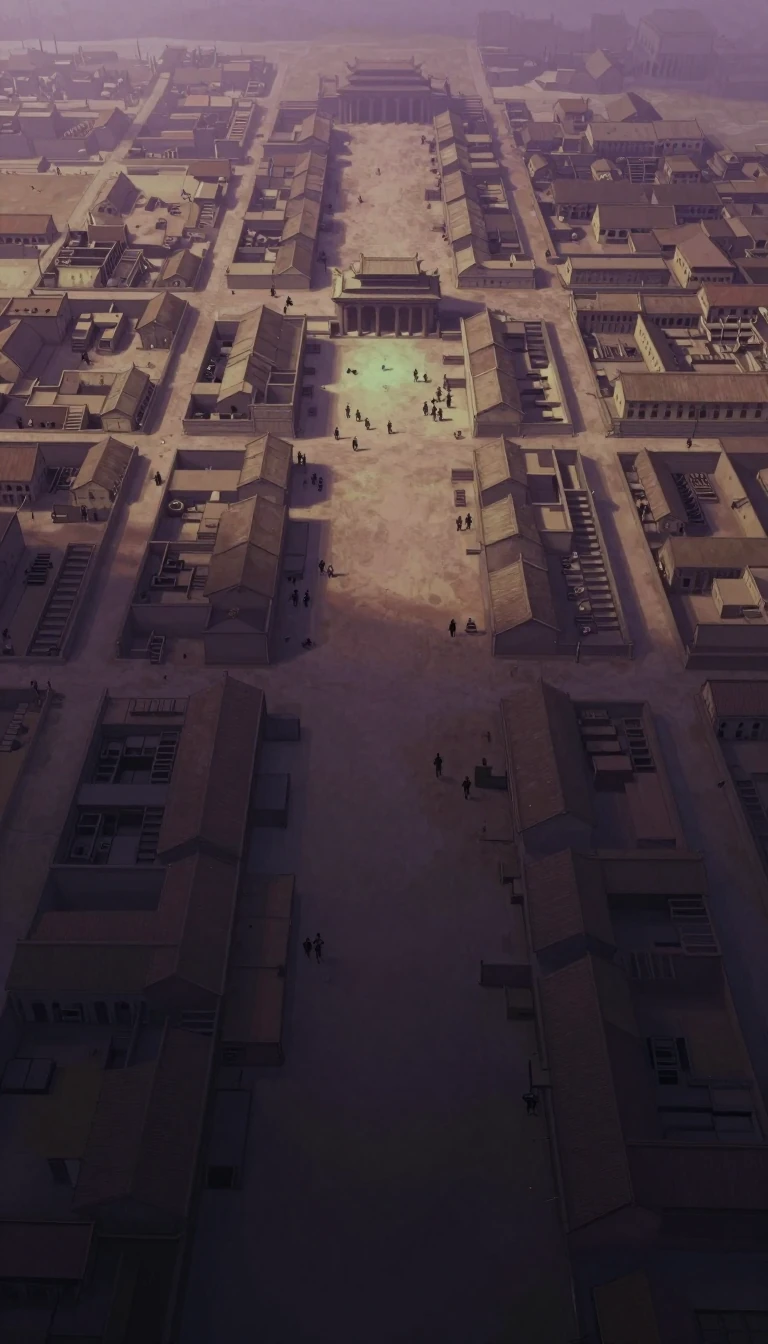 For millennia, empires tried to slice through this narrow strip of Greek land.The Isthmus of Corinth is a slender bridge of limestone connecting the Peloponnese to mainland Greece. For centuries, sailors dreaded the long journey around the peninsula, leadin…
 For millennia, humanity has used celestial diaries to track the movements of the heavens.An ephemeris is a table or digital tool that predicts the trajectory of celestial bodies. From ancient Babylonian clay tablets to modern NASA software, these logs have guided navi…
 For millennia, humanity mistook a deadly bacterial infection for a hereditary curse.Before the 1882 discovery of the tubercle bacillus, tuberculosis was often viewed as a constitutional fate or a family legacy. In New England, this misunderstanding even sparked v…
 For millennia, humanity viewed the sky as a solid, hammered dome of divine engineering.Before modern astronomy, the firmament was not merely empty space but a physical barrier separating Earth from celestial waters. From ancient Near Eastern myths to medieval theolo…
 For millennia, the humble peddler has bridged the gap between isolated communities and global trade.Long before the convenience of modern retail, peddlers were the essential link for rural and remote consumers. Traveling by foot or cart, these itinerant merchants brought goods d…
 For millennia, the ship was the most advanced machine human society could produce.Before the industrial revolution, building a ship was the ultimate test of a civilization's engineering prowess. From prehistoric rafts to the complex iron-hulled vessels of the 1…
 For millions of years, North America was a continent entirely devoid of cats.Between 25 and 18.5 million years ago, the fossil record of North America hits a strange silence. After the extinction of the false-sabertoothed nimravids, the continent lacked an…
 For most of history, an hour in summer outlasted one in winterAncient timekeepers split daylight into twelve parts and night into twelve more, whatever the season. A summer afternoon hour therefore stretched long while a winter one shrank. T…
 For most of history, art just meant skillBefore the 1600s, calling someone an artist was like calling them a good carpenter or surgeon. The word meant mastery of a craft, not a special realm of beauty. Only later did Wes…
 For most of history, economic gains were swallowed by population growthBefore industrialisation, every advance in farming or technology mostly produced more people, not richer ones, as food supplies capped living standards. Economists call it the Mal…
 For most of history, humans weren't thought capable of creating anythingAncient Greeks, Chinese and Indians had no real concept of creativity: art was discovery, not invention. Plato insisted a painter merely imitates. In Jewish, Christian and Islamic…
 For most of history, mathematicians were also accountants, lawyers and doctorsDuring the Renaissance many leading mathematicians held other day jobs. Luca Pacioli founded accounting, Tartaglia worked as an engineer and bookkeeper, Robert Recorde was a physi…
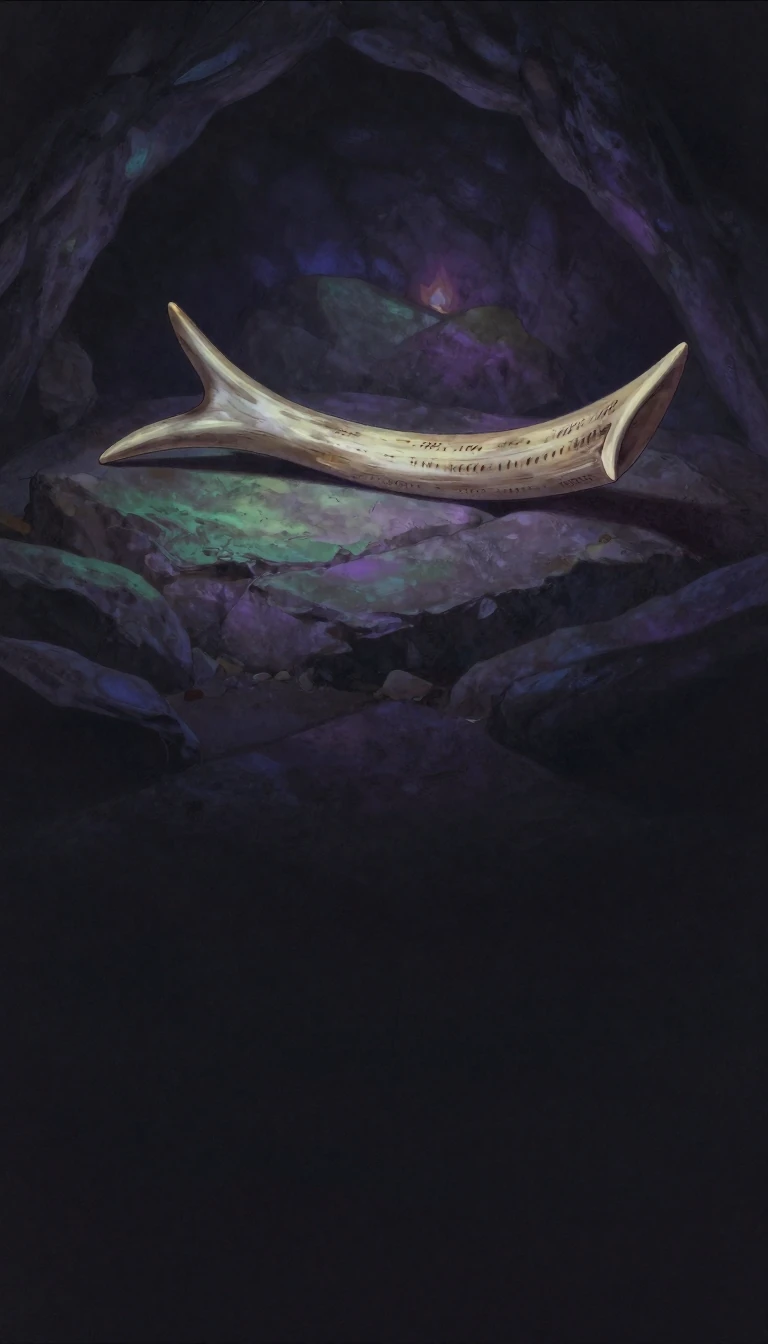 For most of human history, faith left no words, only caves and stonesOver 99 per cent of prehistory falls within the Paleolithic, a stretch lasting more than two and a half million years with no writing at all. Religion appears for certain only aro…
 For most of its history, kimchi contained no chilli at allKimchi's fiery red colour is a relatively recent addition. Chillies are a New World crop that Portuguese traders brought to East Asia, and Korea's first written mention of them da…
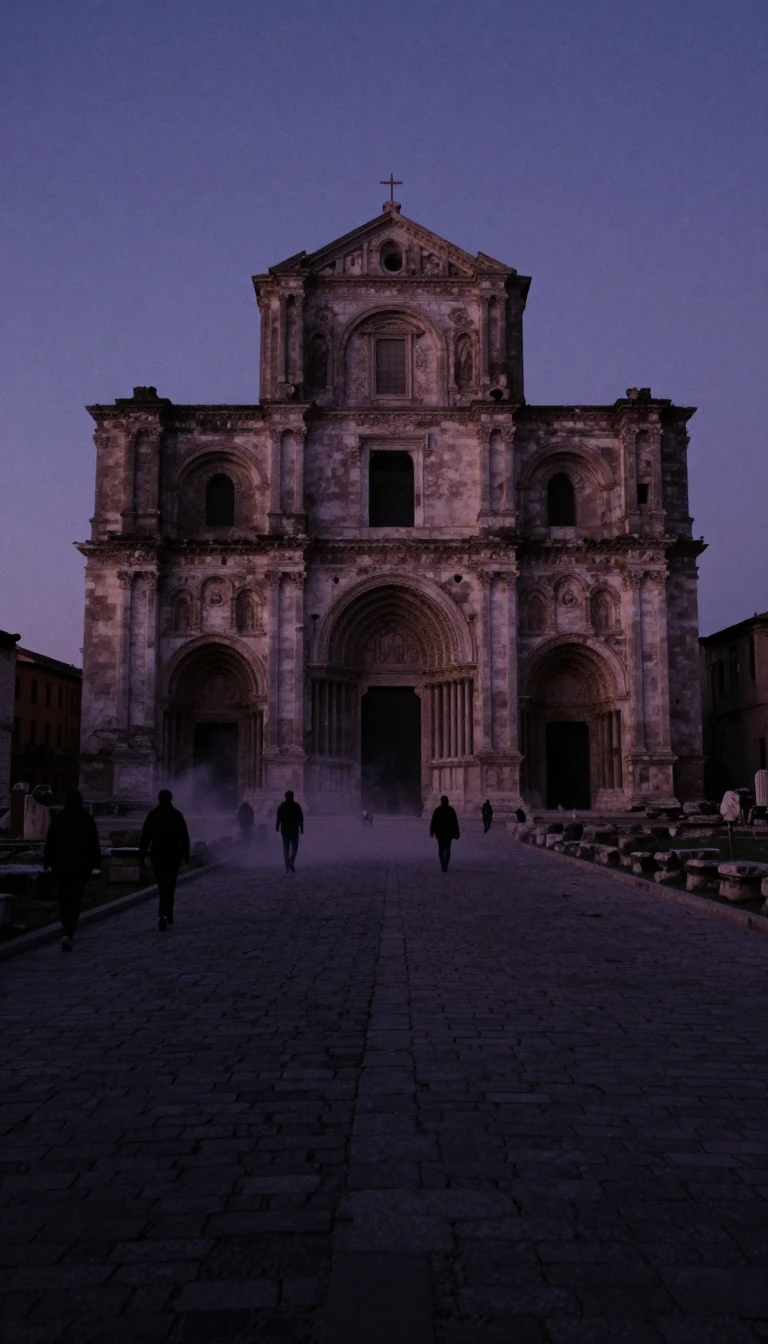 For nearly forty years, the Catholic Church was split between two, then three, popes.From 1378 to 1417, the Western Schism fractured Christendom. Rival factions in Rome and Avignon—and later Pisa—simultaneously claimed the papacy, driven by political allegiances a…