 Intellect Plus
Cards starting with W
29,907 cards. Page 334 of 499.
 Why some royal marriages once barred the spouse and children from inheriting the throneA morganatic marriage allowed a high-ranking noble or royal to marry someone of lower status without passing on their rank or inheritance. While the union was legally valid, it fu…
 Why some saints and prophets chose to live as social outcasts and madmenThroughout history, individuals have deliberately flouted social norms, feigned insanity, or embraced poverty to serve a religious purpose. Known as fools for Christ, these figure…
 Why some satellites are sent to a celestial retirement homeNot every satellite is destined to burn up in the atmosphere. This video explores the necessity of graveyard orbits for spacecraft that cannot safely decay.
 Why some scientific discoveries leave researchers feeling grumpyScience often reveals the beauty of our world, but it also uncovers unsettling environmental and biological realities. This video explores three specific reports that have left th…
 Why some sea stars choose devoted parenting over mass reproductionWhile most sea stars release eggs into the open ocean, the six-rayed sea star takes a different approach. This video explores the unusual brooding behavior of the Leptasterias gen…
 Why some sentences feel like they are hanging by a threadHave you ever started a sentence that feels unfinished, leaving the reader waiting for a resolution? This isn't just a stylistic choice; it is a fundamental rule of syntax. Unders…
 Why some sequences must end, and how that powers mathematical discoveryA well-founded relation is a mathematical structure where every non-empty subset contains a minimal element. By forbidding infinite descending chains, these relations provide the …
 Why some shapes are too complex to be one-dimensional but too simple for twoIn geometry, we are taught that lines are one-dimensional and surfaces are two. Yet, nature is rarely so tidy. Fractal dimension allows us to quantify the complexity of irregular …
 Why some skin injuries grow into permanent, raised scars that defy typical healingKeloids are not just stubborn scars; they are an overgrowth of collagen that expands beyond the original injury site. While they are benign and non-contagious, these raised, firm …
 Why some snakes evolved to target your eyes specificallySpitting cobras don't just strike; they launch venom with precision. This video explores the evolutionary mechanics behind this unique defense mechanism and how human interaction …
 Why some societies intentionally reject the state to preserve their own freedom and equalityAnthropologist Pierre Clastres challenged the assumption that the state is the inevitable destiny of human progress. Through his fieldwork in South America, he argued that many in…
 Why some societies organize around a corporate house rather than a simple family treeIn anthropology, a house society is a unique social structure where political and kinship ties revolve around a corporate dwelling rather than bloodlines. Unlike traditional linea…
 Why some societies prioritize your conscience while others watch your faceIs morality an internal compass or a public performance? Anthropologists distinguish between guilt, shame, and fear as the primary engines of social order. While one culture might…
 Why some solids behave exactly like flowing liquidsWhile fluids like water flow easily, some non-fluid substances mimic this behavior. This video explores three unexpected examples of materials that act like liquids despite being …
 Why some solids melt at a precise temperature while others simply soften into glass.The melting point is the exact temperature where solid and liquid forms of a pure substance coexist in equilibrium. Yet, not all solids behave this way. While crystalline material…
 Why some solids melt at a specific temperature while others do notA piece of glass and a crystal of salt both appear solid, but they behave differently under heat. One has a precise melting point, while the other simply softens. The secret lies …
 Why some solids shatter while others flow like liquidNot all solids are created equal. While a diamond resists almost any force, molecular solids like ice or plastic are held together by much gentler connections, making them soft, b…
 Why some spacecraft survive for centuries while others crash in weeksWhile Earth's satellites can remain in orbit for generations, lunar probes face a much more volatile environment. This video explains the geological irregularities that turn stabl…
 Why some species actually flourish in the wake of human environmental destructionWhile climate change and deforestation drive many species toward extinction, a select few animals have managed to adapt to the human-altered landscape. This video highlights five …
 Why some species fall into evolutionary trapsEvolution is often slow, leaving some species unable to adapt quickly to environmental changes. This video explores how these mismatched responses lead animals into seemingly illo…
 Why some species perish when the temperature shifts by only a few degreesMost organisms are built to handle a wide range of climates, but stenotherms are different. These specialized creatures thrive only within a very narrow temperature window. If the…
 Why some species thrive in extreme heat and cold while others simply perishA eurytherm is an organism capable of functioning across a wide range of ambient temperatures. From the microscopic tardigrade surviving near absolute zero to humans regulating in…
 Why some species thrive in the concrete jungle of modern citiesWhen humans build cities, most local species vanish. However, a specialized group of animals—known as synurbic species—does the opposite. Instead of disappearing, these adaptable …
- Why some spiral galaxies lack the central bar found in our own Milky WayWhile many galaxies feature a central bar of gas and stars that funnels material toward the core, roughly one third of known spiral galaxies lack this structure. These unbarred sp…
 Why some square-root equations yield two distinct solutionsThis tutorial demonstrates how to navigate the complexities of solving square-root equations, specifically focusing on an equation that results in two separate answers.
 Why some stars develop a sooty, ruby red atmosphereMost stars are oxygen-rich, but carbon stars undergo a dramatic transformation. Through internal fusion and violent stellar winds, they dredge up carbon that consumes oxygen, leav…
 Why some stars fade into silence while others end in cosmic explosionsThe Sun's future is a slow, quiet cooling, but for much larger stars, the end is far more violent. The difference between a white dwarf and a supernova lies in a delicate balance …
 Why some stories are impossible to translate into filmThe enduring power of The Catcher in the Rye lies in its prose rather than its plot. This video explores how JD Salinger’s specific use of language and narrative voice creates a l…
 Why some stories prioritize your internal monologue over the external plotIn a psychological drama, the most important action isn't happening on the screen—it is happening inside the character's mind. Unlike standard dramas that focus on narrative conte…
 Why some subatomic particles behave as if they are playing by different rulesIn 1947, physicists discovered particles that defied the known laws of subatomic behavior. They appeared in high-energy collisions with ease, yet lingered far longer than their ma…
 Why some substances dissolve while others remain stubbornly separateWe often think of solutions as liquids, but air and brass are solutions too. The secret to how substances mix lies in the invisible dance of electrical charges and molecular polar…
- Why some substances vanish into thin air while others linger for monthsVolatility determines how readily a substance shifts from a liquid or solid into a vapor. It is the invisible force behind everything from the distillation of spirits and the refi…
 Why some systems naturally return to a perfect, repeating rhythm after being disturbedIn nonlinear systems, a limit cycle acts as a magnetic rhythm. Unlike a simple pendulum that changes its path when nudged, a system governed by a limit cycle will always return to…
 Why some tech experts are trading Silicon Valley for public serviceAfter nearly two decades at Google, engineer Matt Cutts shifted his focus from private innovation to government work. This talk explores why high-level technologists are choosing …
 Why some territories are completely cut off from their home nationsThis video examines the peculiar geography of enclaves and exclaves, territories that exist outside the main body of their sovereign states. It explores the logistical and histori…
 Why some territories are trapped inside others, and why they are disappearingAn enclave is a territory entirely surrounded by one other state, while an exclave is a piece of land separated from its home country by foreign soil. These geographical anomalies…
 Why some territories field their own Olympic teams while others remain on the sidelinesThe global stage of the Olympic Games is not strictly reserved for sovereign nations. While 206 National Olympic Committees currently hold recognition, the rules governing who get…
 Why Some Theaters Refused to Screen the 2004 Superhero Hit HellboyGuillermo del Toro’s 2004 adaptation of Hellboy was a critical success, yet its path to the screen was fraught with bizarre obstacles. From studio executives rejecting the title t…
 Why some theorists believe communism is an action, not a destinationFor Gilles Dauvé, communism isn't a future utopia to be built; it is a task to be performed right now. He argues that revolution shouldn't create a transitional state, but must im…
 Why some things defy categorization, from the European Union to a local pubThe Latin phrase sui generis means of its own kind, describing entities that exist outside standard classifications. Whether in law, biology, or philosophy, it identifies somethin…
- Why some thinkers avoid the word atheism to escape a moral stigmaIs it possible to reject the idea of a god without rejecting morality? For much of history, the label 'atheist' carried a heavy, unintended burden of immorality. To solve this, a …
 Why some tides rise higher than othersThis video captures unusually high tides at the Embarcadero, driven by a specific celestial alignment. Scott Manley explains the underlying science behind these extreme water leve…
 Why some tiger moths choose to stand their ground against batsMost moths flee from predators, but tiger moths have evolved a different survival strategy. This video explores the specific biological mechanisms that allow these insects to face…
 Why some toads are at risk from blowfly eggsWhile nose-picking is generally discouraged, for a toad, it might be a survival tactic. This video explores the parasitic relationship between blowflies and toads, specifically ho…
 Why some traditionalist Catholics believe the Holy See has been vacant since 1958.Sedevacantism is a movement claiming that modern popes are illegitimate heretics who forfeited their authority through the reforms of the Second Vatican Council. Believing the cha…
 Why some traditions distinguish between honoring saints and worshipping God aloneAcross major religions, veneration is the practice of honoring holy figures or relics. While some groups see this as a natural expression of reverence, others fear it crosses the …
- Why some traits defy Mendel: The discovery of genetic linkage in pea plantsIn 1905, geneticists noticed that certain traits in pea plants were inherited together far more often than chance allowed. This defied Gregor Mendel’s famous law of independent as…
 Why some tropical forests shed their leaves while others remain lush and greenUnlike the evergreen rainforests that stay perpetually verdant, seasonal tropical forests operate on a rhythmic pulse. Driven by the shifting Intertropical Convergence Zone, these…
 Why some truths are destined to remain forever beyond the reach of human languageIneffability describes the profound boundary where language fails. When concepts are too vast, abstract, or paradoxical to be captured by symbolic speech, they remain trapped with…
 Why some tuning forks refuse to double their frequency as expectedA previous investigation into a tuning fork phenomenon hit a snag when viewers could not replicate the results. This update explores the initial theories behind why the frequency …
 Why some volcanoes are not just single mountains but entire, shifting geological landscapesA complex volcano is not a simple peak, but a mixed landform built from shifting vents and changing eruptive habits. These structures can evolve from a single stratovolcano into a…
 Why some volcanoes grow into sticky, unstable mounds instead of explosive mountainsLava domes are the slow-motion architects of the volcanic world. Formed by thick, viscous magma that refuses to flow, these circular mounds can grow for centuries before suddenly …
 Why some weapons in history were considered dishonorable or unfairly overpoweredWarfare often drives technological innovation, but some weapons have crossed the line from tactical advantage to perceived cruelty. This video examines the historical perspective …
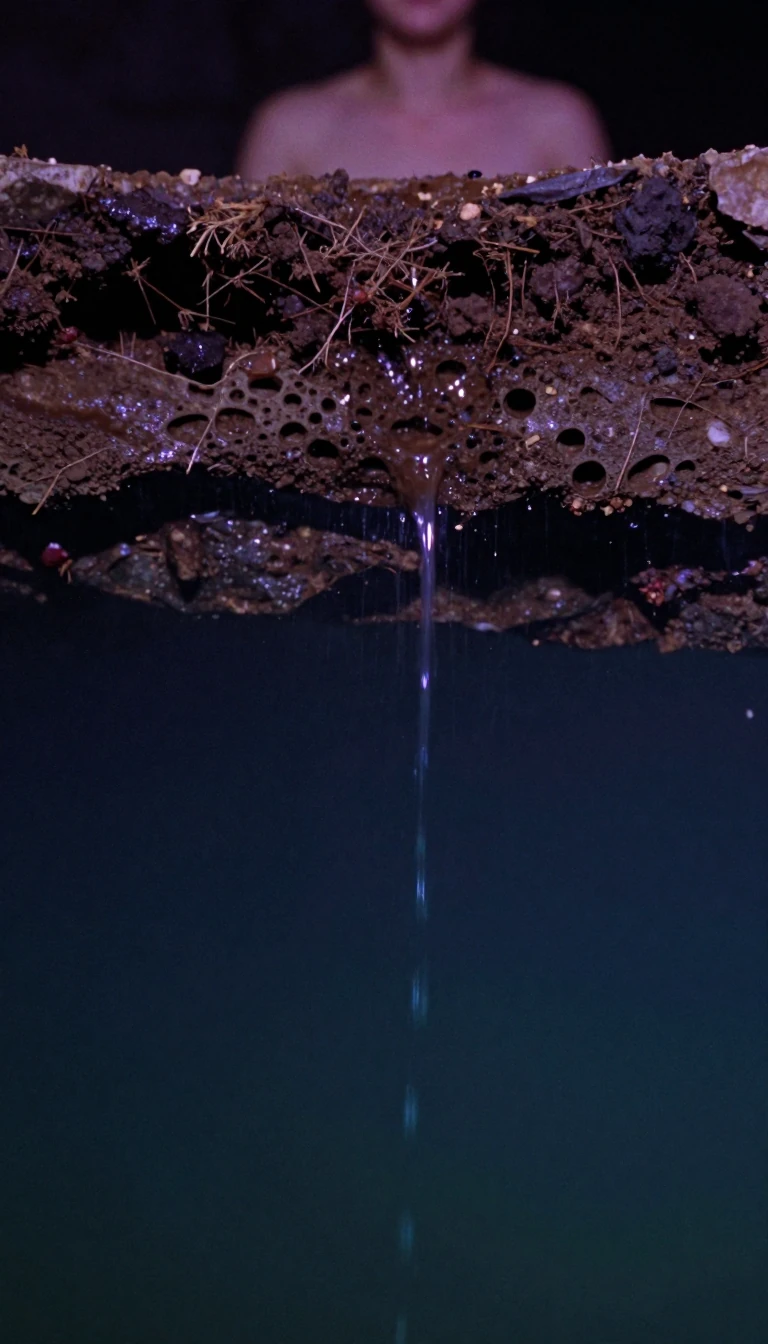 Why some wells flow freely without the need for a mechanical pumpAn artesian well taps into groundwater trapped under natural pressure, allowing water to rise to the surface without mechanical assistance. This phenomenon occurs when a well pene…
 Why some wind chimes sound like music while others just thudMost garden ornaments are victims of chance, but high-quality wind chimes are masterpieces of physics. By understanding how vibrations move through metal and wood, artisans can cr…
- Why Somerset Maugham’s 1915 masterpiece remains a profound meditation on the human conditionWidely considered his greatest work, W. Somerset Maugham’s Of Human Bondage is a semi-autobiographical journey through the life of Philip Carey. Born with a club foot and orphaned…
 Why Something Annoying Can Eventually Become FamiliarRepeated exposure can make things feel more likeable, but meta-analyses show the effect has limits, depends on conditions, and is only one of several forces, alongside novelty and…
 Why songwriting can be a powerful antidote to feeling aloneMusician Luke Sital-Singh performs his songs Afterneath and Killing Me, exploring themes of love, longing, and grief. He shares why he remains drawn to writing and listening to th…
 Why Sonic the Hedgehog traded cars for hoverboards in 2006In a departure from traditional racing tropes, Sonic Team decided that cars were too rigid for high-speed stunts. To capture the energy of extreme sports, they engineered a unique…
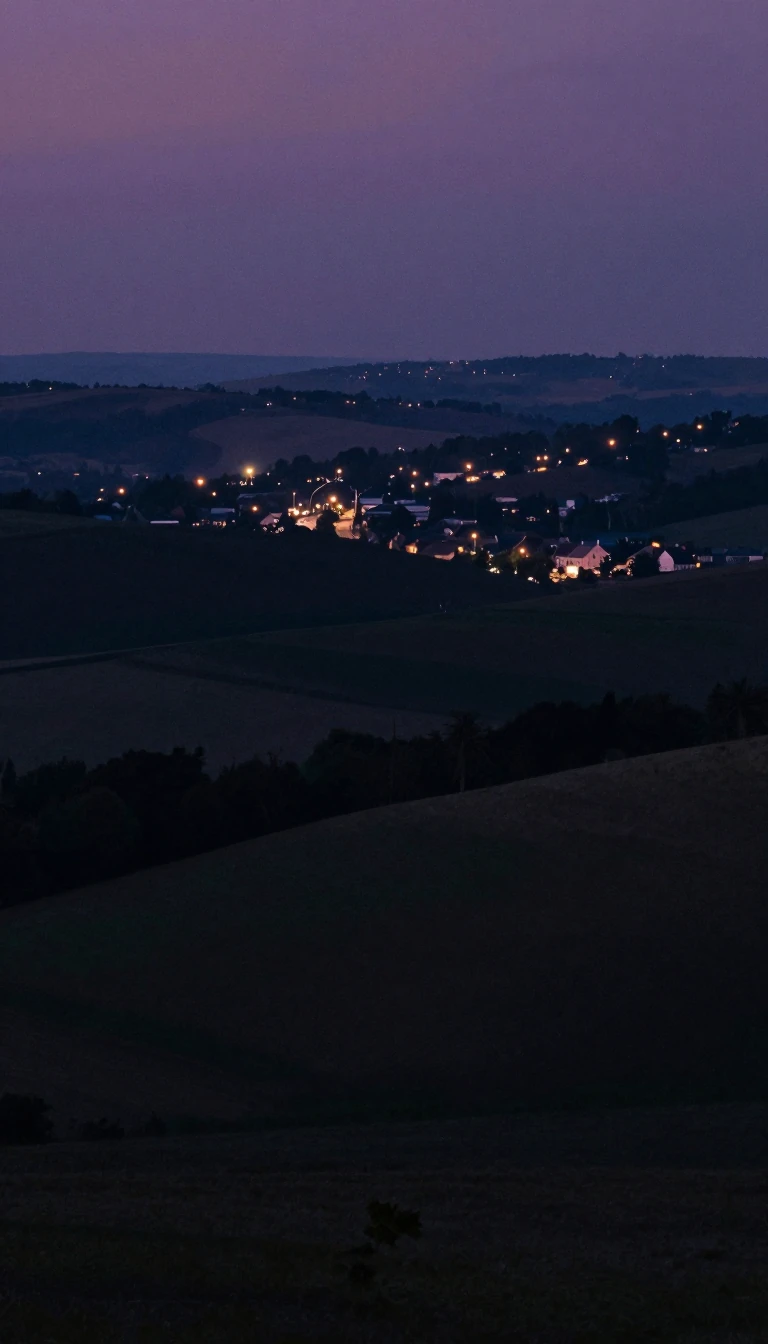 Why Sonoma County’s extreme microclimates make it a masterclass in agricultural diversitySonoma County is a land of dramatic atmospheric contrasts. From the fog-drenched coast to the scorching heat of Cloverdale, this California region packs an incredible range of mic…