 Intellect Plus
Cards starting with W
29,907 cards. Page 250 of 499.
 Why English word order is rigid while other languages let you scramble sentencesIn English, changing the order of words often destroys the meaning of a sentence. In highly inflected languages, however, word order is flexible because suffixes tell you exactly …
 Why English-speaking courts built so many rules about what a jury may hearA treatise on American evidence law by John Wigmore ran to ten volumes, and in 1898 James Bradley Thayer noted that even English lawyers found the American rules bewildering. That…
 Why Enlightenment thinkers used fairy tales to smuggle dangerous ideas past royal censorsUnder the absolute monarchy of Louis XIV, critical thought was a dangerous pursuit. To bypass strict censorship, philosophers like Voltaire invented the philosophical tale—a hybri…
 Why Ennio Morricone’s iconic western score sounds like a coyote howling in the desertThe soundtrack to The Good, the Bad and the Ugly redefined cinematic music in 1966. By blending unconventional sounds like gunfire, yodelling, and whistling with specific instrume…
 Why entertainment universes choose to wipe their own memoriesWhen a long-running franchise begins to feel stale, creators often reach for a radical solution: the reboot. By discarding decades of established continuity, studios can strip a s…
 Why entire functions are the most predictable yet wildest objects in complex analysisIn complex analysis, entire functions are defined by their smoothness across the entire plane. While they follow rigid rules—like Liouville's theorem, which forces bounded functio…
 Why entrepreneurs are obsessed with turning public goods into exclusive clubsDiscover how businesses transform accessible resources into profitable club goods. This video explains the economic distinction between nonrivalry and excludability, using example…
 Why envy is a uniquely destructive emotion that offers no promise of rewardEnvy is often mistaken for simple desire, but it is a far more corrosive force. While other vices offer the illusion of pleasure or security, envy delivers only bitterness. It is …
 Why enzymes are the silent architects controlling every chemical reaction inside your bodyEvery living organism relies on protein molecules called enzymes to govern its internal chemistry. These biological catalysts dictate the speed of vital reactions, such as digesti…
 Why Epiphany is the original celebration of Christ’s manifestation to the worldDerived from the Greek word for manifestation, Epiphany is one of the oldest Christian festivals. While Western traditions focus on the visit of the Magi, Eastern churches emphasi…
 Why equal pay for equal work remains a complex legal and economic challengeThe principle of equal pay for equal work seems straightforward, yet it has sparked decades of legislative battles, landmark court cases, and economic studies. From the industrial…
 Why equality is the perfect example of a symmetric mathematical relationshipIn mathematics, a relation is symmetric if the direction of the connection does not matter. If element A relates to element B, then B must relate back to A. While equality is the …
 Why equating price volatility with investment risk is a fundamental financial error.Investment theories frequently use volatility as a proxy for risk, but this approach contains significant flaws. This video examines why these common models misrepresent the true …
 Why equipment alone cannot bridge the gap for female athletesBeyond better gear and footwear, women athletes require a fundamental shift in medical support. This talk explores the necessity of a dedicated sports medical system designed spec…
 Why equitable budgeting is a prerequisite for economic efficiencyEconomist Maja Bosnic argues that public spending shouldn't just be about balancing books; it should be about fairness. This video explores how gender-responsive budgeting transfo…
 Why eradicating a disease is the ultimate gift to future generationsSmallpox remains the only human disease ever fully eradicated, but the blueprint for total victory exists. While polio and Guinea worm sit on the precipice of disappearance, the p…
 Why Erfurt’s medieval Jewish quarter is a unique survivor of European historyIn the heart of Erfurt, Germany, lies a rare collection of medieval structures that offer an intimate look at Jewish life centuries ago. Recently designated a UNESCO World Heritag…
 Why Erich von Stroheim’s masterpiece Greed remains the ultimate cinematic study of human instinctReleased in 1924, Greed is a landmark of naturalistic cinema. Director Erich von Stroheim adapted Frank Norris’s novel to explore how heredity and environment strip away morality,…
 Why Eritrea is often described as the North Korea of the African continent.This video examines the economic landscape of Eritrea, a nation characterized by a military dictatorship and a lack of free markets. It explores why the country struggles with sev…
 Why Ernest Hemingway called this 1946 noir the only good adaptation of his workThe 1946 film The Killers transformed a brief Hemingway short story into a definitive noir masterpiece. By expanding a twelve-minute opening into a complex, flashback-heavy invest…
 Why Ernest Hemingway refused to watch the 1952 adaptation of his own short storyThe Snows of Kilimanjaro was a massive commercial hit, earning $12.5 million and becoming the third highest-grossing film of 1952. Yet, despite the star power of Gregory Peck and …
- Why Ernest Hemingway Wrote Forty-Seven Different Endings for A Farewell to ArmsPublished in 1929, Hemingway’s masterpiece captures the existential disillusionment of the Lost Generation. Yet, the author famously struggled to find the right conclusion, obsess…
- Why Ernest Hemingway’s wartime masterpiece remains a permanent fixture of our cultural vocabularyPublished in 1940, this novel captures the brutal intensity of the Spanish Civil War through the eyes of an American explosives expert. Beyond its gripping narrative, the book int…
 Why Ernie Els, the Big Easy, remains a titan of professional golf historyNicknamed for his fluid swing and imposing stature, Ernie Els dominated global golf for decades. From his early rise in South Africa to becoming a four-time major champion, Els na…
 Why escaping into fantasy might be the key to solving realityJournalist and science fiction writer Annalee Newitz explores how immersive fiction and subcultures like "goblincore" offer more than just an escape. She argues that by stepping i…
 Why escaping into fantasy worlds might be the key to solving real-world problemsWhen global issues feel overwhelming, science fiction and whimsical subcultures like 'goblincore' offer more than just distraction. This talk explores how escapism can actually re…
 Why essential services like water and power are often managed as natural monopoliesPublic utilities provide the bedrock of modern life, from electricity to broadband. Because building massive infrastructure like power plants or pipelines is prohibitively expensi…
 Why establishing a universal legal limit for cannabis impairment remains scientifically elusiveWhile alcohol impairment is tied to clear legal limits, cannabis presents a unique challenge. This video explores why the way cannabis interacts with the human body makes defining…
 Why estimates of Brazil's Arab population vary by millions depending on who you askWhile government officials claim millions of Brazilians share Arab ancestry, independent surveys suggest the actual number is significantly lower. This discrepancy highlights the …
 Why Eswatini broke the alphabetical rule of the Geography Now seriesThe United Nations officially recognized the name change from Swaziland to Eswatini, prompting this series to deviate from its strict alphabetical order to explore the nation's de…
 Why Ethiopia is currently living seven to eight years behind the rest of the worldThe Ethiopian calendar is a solar system that operates on a unique thirteen-month cycle. Because it calculates the birth of Christ differently than the Gregorian standard, the cou…
 Why Ethiopia's Bale Mountains are a global hotspot for rare and endemic wildlifeSpanning over 215,000 hectares, Bale Mountains National Park protects Africa's largest Afromontane habitat. This high-altitude sanctuary in the Ethiopian Highlands is a treasure t…
 Why Ethiopia's flag colors became the symbol of Pan-African resistance and independenceThe green, yellow, and red tricolour of Ethiopia is more than a national banner; it is a global icon of anti-colonial defiance. Adopted after a historic military victory, these co…
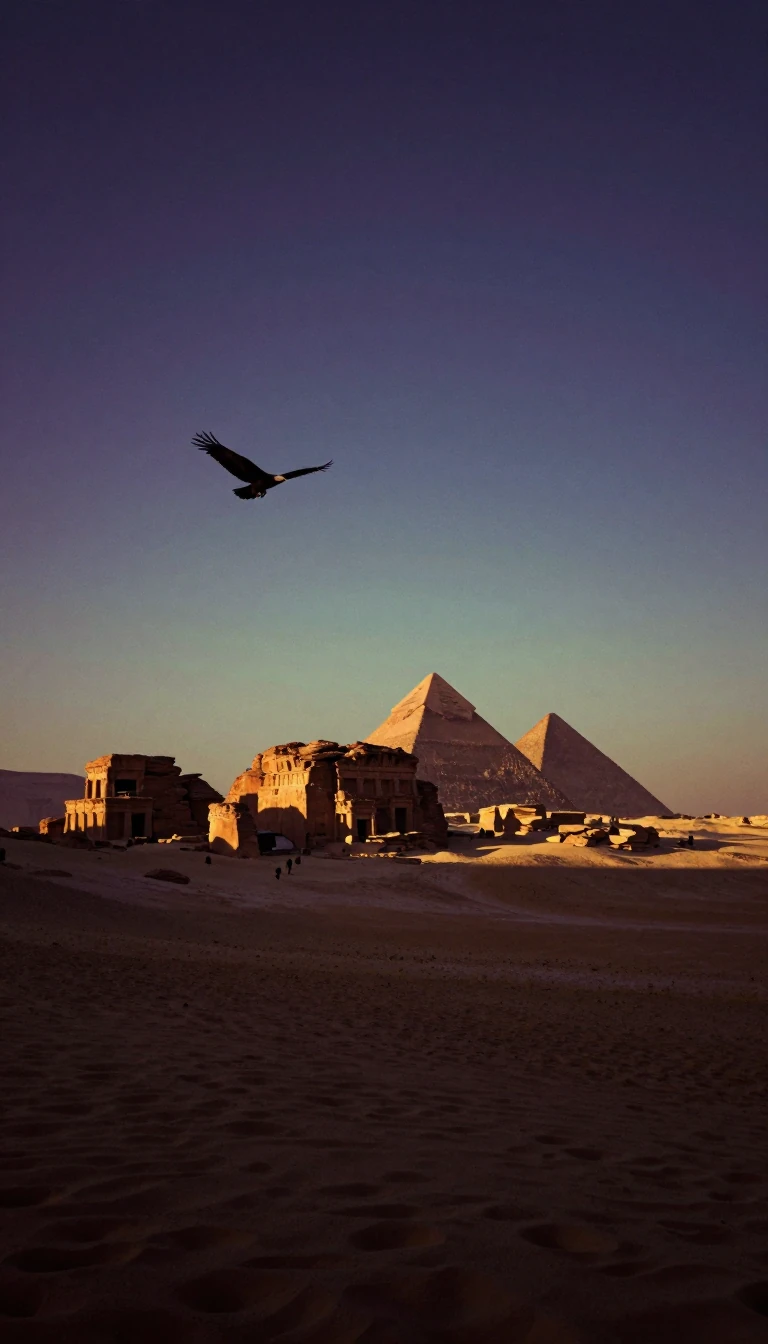
 Why Ethiopia’s mysterious Tiya monoliths are still rewriting the history of ancient burial sitesDeep in Ethiopia’s Gurage Zone lies Tiya, an archaeological site defined by 46 massive, intricately carved stone pillars. While long attributed to local legends, these enigmatic m…
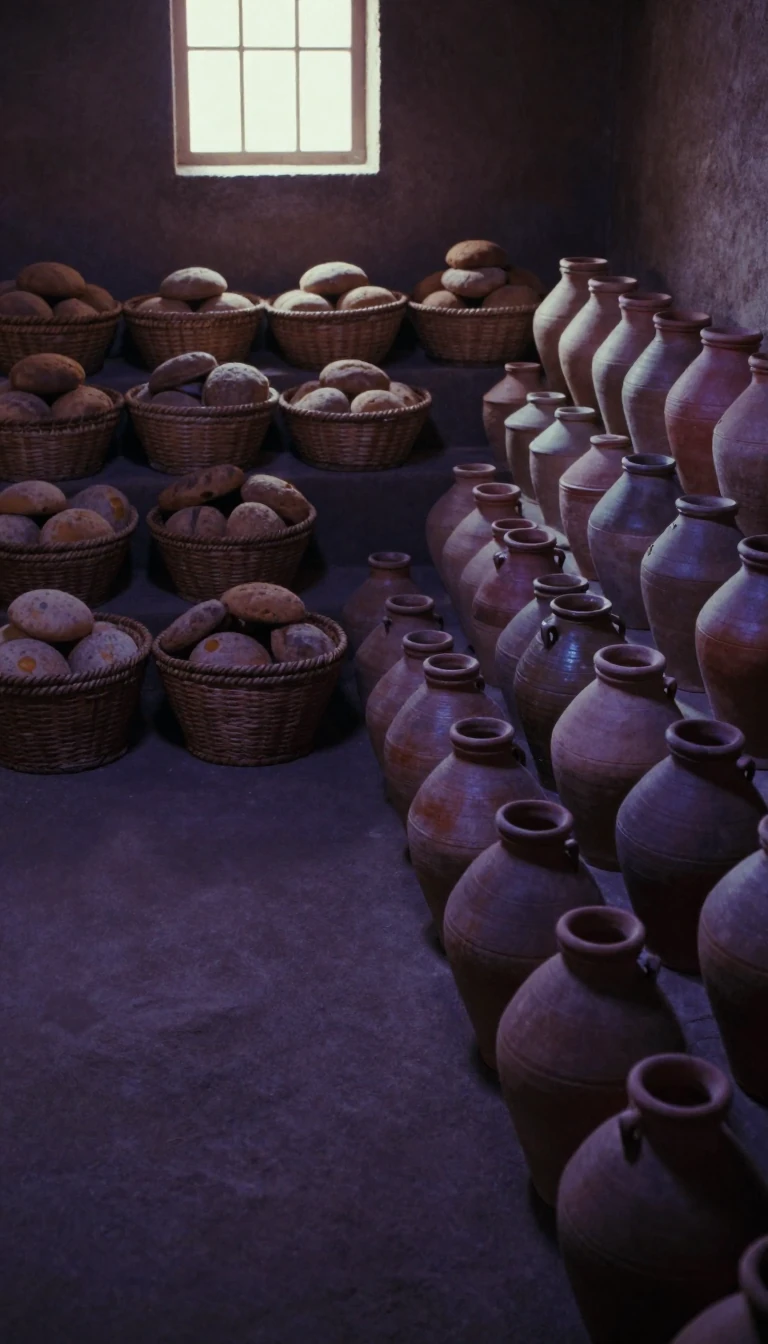 Why Ethiopian cuisine relies on a sourdough flatbread as both plate and utensilEthiopian dining is a communal experience centered on injera, a tangy, fermented sourdough flatbread made from ancient teff grain. Serving as both the base for spicy stews and the…
 Why ethnic media is more than just news for minority communitiesEthnic media serves as a vital bridge for minority groups, offering content that ranges from news and radio to religious expression and music. While often marginalized by mainstre…
 Why Euclid's 2300-year-old algorithm remains the gold standard for computing divisorsThis lecture introduces the fundamentals of constructive mathematics through the lens of algorithms. By examining Euclid's ancient method for finding greatest common divisors, stu…
 Why Euclid's Fifth Postulate is the Original Example of an Undecidable Mathematical ProblemWe often associate undecidability with modern computing, but the concept has roots in ancient geometry. Professor Brailsford explores how Euclid's fifth postulate challenged mathe…
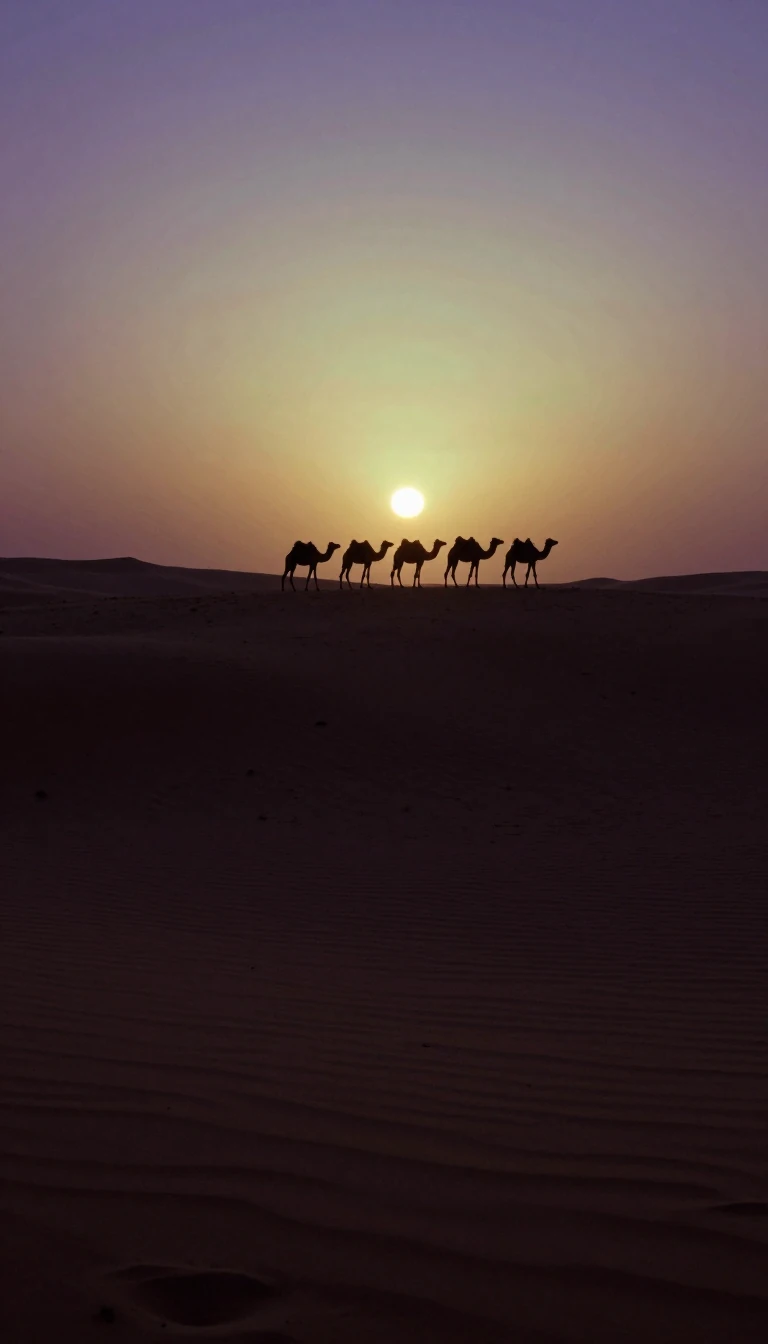 Why Eurasian nomads left behind almost no architecture for historians to study todayThe vast Eurasian Steppe was home to powerful nomadic confederations for millennia, yet they left few permanent structures. Because their survival depended on constant mobility to…
 Why Europe built its most powerful telescopes in the remote Chilean AndesTo unlock the secrets of the southern sky, European astronomers bypassed their own continent to build a massive observatory in Chile. Today, this intergovernmental powerhouse oper…
 Why Europe built its own satellite network to escape American military controlGalileo is the European Union's independent answer to GPS. Designed for civilian use, it provides high-precision positioning without the risk of being disabled by foreign military…
 Why Europe faces a temporary gap in its independent space launch capabilitiesThe retirement of the Ariane 5 rocket leaves Western Europe without its primary means of reaching orbit. With the Ariane 6 not yet ready, the Vega-C grounded, and the Soyuz no lon…
 Why Europe is a mosaic of 160 distinct cultures rather than a monolithEurope is defined not by a single identity, but by a dense, ancient patchwork of 160 distinct cultural groups. Shaped by geography and long-standing territorial boundaries, these …
 Why Europe is fighting for independent access to the starsAs the global commercial satellite market grows more competitive, the European Space Agency's upcoming ministerial meeting in Luxembourg will decide the future of Europe's launch …
 Why Europe was the last continent to launch its own Olympic-style multi-sport gamesWhile other continents established their own regional Olympic traditions decades ago, Europe only joined the movement in 2012. Governed by the European Olympic Committees, these g…
 Why Europe's largest glacier relies on heavy snowfall rather than freezing temperaturesSpanning 487 square kilometres in Western Norway, the Jostedal Glacier is a massive ice formation that defies simple expectations. While many assume glaciers are purely products o…
 Why Europe's map is a moving target that defies simple geographical bordersEurope is the world's second-smallest continent, yet its borders are notoriously fluid. There is no universal agreement on where one region ends and another begins. From Cold War …
 Why Europe’s religious map is a mirror of its ancient imperial bordersEurope’s spiritual landscape is not random. It is a fossilized record of Roman administrative divisions, medieval schisms, and 16th-century rebellions. Today, the continent remain…
 Why Europe’s Third-Tier Football Tournament Is More Than Just A Consolation PrizeLaunched in 2021, the UEFA Conference League provides a vital stage for clubs from lower-ranked European associations to compete internationally. While it sits below the Champions…
 Why European art evolved from prehistoric cave paintings to the Renaissance and beyondEuropean art is a vast, evolving narrative that spans from the Upper Paleolithic era to the modern age. By tracing the shift from religious iconography to secular realism, we unco…
 Why European astronauts must master Japanese space technologySpace exploration is a global relay. While many see astronauts training in Russia or the US, a critical piece of the puzzle involves the Japanese Aerospace Exploration Centre.
 Why European astronauts must master Japanese technology to live in orbitSpace exploration is a global relay of expertise. Watch as ESA astronauts Andreas Mogensen and Thomas Pesquet travel to Japan to master the specific systems required for life on t…
 Why European clocks lagged behind while British timepieces remained perfectly synchronizedA recent power grid anomaly caused clocks across Europe to lose time. This video explores the technical reasons behind the drift and why British clocks were unaffected, all while …
 Why European dominance defines the history of the IHF World Men's Handball ChampionshipSince its inception in 1938, the IHF World Men's Handball Championship has evolved from a modest four-team European tournament into a global spectacle. While the format has shifte…
 Why European Nobles Risked Their Lives to Settle Disputes With Swords and PistolsDueling was once the ultimate arbiter of honor, transforming petty slights into lethal confrontations. From the judicial combat of the medieval era to the pistol-wielding aristocr…
 Why European powers treated the American Civil War as a live military laboratory.European leaders watched the American Civil War not just as a regional conflict, but as a testing ground for the future of warfare. This video examines how observers from Britain,…
 Why Europeans risked everything to sail into the unknown during the Age of DiscoveryEuropeans did not set out to find new lands; they were desperate for new routes to Asia. With traditional overland trade paths blocked by the crumbling Mongol Empire and Mediterra…
 Why Eurovision Young Musicians is the most unpredictable stage in classical musicWhile the flagship Eurovision Song Contest captures global headlines, its classical sibling, Eurovision Young Musicians, has quietly shaped European culture since 1982. This bienn…
 Why EVE Online hosts one of the most realistic economies in digital historyBeyond its reputation for massive space battles and elaborate betrayals, EVE Online features a remarkably complex, player-driven economic system. This video examines how a virtual…
 Why even a professional mathematician admits to making mistakes in his own workMatt Parker, a stand-up mathematician, reflects on the errors found in his content. This video serves as a candid look at the reality of content creation, where even experts can m…