Can architecture and art physically manifest our deepest psychological fears and internal mental states?
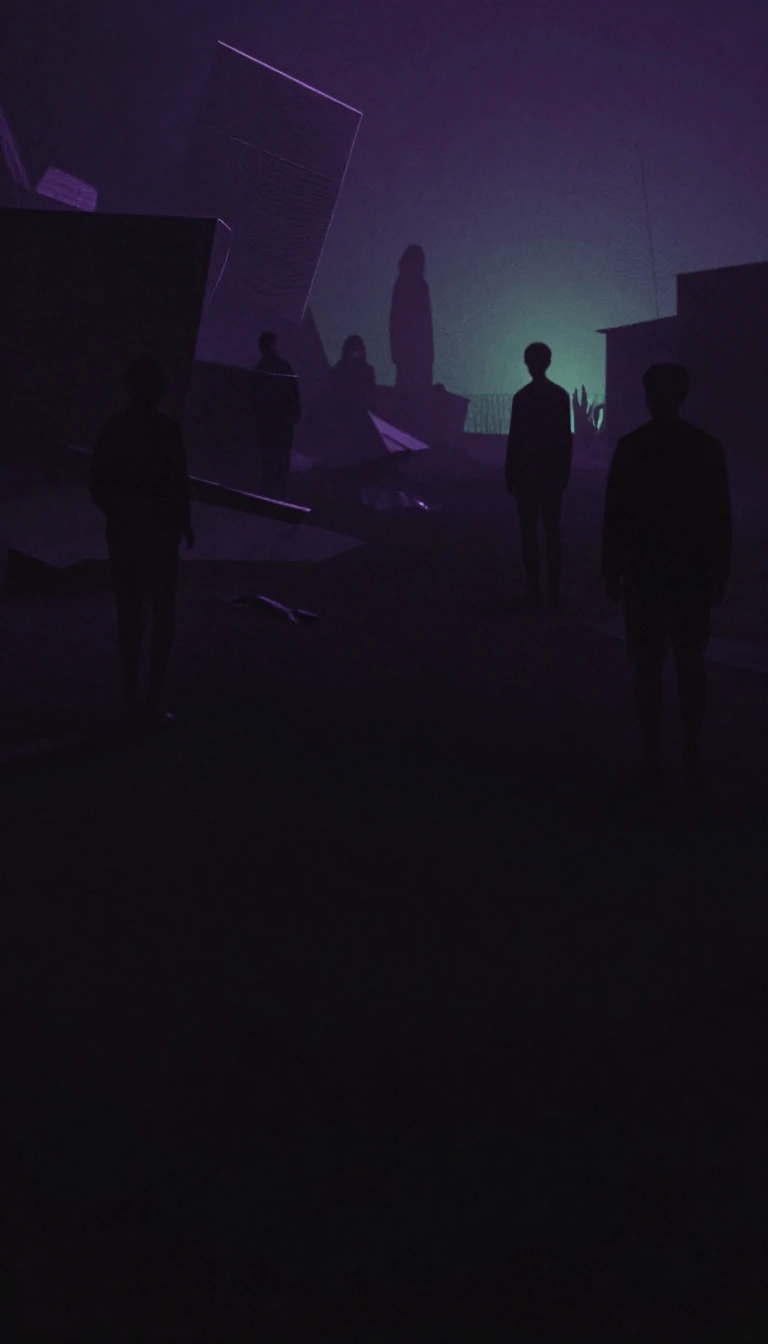
In short: Surrealist painter Roberto Matta believed that our environment should not be dictated by rational utility, but by the fluid, shifting nature of human desire. By merging geometry with the psyche, he sought to create spaces that pulse and transform, mirroring the unstable, often terrifying architecture of our own inner lives.
In the late 1930s, Chilean artist Roberto Matta introduced the concept of psychological morphology to the Surrealist movement. Rejecting the rigid, utilitarian structures of the physical world, Matta proposed that spaces and objects should be formed by human psychological needs. He famously argued for walls that act like wet sheets, losing their fixed form to better accommodate and wed our deepest psychological fears. This approach was not merely abstract; it was a deliberate attempt to visualize the internal mental landscapes he called inscapes.
Matta’s work was deeply informed by a synthesis of scientific and mystical influences. He drew inspiration from Albert Einstein’s General Theory of Relativity and the Russian philosopher P. D. Ouspensky, whose work Tertium Organum explored the perception of four-dimensional space and cosmic consciousness. By blending these intellectual frameworks with a fascination for mathematical objects, Matta sought to capture a graphic art of transformations. In his view, the object was in a constant state of flux, oscillating between extremes like light and shadow, attraction and repulsion, or past and future.
This artistic pursuit mirrors the broader mechanisms of psychological horror, a genre that prioritizes mental conflict over physical monsters. While traditional horror might rely on tangible threats, psychological horror often utilizes unreliable narrators, paranoia, and the distortion of reality to unsettle the audience. By exposing the archetypal shadow—those repressed parts of the human psyche involving distrust and self-doubt—the genre forces a confrontation with the irrational. Matta’s paintings, such as his 1938 work Psychological Morphology, serve as a visual parallel to this experience, where the canvas becomes the only place where these mental universes can truly come into being, free from the constraints of rational logic.
Opens the Intellect+ feed with this card first. Swipe up for the next one.
Sources
- Summary by Intellect · source: Untitled (Psychological Morphology)
- Also: Psychological horror
- Also: Psychological Morphology
To cite this card, link to https://intellectplus.co.uk/app/art-psychological-horror.
How we source, check and correct cards: Editorial standards.
General information, not professional advice. Spotted an error? Flag the card or see corrections and complaints.
Intellect Plus is a visual educational discovery platform for exploring fascinating facts and ideas. Brain Food, Not Brain Rot. What is Intellect Plus?
Related
More in Concepts of fiction and narrative · More in Art · Latest · A–Z · All topics
