Why American artists used paint to protest the harsh realities of the Great Depression
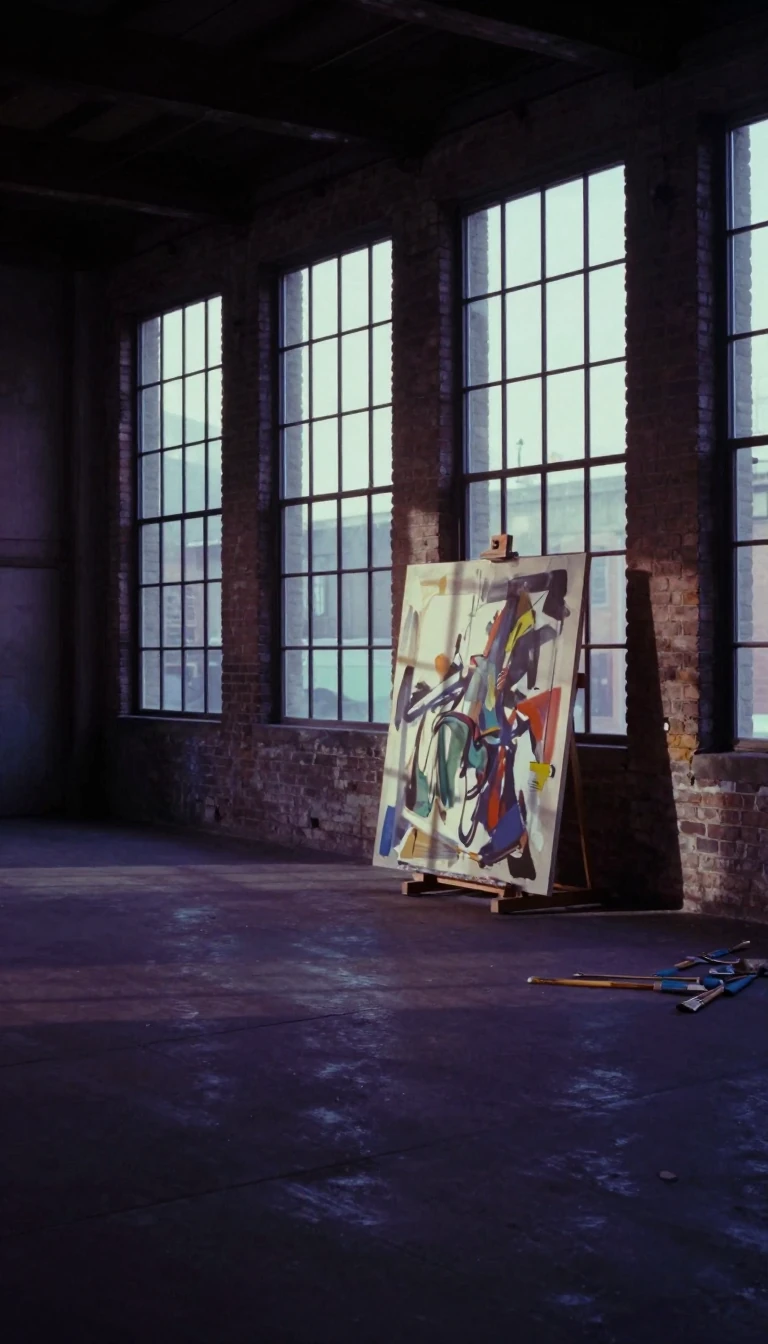
In short: In the 1930s, American art shifted from romanticized landscapes to biting social commentary. Fueled by economic collapse and federal patronage, artists used their canvases to expose poverty, political corruption, and labor injustice. This movement, known as Social Realism, turned the gallery into a stage for the struggles of everyday people.
Social Realism emerged in the United States around 1930, evolving from the gritty urban observations of the early 20th-century Ashcan School. While painters like Robert Henri and John Sloan had previously documented the unglamorous realities of city life, the onset of the Great Depression in 1929 pushed artists toward a more aggressive, politically charged style. This shift was bolstered by New Deal programs, such as the Works Progress Administration and the Public Works of Art Project, which commissioned artists to decorate public buildings with murals depicting American life.
The movement was deeply influenced by Mexican muralists like Diego Rivera and David Alfaro Siqueiros, whose work often carried overt propagandistic messages. American artists such as Ben Shahn, William Gropper, and Jack Levine utilized this influence to create scathing critiques of society. For instance, Shahn’s 1931–32 painting, The Passion of Sacco and Vanzetti, served as a bitter indictment of a politically motivated trial, while Gropper’s The Senate (1935) used simplified caricature to mock public life. These works were distinct from the Regionalist movement, which included artists like Grant Wood and Thomas Hart Benton; while Regionalists also focused on everyday life, their approach was generally romanticized and avoided explicit social protest.
The movement also grappled with the boundaries of inclusion. Ben Shahn’s 1940 work, Contemporary American Sculpture, highlights this tension by blending reality with fiction. By inserting photographs of working-class people into a depiction of a high-end gallery exhibition, Shahn illustrated how race, class, and geography often excluded ordinary citizens from the elite spaces of the art world. Although the movement began to fade by the 1960s, its legacy remains a significant chapter in American history, marking a period when art was explicitly weaponized to hold governmental and social systems accountable for the suffering of the common person.
It is important to distinguish this American movement from 'socialist realism,' the official, state-mandated art form institutionalized by Joseph Stalin in 1934. While both terms are sometimes used interchangeably, Social Realism in the American context was a diverse, often independent response to domestic hardship, rather than a top-down ideological mandate.
Opens the Intellect+ feed with this card first. Swipe up for the next one.
Sources
- Summary by Intellect · source: Social Realism | Painting, Origins, Techniques & Examples | Britannica
- Also: Social realism
- Also: Contemporary American Sculpture
To cite this card, link to https://intellectplus.co.uk/app/art-social-realism.
How we source, check and correct cards: Editorial standards.
General information, not professional advice. Spotted an error? Flag the card or see corrections and complaints.
Intellect Plus is a visual educational discovery platform for exploring fascinating facts and ideas. Brain Food, Not Brain Rot. What is Intellect Plus?
Related
More in Visual arts · More in Art · Latest · A–Z · All topics
