Is this crumbling Kowloon tower the most globalized building on the planet?
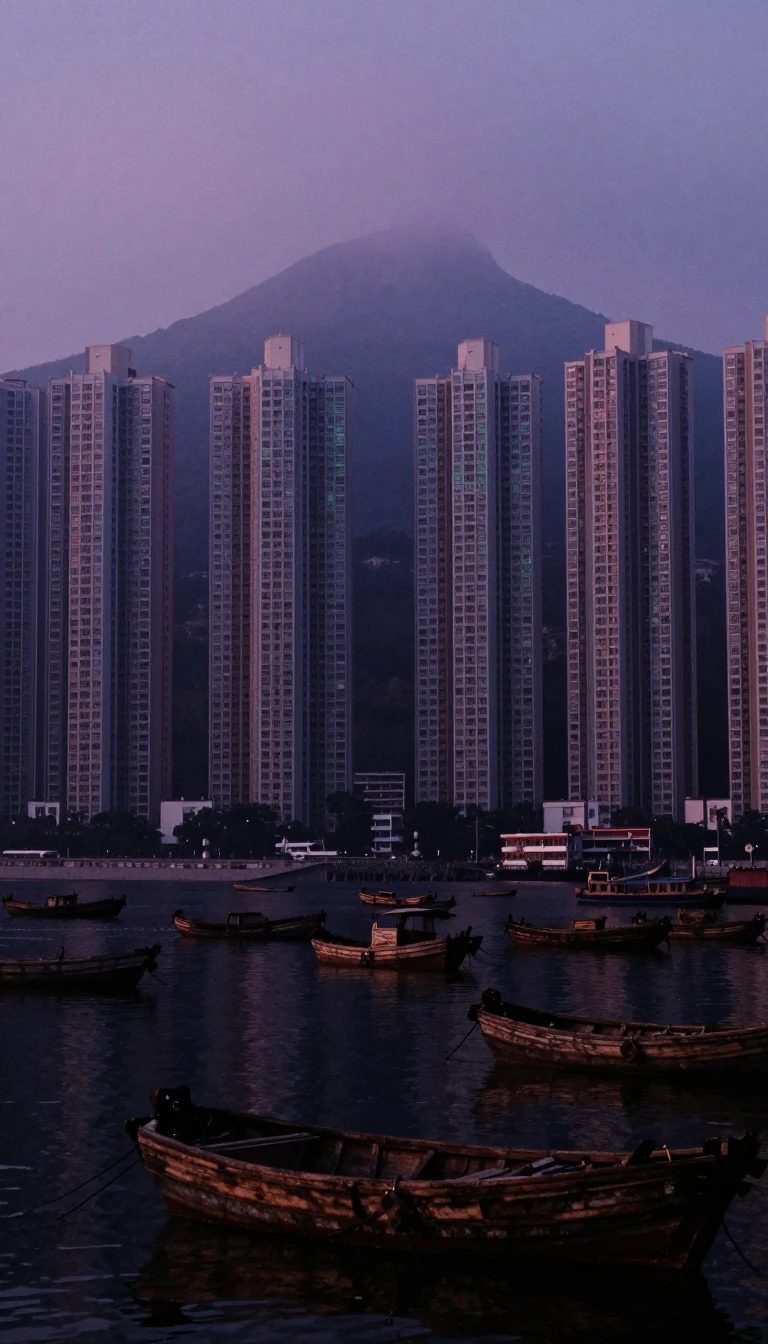
In short: Standing on prime Hong Kong real estate, Chungking Mansions is a chaotic, seventeen-storey labyrinth of guesthouses and import-export stalls. Once a site of wartime peril, it has evolved into a multicultural hub where thousands of residents from over 120 nationalities converge, defying its reputation as a dangerous, gritty urban relic.
Completed in 1961 on Nathan Road, Chungking Mansions was developed by Jaime Tiampo, a Chinese-Filipino immigrant who financed the project by selling individual units off the plan. This decentralized ownership model created a unique, fragmented structure of five interconnected blocks. Today, the building serves as a vital node in global trade, with anthropologist Gordon Mathews estimating that up to 20 percent of mobile phones used in sub-Saharan Africa have passed through its corridors. It is a place where budget backpackers share space with wholesalers shipping goods to South Asia and Africa, earning it the title of the 'unofficial African quarter' of Hong Kong.
The building’s history is marked by both physical and social volatility. During the Japanese occupation of 1941–1945, the site—then a shopping arcade—was bombed by the Allies; a 500-pound unexploded device was only discovered during the construction of the current towers in 1959. In later decades, the complex gained a notorious reputation for crime, fire hazards, and unsanitary conditions, leading to multiple government-mandated renovations. Security has since been tightened, with 330 CCTV cameras installed by 2013 to monitor the majority of its public spaces.
Despite its gritty image, the building has become a symbol of cultural resilience. In 2007, Time magazine named it the 'Best Example of Globalization in Action.' Its public perception shifted significantly after 2019, when ethnic minority residents organized community support efforts during local protests. Today, the building is frequently celebrated in literature and film, from Wong Kar-wai’s 1994 classic Chungking Express to Michael Connelly’s description of it as a 'post-modern Casablanca.' Far from being just a relic of the past, it remains a living, breathing testament to the diverse, transient nature of modern urban life.
Opens the Intellect+ feed with this card first. Swipe up for the next one.
Sources
- Summary by Intellect · source: Chungking Mansions
To cite this card, link to https://intellectplus.co.uk/app/culture-chungking-mansions.
How we source, check and correct cards: Editorial standards.
General information, not professional advice. Spotted an error? Flag the card or see corrections and complaints.
Intellect Plus is a visual educational discovery platform for exploring fascinating facts and ideas. Brain Food, Not Brain Rot. What is Intellect Plus?
Related
More in Festivals & celebrations · More in Cultures · Latest · A–Z · All topics
