Why the crossroads has always been a gateway between worlds
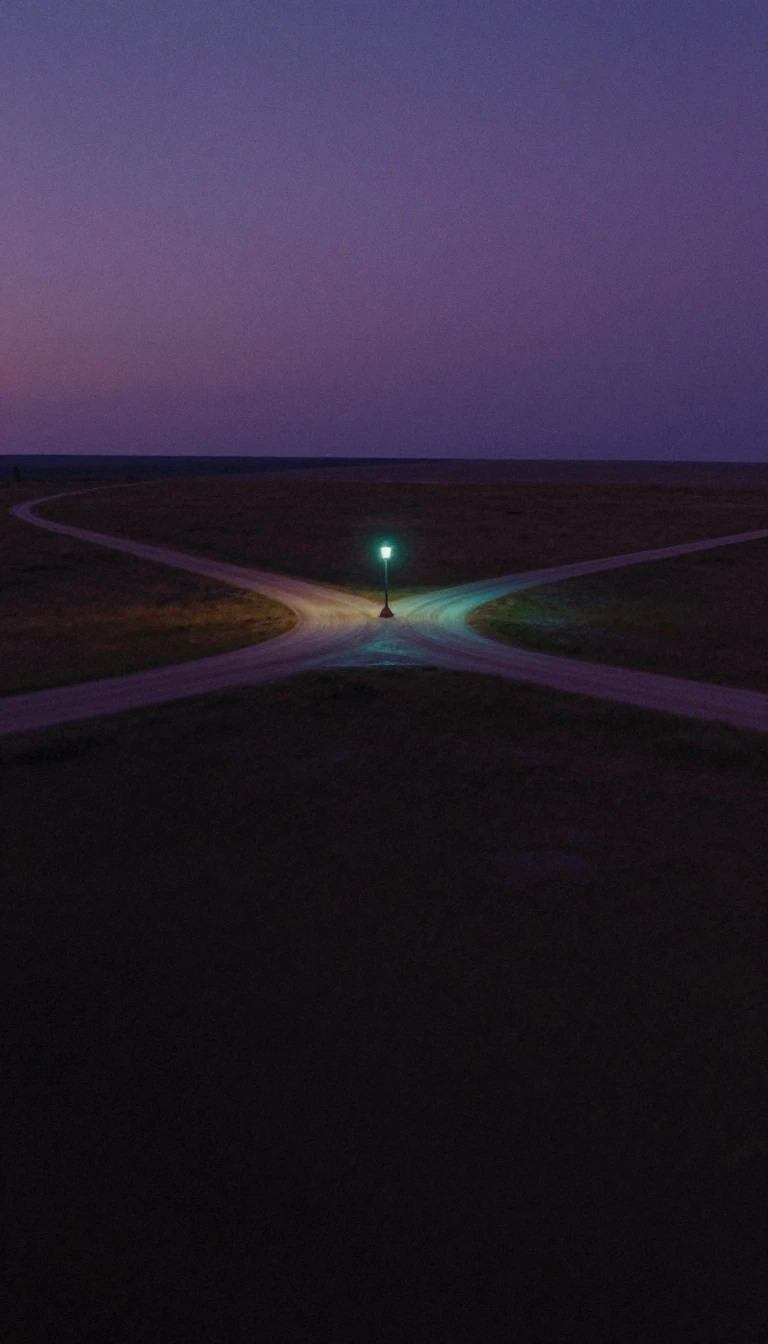
In short: From ancient Greek rituals to the legends of the American Blues, the crossroads is more than a simple intersection. It is a liminal space—a place 'neither here nor there' where the boundary between the living and the supernatural becomes thin enough to cross.
In folklore, the crossroads represents a site of profound transition. To the ancient Greeks, specific junctions like the triodia (three-way) or tetraodia (four-way) were sacred domains. The god Hermes, associated with travelers, often marked these spots with herm pillars, while the goddess Hecate was venerated through 'Suppers of Hecate' left at junctions during the new moon. These rituals were not merely symbolic; they were functional attempts to manage change, as crossroads, like rivers and gates, were believed to hold spiritual significance regarding physical and spiritual transitions.
This concept of the crossroads as a site of contact persists across diverse traditions. In the Kongo-Atlantic world, the crossroads stems from the Bakongo cosmogram, representing the human life cycle of death and rebirth and the intersection of ancestors and the living. Similarly, in West African Yoruba traditions, the trickster deity Eshu-Elysba resides at these junctions. In the Americas, these beliefs evolved into Hoodoo and Vodou, where figures like Papa Legba serve as messengers to the spirit world.
However, the crossroads also holds darker, more earthly histories. In Great Britain, from Anglo-Saxon times until 1823, crossroads were used as burial sites for criminals and suicides, partly to keep the deceased outside the settlement or to confuse their spirits. In Western mythology, the intersection is a place of bargains, such as the 1587 account of Faust summoning the devil. While legends suggest blues musician Robert Johnson sold his soul at a crossroads to master the guitar, his family and historians note he actually learned his skill through training under guitarist Ike Zimmerman.
Opens the Intellect+ feed with this card first. Swipe up for the next one.
Sources
- Summary by Intellect · source: Crossroads (folklore)
To cite this card, link to https://intellectplus.co.uk/app/culture-crossroads-folklore.
How we source, check and correct cards: Editorial standards.
General information, not professional advice. Spotted an error? Flag the card or see corrections and complaints.
Intellect Plus is a visual educational discovery platform for exploring fascinating facts and ideas. Brain Food, Not Brain Rot. What is Intellect Plus?
Related
More in Traditions & customs · More in Cultures · Latest · A–Z · All topics
