How a humble folk fiddle evolved into the undisputed leader of the modern orchestra
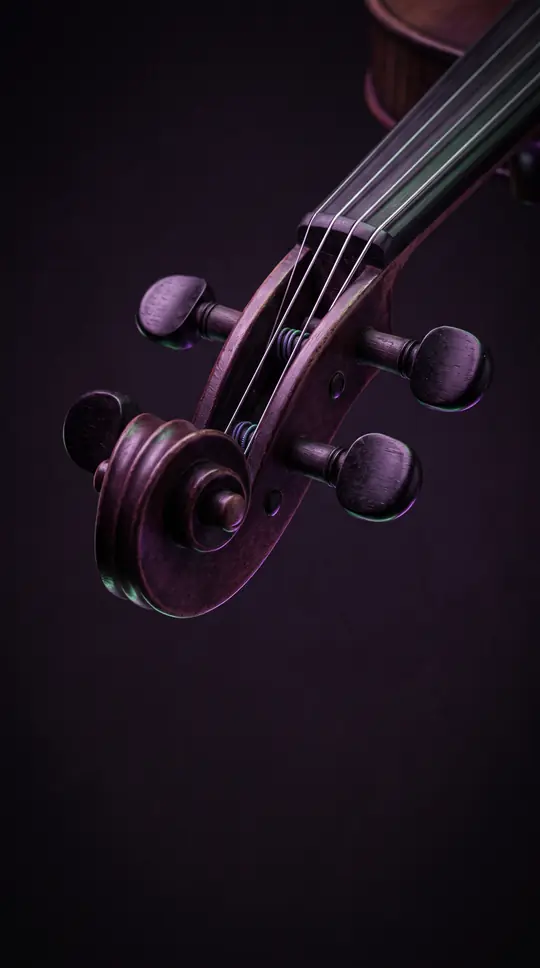
In short: Before it commanded the concert hall, the violin was a democratic instrument played by commoners and nobles alike. Emerging from a complex lineage of ancient stringed ancestors, it was perfected by Italian masters in the 16th century, eventually becoming the essential voice that coordinates every other instrument in the orchestra.
The modern violin did not appear overnight; it was the result of a gradual evolution from various stringed instruments. Its DNA includes the pear-shaped lira, which appeared in Europe by the 9th century, and the Arabian rabab, introduced to the West in the 11th century. By the 13th century, the three-stringed rebec and the French vielle were widely used by troubadours for accompaniment. These early instruments provided the foundation for what would eventually become a standardized, four-stringed masterpiece in northern Italy during the early 16th century.
Cremona became the epicenter of this craft, thanks to the availability of maple and spruce in the Lombardy region. Andrea Amati, a master craftsman who established a workshop in 1539, is credited with defining the violin's basic construction. His instruments featured a wooden sound box with two F-shaped apertures and four strings tuned to perfect fifths. This design was so successful that it was adopted by his sons and later refined by his grandson, Nicolò, who mentored legendary luthiers like Antonio Stradivari and Andrea Guarneri.
As the violin moved from folk settings to the royal court, its role expanded significantly. In the 17th century, composers like Claudio Monteverdi integrated it into orchestral compositions, while later virtuosos such as Antonio Vivaldi and Niccolò Paganini pushed the instrument to new heights of prominence. Technical innovations, such as the creation of the modern bow by François Tourte around 1786 and the 19th-century addition of the chin rest, further enhanced the instrument's range and playability. Today, the first chair violinist, or concertmaster, serves as the orchestra's leader, responsible for tuning the ensemble and coordinating the string section's performance.
While the violin's rise is well-documented, its exact origins remain a subject of historical nuance. Early depictions, such as those by Gaudenzio Ferrari in the 1530s, show instruments with three strings, differing slightly from the modern four-stringed version. Whether the bow itself originated in the Middle East or developed independently across Europe remains debated among historians. Regardless, the violin's ability to evoke diverse moods—from the playful to the somber—has secured its status as the world's most popular instrument.
Opens the Intellect+ feed with this card first. Swipe up for the next one.
Sources
- Summary by Intellect · source: A Brief History of the Violin | National Geographic
- Also: History of the violin
To cite this card, link to https://intellectplus.co.uk/app/culture-history-of-the-violin.
How we source, check and correct cards: Editorial standards.
General information, not professional advice. Spotted an error? Flag the card or see corrections and complaints.
Intellect Plus is a visual educational discovery platform for exploring fascinating facts and ideas. Brain Food, Not Brain Rot. What is Intellect Plus?
Related
More in Education · More in Cultures · Latest · A–Z · All topics
