Why medieval architects pushed stone to its breaking point with the soaring church spire
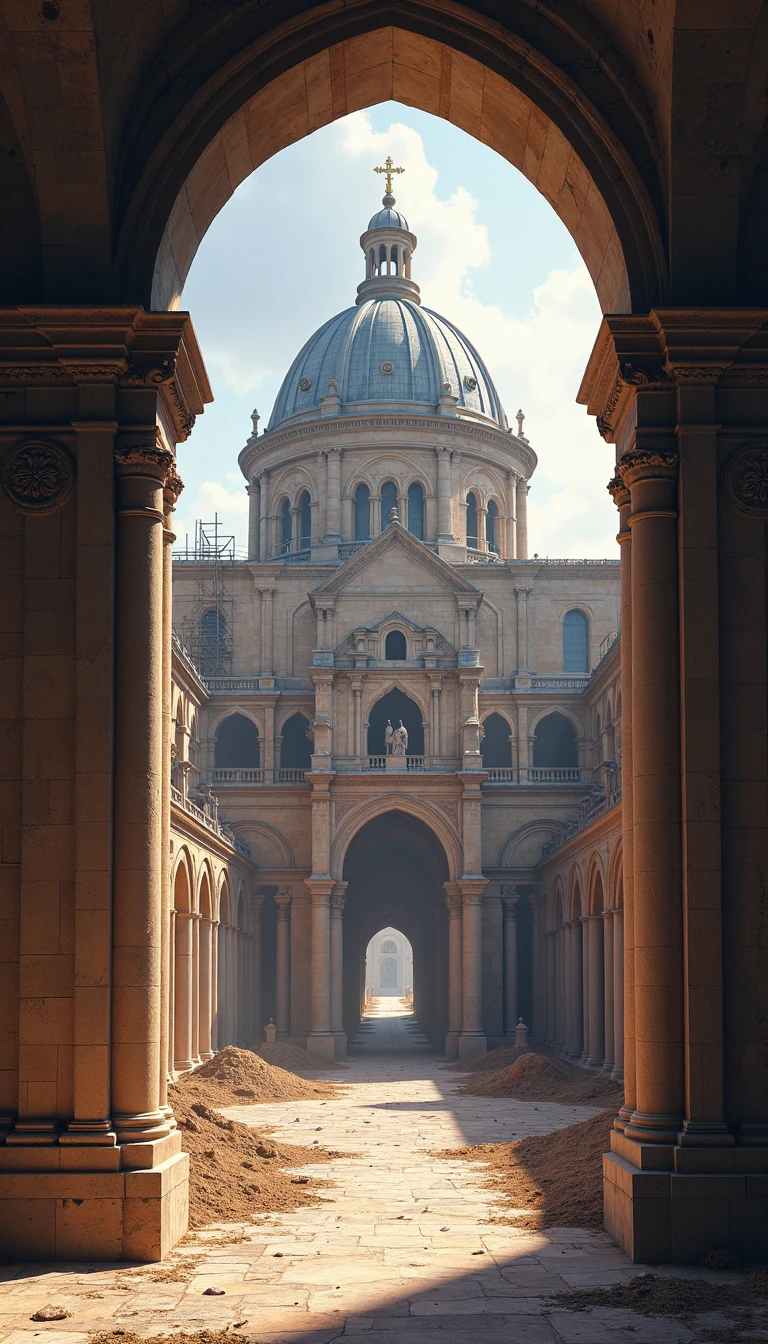
In short: The spire is more than a decorative peak; it is a structural marvel born from the Gothic desire to reach toward the heavens. From the delicate, timber-framed flèche to the massive, wind-defying masonry of cathedrals, these slender towers represent a centuries-long engineering struggle against gravity, collapse, and the elements.
Originating in the 12th century as simple, four-sided pyramidal structures, spires evolved into complex architectural statements. While early designs were modest, the Gothic ambition for height led to increasingly slender and ornate forms. Builders utilized techniques like the broach—a pyramidal transition—to bridge the gap between square towers and octagonal spires. By the late 13th century, structures like Freiburg Minster reached heights of 385 feet, pushing the limits of what stone could support.
The quest for height came with significant risks. Spires were notoriously fragile in high winds, leading to the collapse of iconic structures such as Lincoln Cathedral’s spire, which stood as the world's tallest building for 238 years between 1311 and 1548. Salisbury Cathedral, completed in 1320, remains the tallest masonry spire in the world at 404 feet, but only survived through the addition of buttresses, arches, and tie irons. Later, in 1668, Christopher Wren introduced reinforcing beams to halt the structure's deformation.
Architects eventually moved toward skeletal, openwork designs, using iron cramps to hold pierced stonework together, which allowed for even greater heights. Beyond their structural ingenuity, spires served as potent symbols. Their resemblance to spear points suggested the strength of religion, while their extreme verticality embodied the heavenly aspirations of their builders. Today, these structures remain a testament to the intersection of faith and physics, from the historic flèches of Notre-Dame to the ongoing completion of Antoni Gaudi’s spires at the Sagrada Família.
The evolution of the spire also reflects a competitive spirit among cities and denominations. Ulm Minster, for instance, reached a height of 530 feet specifically to surpass the Catholic Cologne Cathedral. Whether constructed of brick, stone, or lead-clad timber, the spire remains one of humanity's most enduring attempts to physically manifest the infinite.
Opens the Intellect+ feed with this card first. Swipe up for the next one.
Sources
- Summary by Intellect · source: Spire
To cite this card, link to https://intellectplus.co.uk/app/design-spire.
How we source, check and correct cards: Editorial standards.
General information, not professional advice. Spotted an error? Flag the card or see corrections and complaints.
Intellect Plus is a visual educational discovery platform for exploring fascinating facts and ideas. Brain Food, Not Brain Rot. What is Intellect Plus?
Related
More in Architecture · More in Design · Latest · A–Z · All topics
