Can we feed a growing planet without destroying the last of our wild spaces?
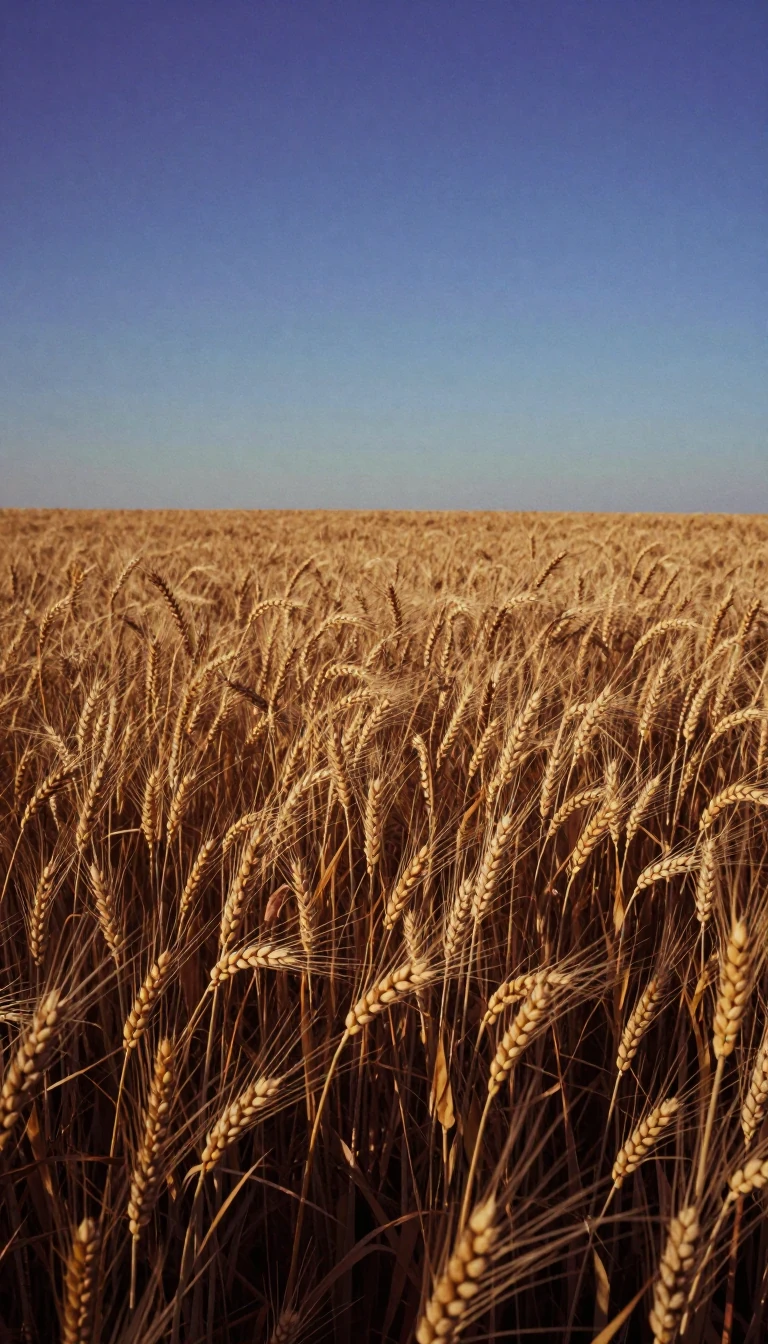
In short: Global demand for agricultural commodities is set to surge by up to 100% by 2050. To meet this, we face a stark choice: expand farmland into natural habitats or intensify production on existing soil. Both paths threaten global biodiversity, forcing a critical 21st-century trade-off between food security and conservation.
Humanity has long reshaped the Earth to sustain itself, with farmlands now covering 38% of the global land surface. While the pace of production growth is slowing, the inexorable rise in demand for food, fiber, and energy—driven by population growth and changing consumption patterns—creates immense pressure on farming systems. Agriculture remains the primary driver of global biodiversity loss, as expansion into uncultivated areas causes habitat fragmentation, while intensification homogenizes landscapes through irrigation and heavy chemical inputs.
Researchers are now using integrated modeling to map these pressures. By combining biophysical constraints—such as soil quality, topography, and climate change—with socio-economic drivers like GDP and population growth, scientists can simulate the potential impacts of 17 major crops. These crops, which account for 73% of global production, serve as a proxy for understanding how future agricultural pathways will affect nearly 20,000 species of mammals, birds, and amphibians. The goal is to identify biodiversity hotspots where agricultural encroachment poses the greatest risk.
The challenge is that expansion and intensification are often studied in isolation, ignoring the complex feedback loops between economic markets and ecological health. For instance, while intensification might seem less destructive than clearing new land, it often leads to habitat degradation that harms farmland species. As we look toward 2030 and beyond, achieving sustainable agricultural pathways requires balancing these strategies. Without integrated approaches that account for both regional market demands and local conservation values, we risk irreversible damage to the ecosystems that underpin global life.
Opens the Intellect+ feed with this card first. Swipe up for the next one.
Sources
- Summary by Intellect · source: Global impacts of future cropland expansion and intensification on agricultural markets and biodiversity - Nature Communications
- Also: Agricultural expansion
To cite this card, link to https://intellectplus.co.uk/app/gardening-agricultural-expansion.
How we source, check and correct cards: Editorial standards.
General information, not professional advice. Spotted an error? Flag the card or see corrections and complaints.
Intellect Plus is a visual educational discovery platform for exploring fascinating facts and ideas. Brain Food, Not Brain Rot. What is Intellect Plus?
Related
More in Agriculture · More in Gardening · Latest · A–Z · All topics
