The wild ancestor of your morning banana is a complex, seed-filled tropical plant.
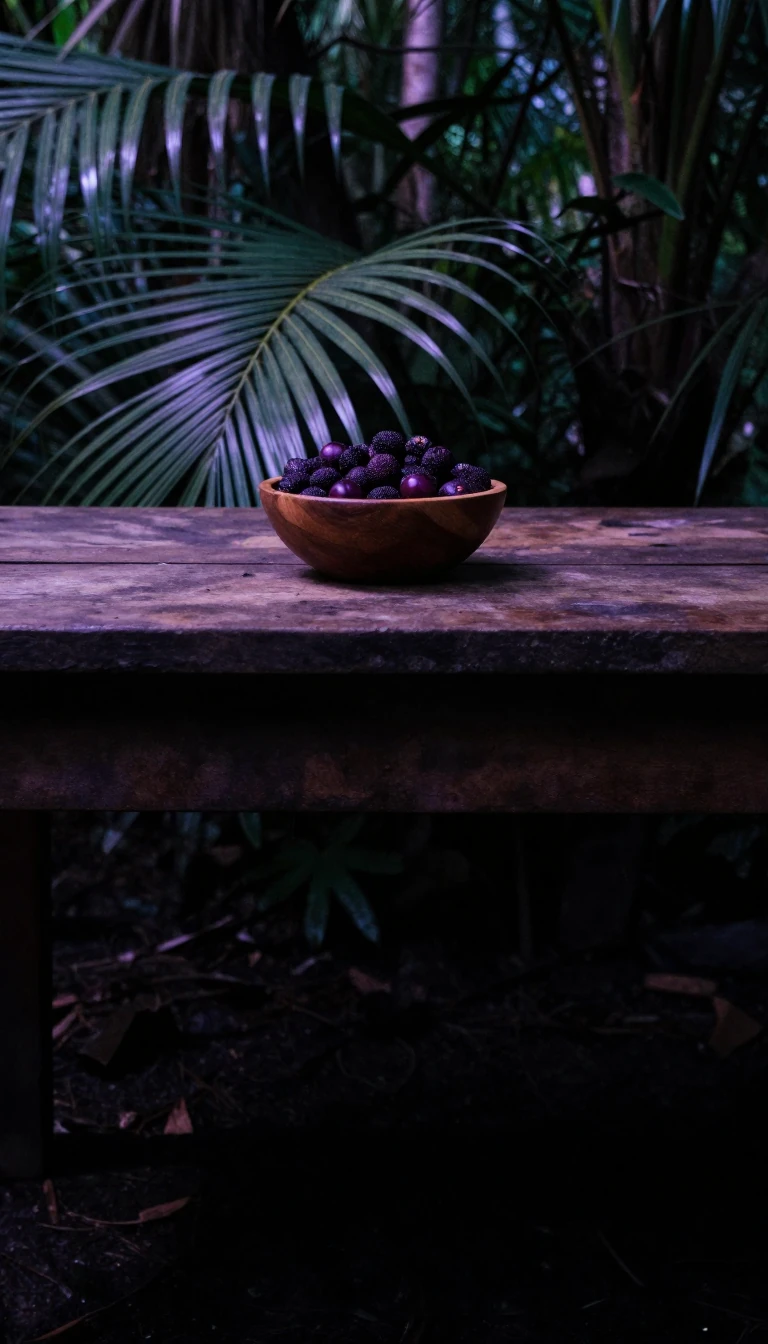
In short: While modern grocery store bananas are sterile, seedless clones, their wild ancestor, Musa acuminata, is a diverse, seed-bearing herbaceous plant native to the wet tropics. From India to Southeast Asia, this species has been cultivated and transported by humans for millennia, forming the genetic foundation for our favorite fruits.
Musa acuminata is a herbaceous plant native to a vast range spanning from India to Southern China and Western Malesia. While often colloquially called a tree, it is botanically classified as a perennial herb. Its native habitat is the wet tropical biome, though it has been introduced by human activity to diverse locations including Spain, Tanzania, and various Pacific islands. The species is highly variable, with numerous subspecies and varieties recognized by botanists, such as the ornamental 'blood banana' (subspecies zebrina) known for its distinct leaf coloration.
The wild form of this plant is diploid and produces fruit packed with hard, subglobose seeds. In contrast, the edible bananas found in modern markets are typically triploid and parthenocarpic, meaning they develop fruit without fertilization. This transition to seedless fruit was achieved through the selection of natural mutations during centuries of vegetative propagation. In wild specimens, seeds are surrounded by a small amount of edible starchy pulp, whereas in cultivated varieties, the ratio of pulp to seeds has increased dramatically, leaving only tiny, sterile black specks along the fruit's axis.
The taxonomy of Musa acuminata is complex, with a long history of synonyms and misidentifications. Early botanical descriptions, such as those by Luigi Aloysius Colla in 1820, established the species name that remains in use today. Because the plant hybridizes readily with other species like Musa balbisiana, many historical names were mistakenly applied to these hybrids. Today, researchers rely on detailed checklists and genetic studies to track the movement of these plants across the globe, noting that the spread of the species outside its original Asian range is almost entirely the result of human intervention.
Opens the Intellect+ feed with this card first. Swipe up for the next one.
Sources
- Summary by Intellect · source: Musa acuminata subsp. acuminata | Plants of the World Online | Kew Science
- Also: Musa acuminata
To cite this card, link to https://intellectplus.co.uk/app/gardening-musa-acuminata.
How we source, check and correct cards: Editorial standards.
General information, not professional advice. Spotted an error? Flag the card or see corrections and complaints.
Intellect Plus is a visual educational discovery platform for exploring fascinating facts and ideas. Brain Food, Not Brain Rot. What is Intellect Plus?
Related
More in Plants · More in Gardening · Latest · A–Z · All topics
