Can we ever truly hear the music exactly as the composer intended?
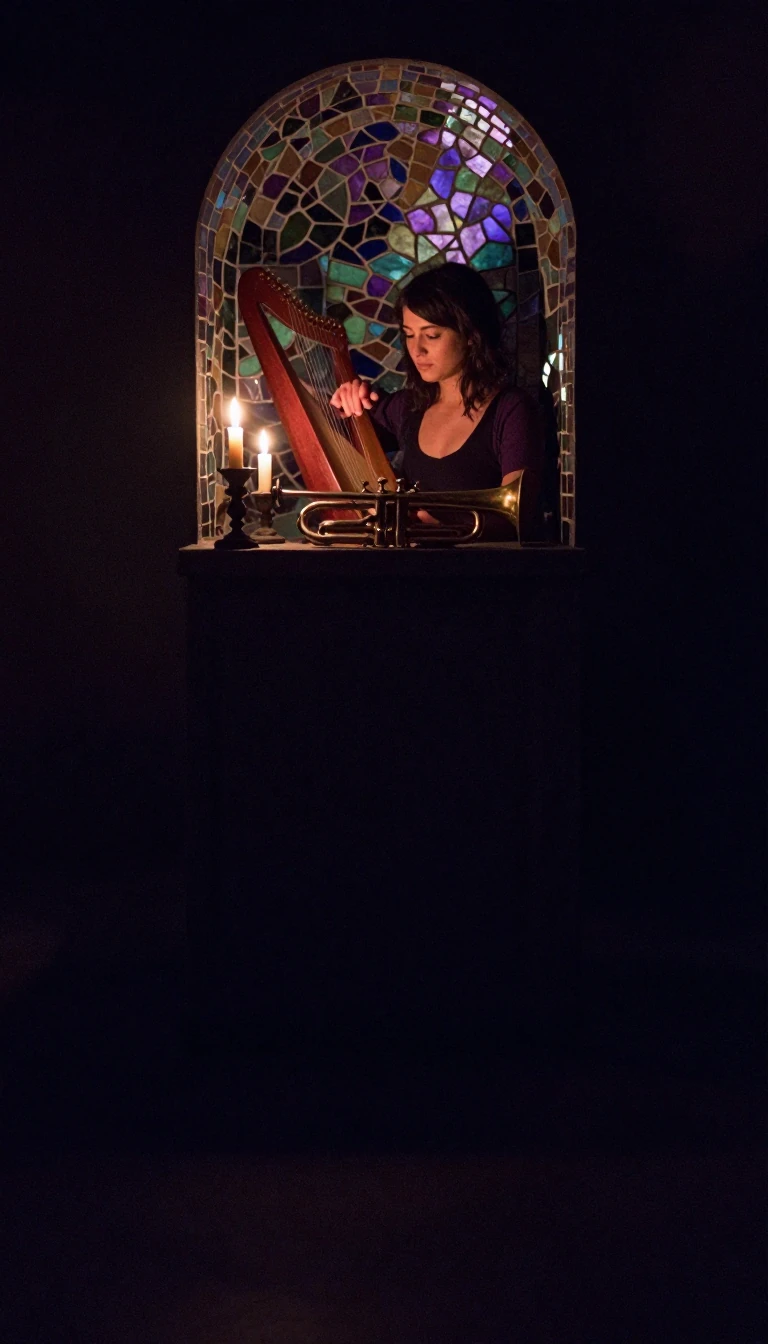
In short: The movement known as Historically Informed Performance (HIP) seeks to bridge centuries of silence. By using period instruments and studying ancient treatises, musicians attempt to recreate the lost soundscapes of the Baroque and Classical eras. But is this a precise reconstruction or a modern reimagining of the past?
Historically Informed Performance, or HIP, emerged in the mid-to-late 20th century as a modernist response to breaking with earlier traditions. The movement focuses on two pillars: performance practice—applying the stylistic and technical nuances of a specific era—and the use of period instruments. These instruments, such as the harpsichord, clavichord, or the viol family, often possess a timbre and temperament distinct from their modern counterparts. For example, the 19th-century transition saw the harpsichord gradually replaced by early pianos, with the 'fortepiano' eventually evolving into the modern 'pianoforte' around 1830.
Because no recordings exist for music composed before the late 19th century, scholars must act as musical detectives. They rely on musicological analysis of historical texts, including pedagogical tutors, concert critiques, and even iconographic evidence like contemporary paintings. These visual sources can reveal whether singers stood in front of instrumentalists—as suggested by theorist Johann Mattheson in 1739—or how ensembles were arranged. For the 19th century, however, researchers have a unique advantage: extant recordings like cylinders, discs, and piano rolls from the 1890s onwards.
The movement is not without controversy. Some critics argue that HIP is a 20th-century construct and that absolute 'authenticity' is impossible to achieve due to the vast cultural distance between eras. This has led to a shift in terminology; many now prefer 'historically informed' over 'authentic' to acknowledge the inherent limitations of academic reconstruction. Despite these debates, the movement has successfully revived obsolete instruments like the recorder and the harpsichord, and even influenced theatrical productions of Baroque opera.
Opens the Intellect+ feed with this card first. Swipe up for the next one.
Sources
- Summary by Intellect · source: Historically informed performance
- Also: podcasts.ox.ac.uk — What is Historically Informed Performance?
To cite this card, link to https://intellectplus.co.uk/app/health-historically-informed-performance.
How we source, check and correct cards: Editorial standards.
General information, not professional advice. Spotted an error? Flag the card or see corrections and complaints.
Intellect Plus is a visual educational discovery platform for exploring fascinating facts and ideas. Brain Food, Not Brain Rot. What is Intellect Plus?
Related
More in Classical music · More in Music · Latest · A–Z · All topics
