The molecular gatekeepers that decide which cellular secrets are exposed
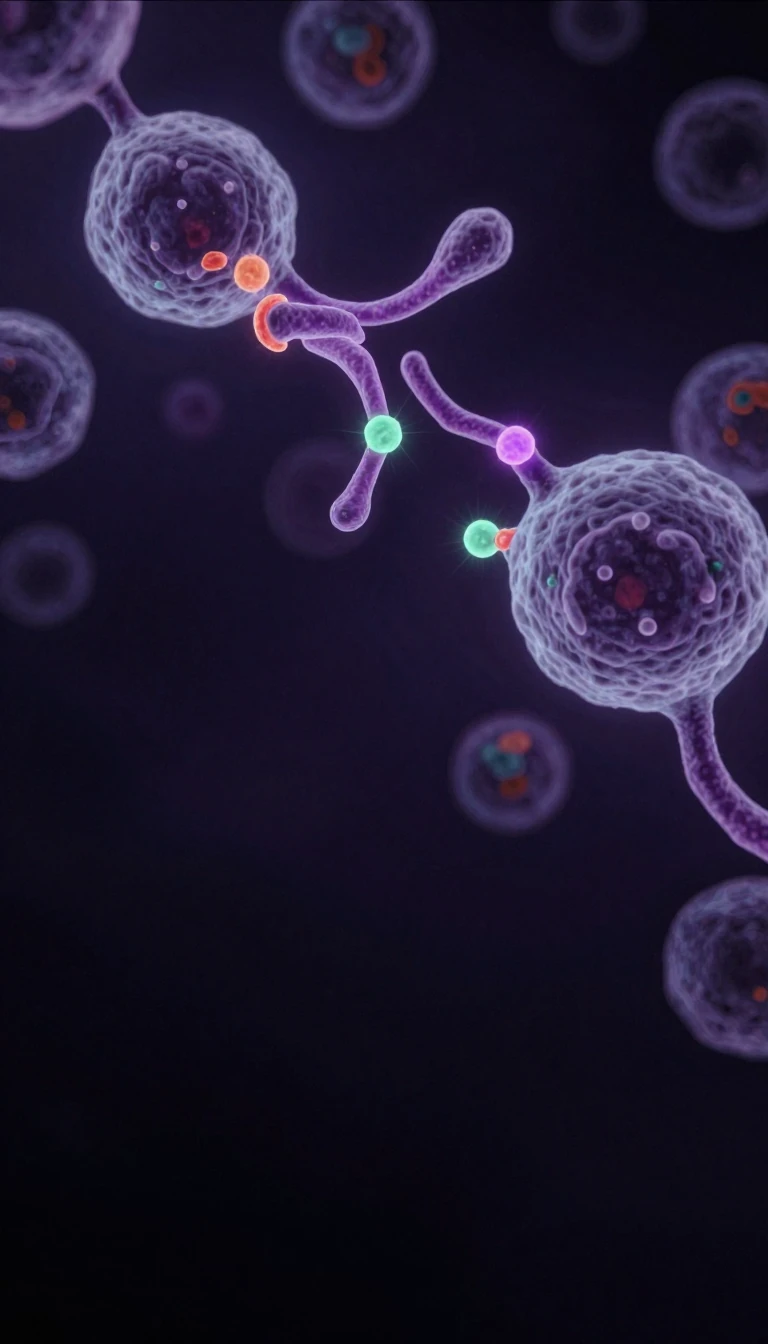
In short: Your immune system relies on a constant surveillance of your internal cellular state. MHC class I molecules act as the primary display cases, showcasing fragments of proteins to cytotoxic T cells. If a cell is healthy, it shows routine maintenance; if it is infected or cancerous, it broadcasts a distress signal.
MHC class I molecules are found on the surface of all nucleated cells in vertebrates, including platelets, but notably not on red blood cells. Their primary role is to present peptides derived from cytosolic proteins—the 'endogenous' pathway—to cytotoxic CD8+ T cells. This process allows the immune system to identify and destroy cells expressing non-self antigens, such as those produced during a viral infection. However, these molecules are not just passive displays; they are highly polymorphic, meaning different alleles can have distinct consequences for immune responses.
The selection of which peptides to display is a complex biochemical feat. Peptides are primarily generated from the degradation of cytosolic proteins by the proteasome. Once processed, these fragments are transported into the endoplasmic reticulum and inserted into the plasma membrane. The repertoire of presented peptides is heavily influenced by the structural features of the MHC binding groove. Furthermore, 'peptide editors' like tapasin help shape the presented peptidome by favoring high-affinity antigens. Recent research suggests that intermediate protein states and MHC dynamics profoundly influence immunodominance and the development of autoimmune diseases.
The system is so nuanced that it can even present non-genetically encoded antigens. For instance, viral alterations to cellular translation can increase 'defective ribosomal products' that are presented by MHC class I for immunosurveillance. In disease states like psoriatic arthritis, this presentation can become skewed. Studies have identified specific perturbations, such as an increased relative abundance of glutamic acid at position 2 in nine-amino-acid peptides, and the unique presentation of peptides from autoantigens like hnRNP A1. This highlights how subtle shifts in MHC processing can drive systemic immunopathology.
Opens the Intellect+ feed with this card first. Swipe up for the next one.
Sources
- Summary by Intellect · source: Towards a systems understanding of MHC class I and MHC class II antigen presentation | Nature Reviews Immunology
- Also: Major Histocompatibility Complex (MHC) Class I and MHC Class II Proteins: Conformational Plasticity in Antigen Presentation - PMC
- Also: MHC class I
- Also: Skewed MHC Class I Peptide Presentation in Psoriatic Arthritis.
To cite this card, link to https://intellectplus.co.uk/app/health-mhc-class-i.
How we source, check and correct cards: Editorial standards.
General information, not professional advice. Spotted an error? Flag the card or see corrections and complaints.
Intellect Plus is a visual educational discovery platform for exploring fascinating facts and ideas. Brain Food, Not Brain Rot. What is Intellect Plus?
Related
More in Vaccines · More in Health · Latest · A–Z · All topics
