The Hollywood model of game design: how a studio acts as a concept house
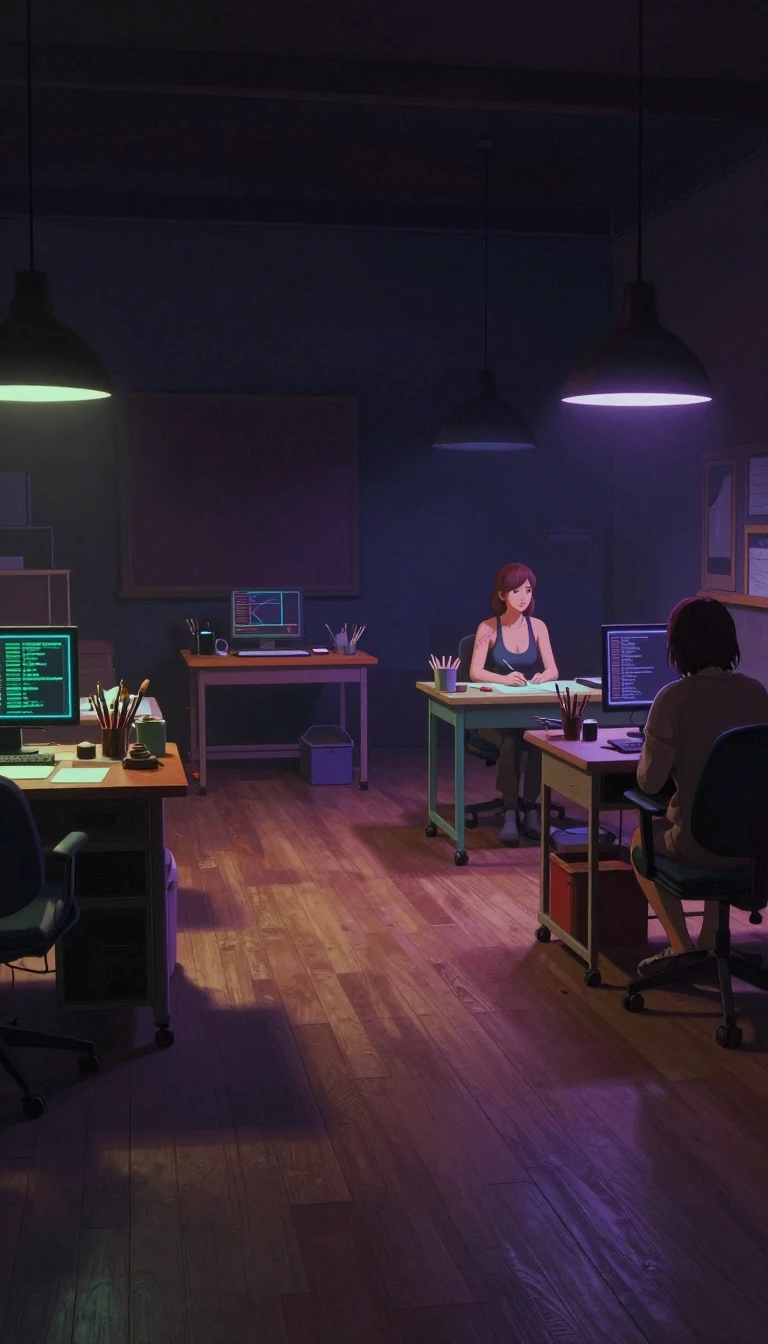
In short: Hironobu Sakaguchi, the creator of Final Fantasy, founded Mistwalker to escape corporate bureaucracy. Instead of building massive internal teams, he created a boutique collective that functions like a Hollywood studio—overseeing high-level concepts while outsourcing the heavy lifting to specialized partners.
Mistwalker was born from Sakaguchi's desire for creative autonomy after his departure from Square in 2003. Following the financial difficulties of 'Final Fantasy: The Spirits Within,' a CGI film that exceeded its budget and became a box office failure, Sakaguchi felt demoralized by administrative duties. He sought to return to his roots as a creator, forming Mistwalker in July 2004 with offices in Honolulu and Tokyo. Unlike typical Japanese studios that rely on large internal workforces, Mistwalker operates as a small-scale collective of artists, often maintaining a staff of at most twenty people.
This 'concept studio' model allows the company to move freely between different development partners depending on the project's needs. For its early titles like 'Blue Dragon' (2006) and 'Lost Odyssey' (2007), Mistwalker oversaw production while co-developing with studios such as Artoon, Feelplus, and tri-Crescendo. This structure is rare in Japan, where the industry norm favors large corporations with sizeable internal teams. By acting as a creative hub rather than a manufacturing plant, Sakaguchi could collaborate with elite artists like Akira Toriyama and Takehiko Inoue while leveraging external technical expertise.
The studio's trajectory reflects a constant search for the right balance between scale and intimacy. After focusing on large-scale console RPGs, Sakaguchi shifted toward smaller mobile titles to work with a more hand-picked team. This led to 'Terra Battle,' which achieved worldwide success but eventually faced challenges in maintaining quality over time. More recently, this philosophy of high-concept artistry culminated in 'Fantasian' (2018), which utilized real-life dioramas scanned into the game environment—a project that finally marked Sakaguchi's first collaboration with Square Enix in 21 years.
The Mistwalker approach highlights a distinct tension in the gaming industry: the trade-off between corporate stability and artistic purity. By outsourcing development, the studio avoids the overhead of massive infrastructure but must navigate complex relationships with partners like Cavia or Silicon Studio. This model prioritizes the 'vision'—the narrative, emotional impact, and aesthetic direction—over the mechanics of production, positioning Mistwalker as a curator of experiences rather than just a manufacturer of software.
Opens the Intellect+ feed with this card first. Swipe up for the next one.
Sources
- Summary by Intellect · source: Mistwalker
To cite this card, link to https://intellectplus.co.uk/app/health-mistwalker.
How we source, check and correct cards: Editorial standards.
General information, not professional advice. Spotted an error? Flag the card or see corrections and complaints.
Intellect Plus is a visual educational discovery platform for exploring fascinating facts and ideas. Brain Food, Not Brain Rot. What is Intellect Plus?
Related
More in Future Frontier · More in Health · Latest · A–Z · All topics
