The 'Holy Grail' of immunology: How your body recognizes the invisible
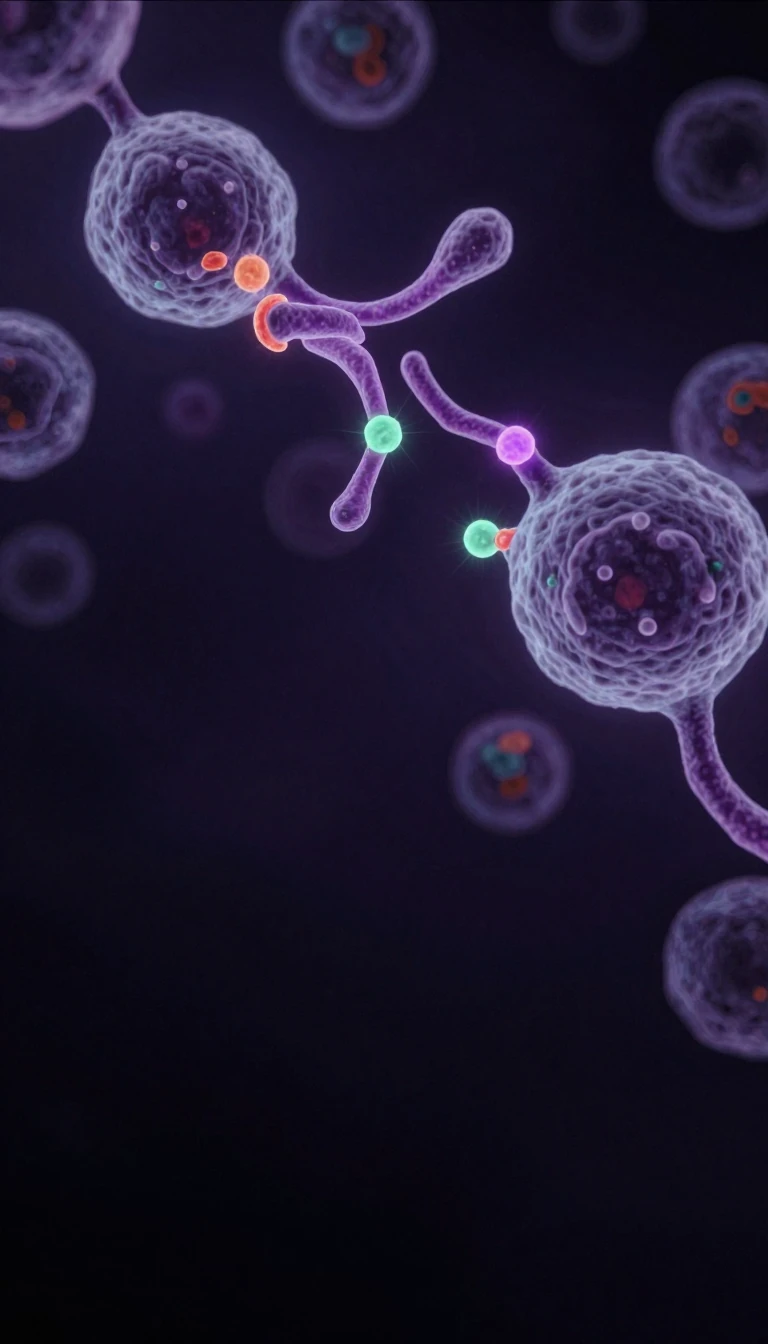
In short: For decades, the T-cell receptor was the elusive "Holy Grail" of immunology because it lived only on cell membranes. Now we know it is a master of versatility, capable of identifying billions of unique threats without ever having met them before.
The mammalian T-cell receptor (TCR) is an extraordinary molecular sensor that orchestrates immunity by responding to billions of different ligands. Most mature T cells express the alpha-beta (αβ) heterodimer, which typically recognizes peptides derived from degraded proteins presented in "molecular cradles" called major histocompatibility complex (MHC) molecules. However, a smaller subset of T lymphocytes—specifically 0.5% to 5% in humans—expresses gamma-delta (γδ) receptors. These are often found in high concentrations in tissues like the gut and skin, where they can engage with lipids or bacterial metabolites.
The discovery of these receptors was delayed until 1983 because their membrane-bound nature made them difficult to isolate in a laboratory setting. Once identified, researchers discovered that while TCRs share structural similarities with antibodies—including variable domains that form antigen-binding sites—they function fundamentally differently. Unlike antibodies, which have two binding sites, the T-cell receptor has only one. This distinction is central to how B cells and T cells perform their distinct roles in the immune system.
The mechanism of activation is a complex relay of signal transduction. When a TCR binds an MHC-antigenic peptide complex, it triggers protein tyrosine kinases (PTKs) to phosphorylate residues on its cytoplasmic tail. This creates docking sites for effector enzymes like phosphatases and phospholipases. Crucially, non-enzymatic adaptor proteins act as scaffolds, integrating these disparate signals into multiprotein complexes that ultimately activate specific transcription factors in the nucleus.
This precision is vital for survival; during development in the thymus, T cells undergo a rigorous checkpoint. Those with high affinity for self-peptides are eliminated via apoptosis (negative selection), while low-affinity ones survive to become mature, self-tolerant cells. If this signaling balance fails, it can lead to anergy or autoimmunity.
Opens the Intellect+ feed with this card first. Swipe up for the next one.
Sources
- Summary by Intellect · source: T cell receptor (TCR) signaling in health and disease | Signal Transduction and Targeted Therapy
- Also: Immune system - T Cells, Antigens, Receptors | Britannica
- Also: The T cell antigen receptor: the Swiss army knife of the immune system - PMC
- Also: T-cell receptor
To cite this card, link to https://intellectplus.co.uk/app/health-t-cell-receptor.
How we source, check and correct cards: Editorial standards.
General information, not professional advice. Spotted an error? Flag the card or see corrections and complaints.
Intellect Plus is a visual educational discovery platform for exploring fascinating facts and ideas. Brain Food, Not Brain Rot. What is Intellect Plus?
Related
More in Vaccines · More in Health · Latest · A–Z · All topics
