Why the Nile Valley's ancient inhabitants remain the most rooted people on Earth
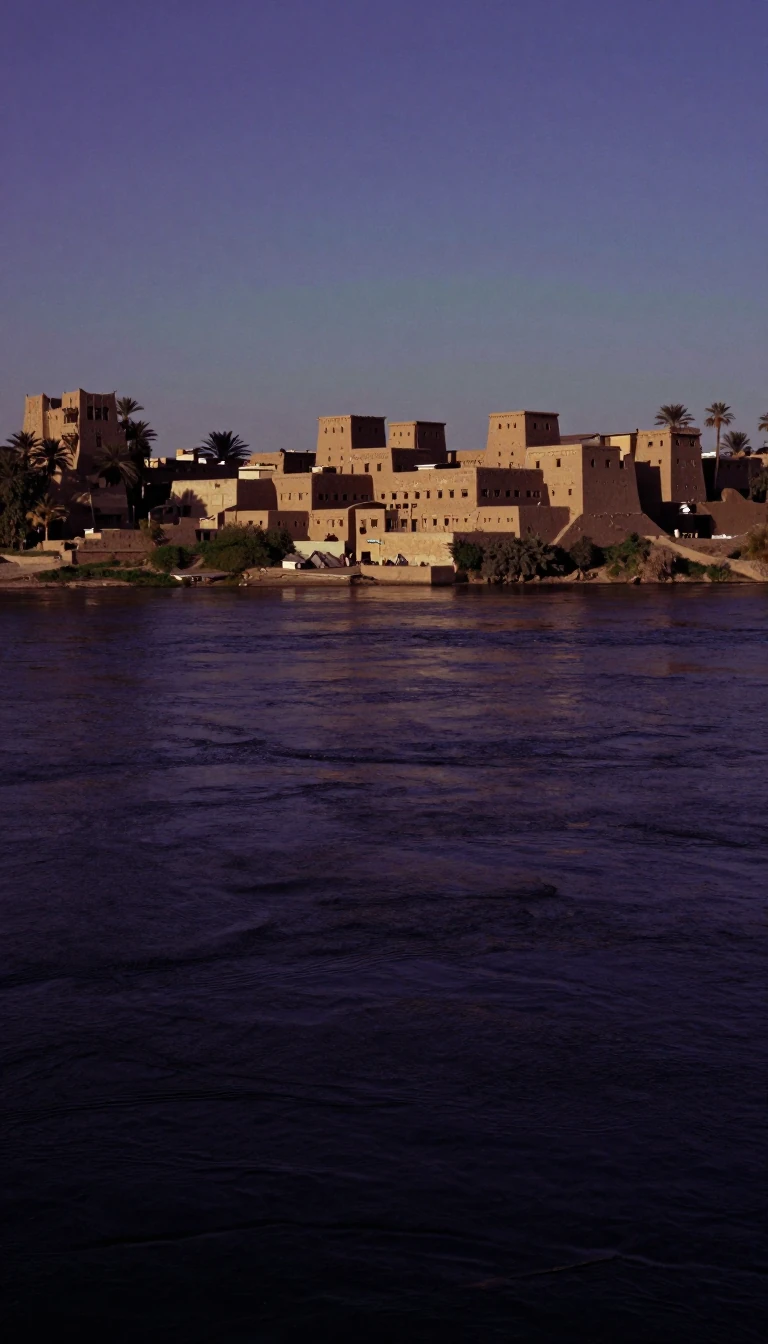
In short: For millennia, the Egyptian identity has been anchored to the fertile banks of the Nile. Despite waves of foreign rule, from Persians to Romans, this hinterland society maintained a fierce, provincial continuity. Today, that ancient sense of belonging persists, defining a people whose history is as deep as their river.
The Egyptian identity is inseparable from the Nile Valley, a narrow, fertile strip of land protected by vast deserts. This geography fostered a society that, since antiquity, has remained remarkably consistent in its cultural and social structures. Even as the region fell under the control of various empires—including the Hyksos, Persians, and Greeks—the native population, or 'rmṯ', maintained a distinct sense of self. They viewed themselves as the true inhabitants of the 'Black Land', or 'Km.t', often regarding foreigners as outsiders who threatened the cosmic order of Ma'at.
Divine kingship served as the glue for this society for nearly three millennia, from 2920 BC until the Roman conquest. The pharaoh, as the living personification of Horus, was responsible for maintaining justice and ensuring the annual Nile floods that sustained the agricultural economy. When this central authority waned, the country became vulnerable to foreign influence. Yet, even under Ptolemaic or Roman rule, the mass of the population remained in the countryside, speaking the Egyptian language and preserving their own communities, largely separate from the foreign elites in cities like Alexandria.
The transition to Christianity in the early centuries AD marked a significant shift, yet it remained deeply rooted in Egyptian soil. The 'Era of the Martyrs', triggered by the persecutions under Emperor Diocletian in 284 AD, solidified the Coptic Church as a pillar of identity. This period also saw the rise of monasticism, pioneered by figures like St. Antony and St. Bakhum. Today, this legacy continues through a population that remains overwhelmingly concentrated along the Nile, where the rhythm of the river still dictates the pulse of daily life and a profound, sometimes nostalgic, attachment to the homeland.
Modern Egyptians, numbering an estimated 105.3 million, carry this historical weight into the present. While political and economic pressures have driven a diaspora of nearly 4 million people, the 'rootedness' of the culture remains a defining trait. Whether through the preservation of ancient agricultural practices or the enduring influence of the Coptic language in prayer, the connection to the past is not merely academic—it is a lived, daily reality for the people of the Nile.
Opens the Intellect+ feed with this card first. Swipe up for the next one.
Sources
- Summary by Intellect · source: Egyptians
To cite this card, link to https://intellectplus.co.uk/app/history-egyptians.
How we source, check and correct cards: Editorial standards.
General information, not professional advice. Spotted an error? Flag the card or see corrections and complaints.
Intellect Plus is a visual educational discovery platform for exploring fascinating facts and ideas. Brain Food, Not Brain Rot. What is Intellect Plus?
Related
More in Post-classical · More in History · Latest · A–Z · All topics
