Did a catastrophic outburst flood at Jishi Gorge birth China's first dynastic state?
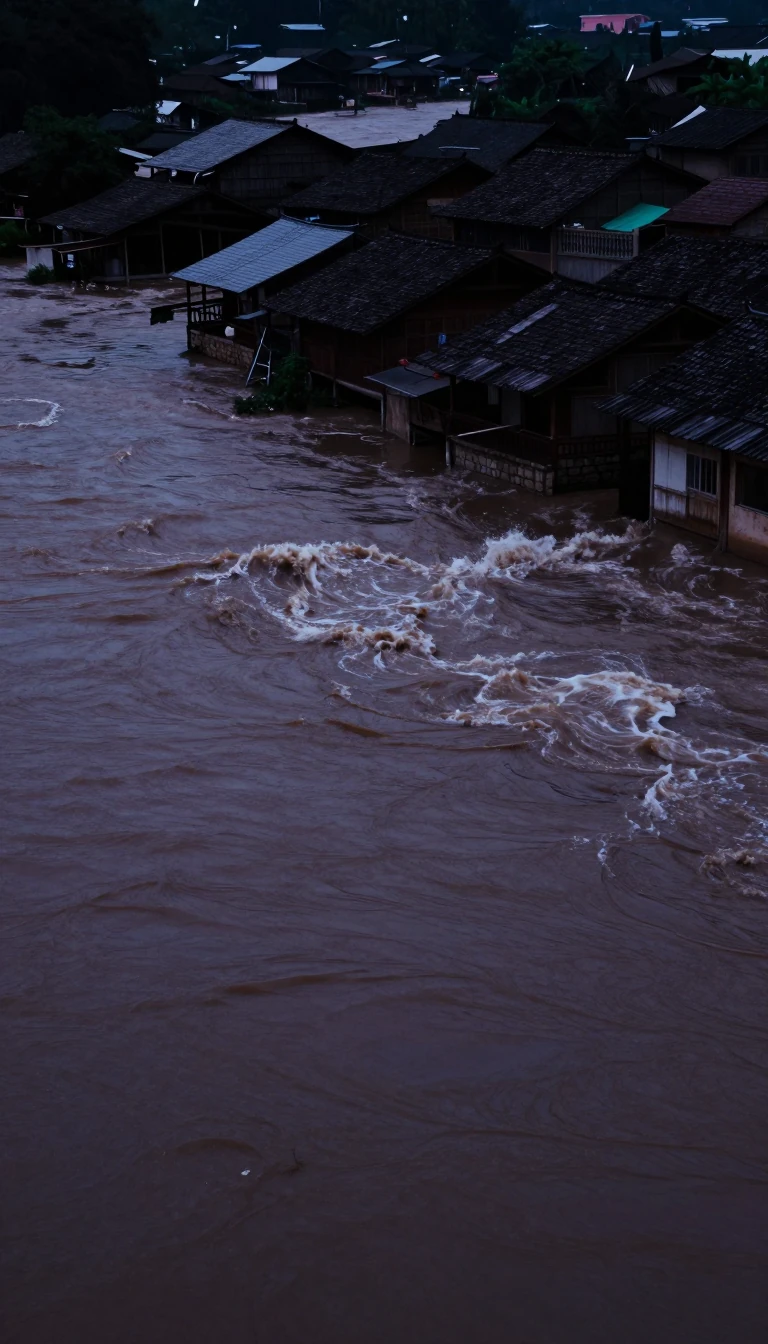
In short: Ancient Chinese mythology tells of a relentless, multi-generational deluge that forced humanity to innovate or perish. While traditionally viewed as a moral tale of divine intervention, modern geological evidence suggests a massive 1920 BCE outburst flood on the Yellow River may have been the real-world catalyst for this foundational national narrative.
The Great Flood of Gun-Yu is a cornerstone of Chinese culture, traditionally dated to the third millennium BCE during the reign of Emperor Yao. The narrative describes a world submerged, where the hero Gun failed for nine years to contain the waters using magical, self-expanding soil called xirang. His son, Yu the Great, eventually succeeded by shifting strategy from containment to drainage, a feat that allegedly led to the founding of the Xia dynasty.
Scholars like David Hawkes interpret these myths as symbolic of a societal transition from small-scale agriculture to advanced land management. While Gun’s failed dams represent early, localized attempts to survive in a marshy landscape, Yu’s success symbolizes the technological leap toward large-scale, gridded drainage systems. This transformation allowed for the permanent reclamation of wetlands and the establishment of the first dynastic state, marking a shift from emergency management to organized civilization.
In 2016, researchers identified geological evidence of a colossal landslide that dammed the Yellow River at Jishi Gorge around 1920 BCE. The subsequent breach caused a flood that likely disrupted river channels for up to twenty years. This timing aligns with the transition from the Neolithic to the Bronze Age in the region. While traditional texts like the 'Canon of Yao' place the flood near 2200 BCE—a date supported by some modern archaeoastronomical analysis—the 1920 BCE event offers a compelling, tangible basis for the legend.
Ultimately, the story serves as a profound cultural response to extreme natural disaster. Whether through the lens of mythology or geology, the Great Flood remains a narrative about the necessity of synchronized, state-level cooperation. By standardizing weights, measures, and calendars, leaders like Shun and Yu transformed a chaotic, flood-ravaged territory into a unified, functioning empire, cementing the flood's role as the origin story of Chinese political authority.
Opens the Intellect+ feed with this card first. Swipe up for the next one.
Sources
- Summary by Intellect · source: Great Flood (China)
To cite this card, link to https://intellectplus.co.uk/app/history-great-flood-china.
How we source, check and correct cards: Editorial standards.
General information, not professional advice. Spotted an error? Flag the card or see corrections and complaints.
Intellect Plus is a visual educational discovery platform for exploring fascinating facts and ideas. Brain Food, Not Brain Rot. What is Intellect Plus?
Related
More in Ancient · More in History · Latest · A–Z · All topics
