Before photography existed, the camera was a room-sized tool for drawing the world.
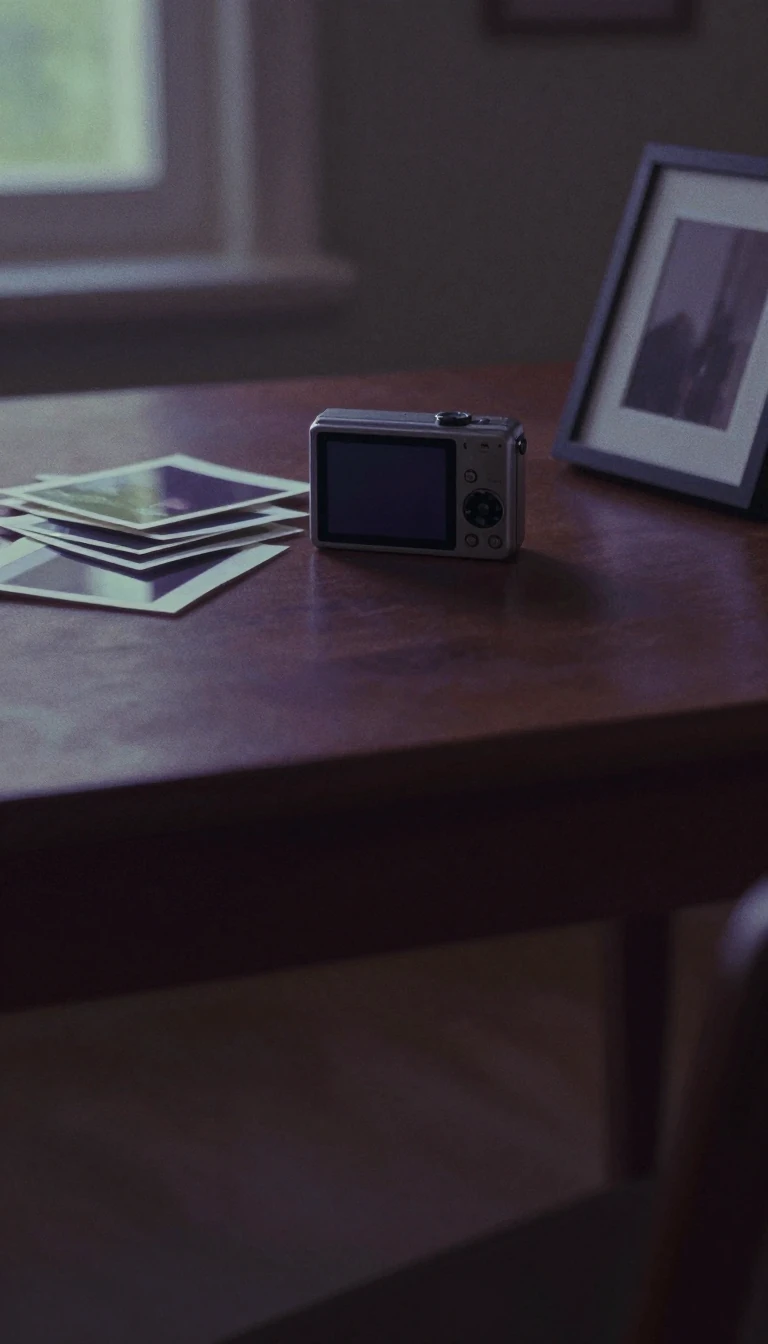
In short: The camera did not begin as a device to capture images, but as a natural optical phenomenon called the camera obscura. For centuries, this dark room projection was used by artists to trace reality. It took nearly 150 years after the first portable designs to finally achieve practical, permanent photography.
The camera obscura, meaning 'dark room' in Latin, relies on light traveling in straight lines to project an inverted image through a small aperture. Chinese philosopher Mozi first documented this principle between 470 and 391 BC. By the 11th century, physicist Ibn al-Haytham provided the first geometrical analysis of the phenomenon, pioneering early afterimage experiments and the pinhole camera. By 1550, lenses were added to these apertures to sharpen projections, and by the late 17th century, portable box and tent versions were common drawing aids.
The transition to photography required fixing these light-projected images. In 1727, Johann Heinrich Schulze proved that silver salts darkened due to light rather than heat. Thomas Wedgwood later used this chemistry to create silhouettes on ceramic pots, but he lacked a fixing mechanism to make them permanent. The breakthrough arrived in 1826 when Nicéphore Niépce produced the first permanent photograph using a wooden box camera and bitumen-coated pewter. His partner, Louis Daguerre, later refined this into the daguerreotype, which used silver iodide and mercury vapor to create sharp, high-contrast images.
The 19th century saw rapid innovation, moving from bulky nested boxes to the bellows-focused cameras of the 1850s. George Eastman revolutionized the field in 1888 with the Kodak, a simple, pre-loaded box camera that brought photography to the masses. By the mid-20th century, the industry shifted toward 35 mm film, popularized by the Leica I in 1925 and later by affordable models like the Argus C3. The evolution continued with the 1949 Polaroid, which introduced instant-picture technology, and eventually the digital revolution, which replaced chemical film with electronic storage, fundamentally changing how we capture and share our lives.
While the technology evolved from manual tracing to digital sensors, the core mechanism—controlling light through an aperture—remains the constant thread. From the early daguerreotype cameras costing 400 francs in 1839 to the sophisticated system cameras of the late 20th century, the history of the camera is a story of making the complex act of capturing light increasingly compact, automated, and accessible.
Opens the Intellect+ feed with this card first. Swipe up for the next one.
Sources
- Summary by Intellect · source: History of the camera
To cite this card, link to https://intellectplus.co.uk/app/history-history-of-the-camera.
How we source, check and correct cards: Editorial standards.
General information, not professional advice. Spotted an error? Flag the card or see corrections and complaints.
Intellect Plus is a visual educational discovery platform for exploring fascinating facts and ideas. Brain Food, Not Brain Rot. What is Intellect Plus?
Related
More in History by topic · More in History · Latest · A–Z · All topics
