When the center of civilization moves, who gets to keep the crown?
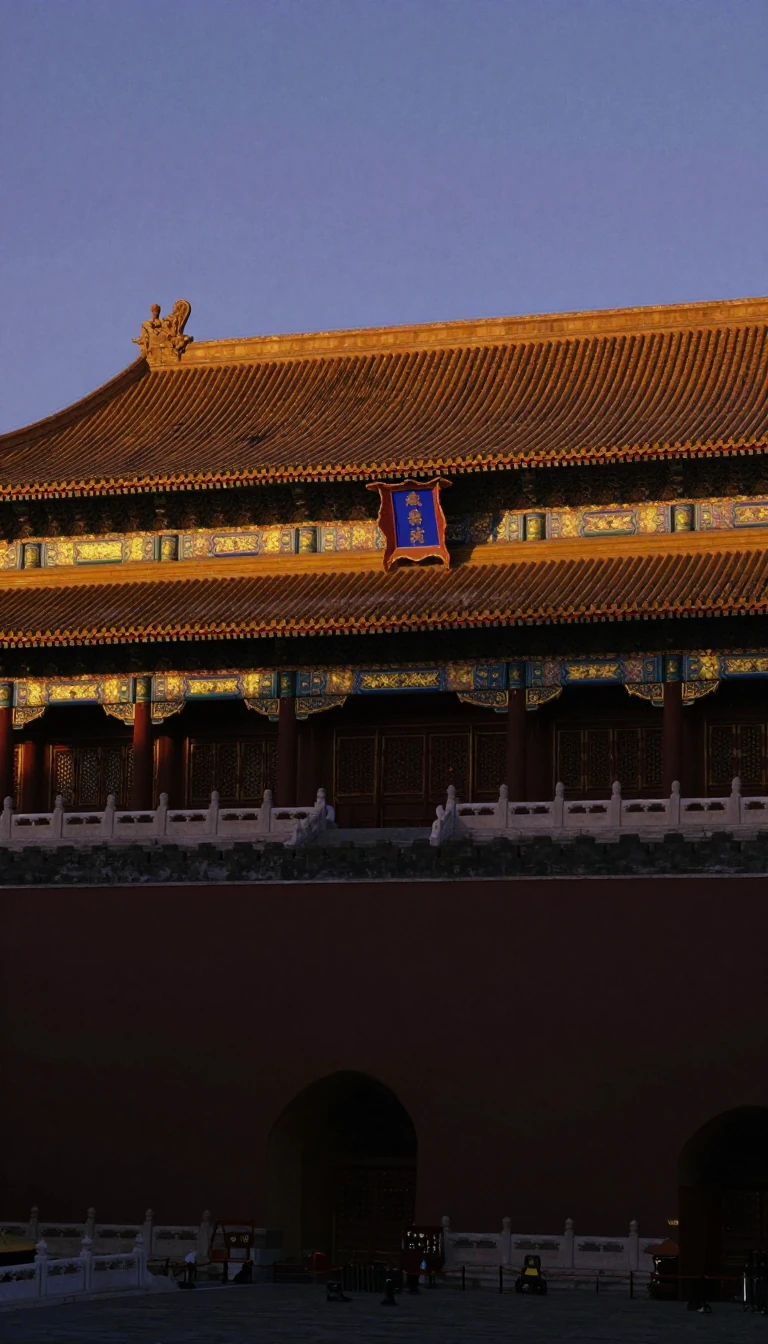
In short: For centuries, the concept of 'China' was not a fixed geography but a cultural standard. When the Manchu-led Qing dynasty took power, neighboring nations like Korea, Vietnam, and Japan faced a crisis of identity. They didn't just see a new ruler; they saw a 'barbarian' occupying the throne of civilization.
The ideology of 'Little China' emerged from the traditional Sinocentric view that 'Chinese-ness' was defined by cultural affiliation rather than ethnicity. According to the Spring and Autumn Annals, a 'barbarian' who adopted Chinese ways became Chinese, while a Chinese person who abandoned them became a barbarian. This fluidity allowed various regimes to claim the mantle of the 'Central State' as legitimate successors to Chinese civilization, especially when they perceived the actual center as being corrupted or occupied by outsiders.
In Korea, the Joseon dynasty's scholar gentry (Yangban) initially viewed the Ming dynasty as the supreme leader of the tributary system. When the Manchu-led Qing dynasty replaced the Ming in the 17th century, Joseon elites initially rejected the Qing as unworthy heirs. They asserted themselves as the true successors, styling Joseon as the 'Little Central Kingdom.' It wasn't until the rise of the Northern Learning School during the Qianlong Emperor's reign that Korean scholars began to reconceptualize the Qing as the legitimate successor, eventually adopting the term 'Zhongguo' to refer to them by the early 19th century.
Vietnam followed a similar trajectory of cultural self-identification. Vietnamese monarchs often used the 'emperor at home, king abroad' policy, styling themselves as the 'Central Kingdom' domestically while maintaining tributary ties with China. During the Nguyễn dynasty, rulers even used the names 'Trung Quốc' and 'Hạ' to describe their own lineage. In the 17th century, Vietnamese scholars argued that because Vietnam followed Chinese governance, orthodoxy, and literature without Manchu influence, it should be considered 'Hoa' (civilized), challenging China's own definition of the term.
Japan underwent a parallel transformation. During the Edo period, Japanese scholars declared that the Qing dynasty lacked the legitimacy to represent China. In works like Kai Hentai, it was argued that Japan had replaced the Qing as the center of civilization. Scholars adopted terms like 'Chūka' and 'Chūgoku' to refer to Japan, while labeling the Qing as the 'outer dynasty.' This reached a peak during the Meiji Restoration, when Emperor Meiji issued an edict explicitly identifying Japan as 'Ka' (civilized) to distinguish it from the 'barbarians.'
Opens the Intellect+ feed with this card first. Swipe up for the next one.
Sources
- Summary by Intellect · source: Little China (ideology)
To cite this card, link to https://intellectplus.co.uk/app/ideas-little-china-ideology.
How we source, check and correct cards: Editorial standards.
General information, not professional advice. Spotted an error? Flag the card or see corrections and complaints.
Intellect Plus is a visual educational discovery platform for exploring fascinating facts and ideas. Brain Food, Not Brain Rot. What is Intellect Plus?
Related
More in Eastern philosophy · More in Ideas & Philosophy · Latest · A–Z · All topics
