Was the ancient philosopher Metrodorus of Chios the first to imagine an infinite universe?
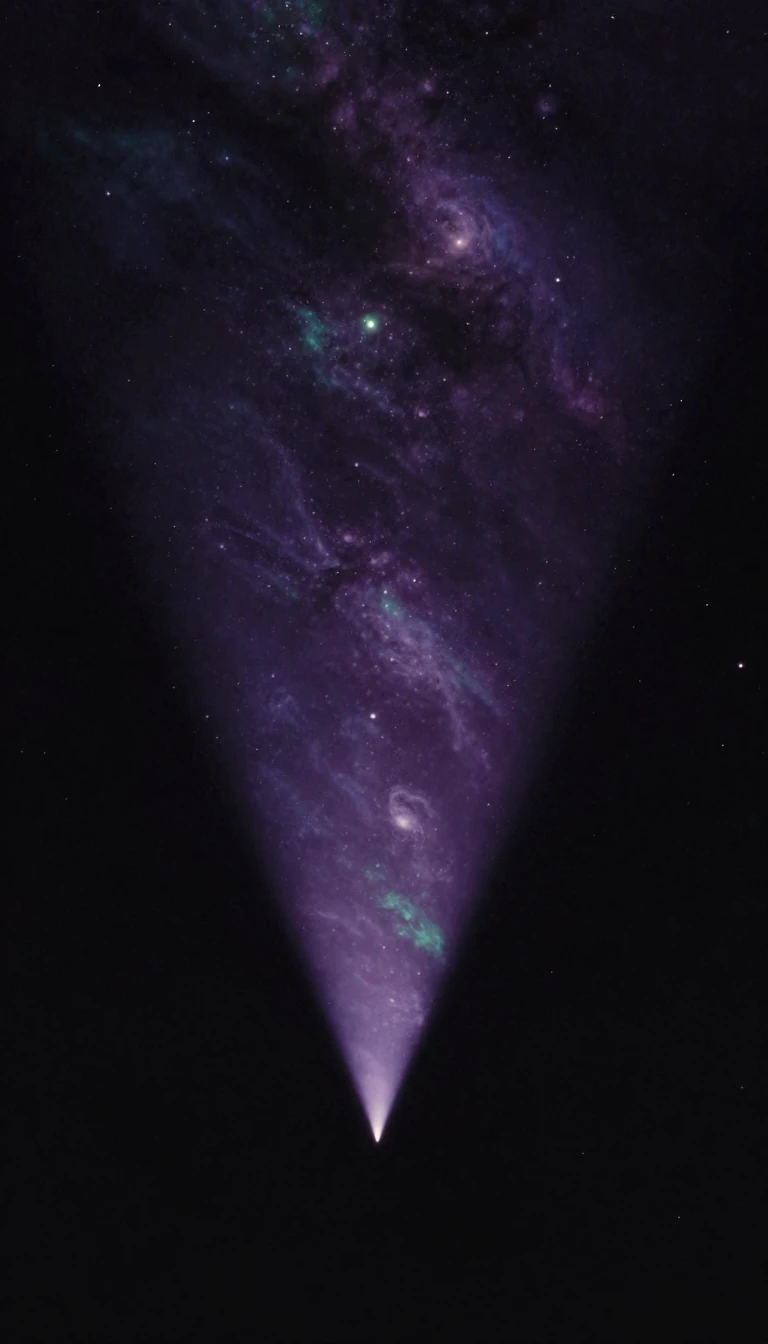
In short: Metrodorus of Chios, a fourth-century BC thinker, bridged the gap between early atomism and radical scepticism. He famously argued that a single world in infinite space is as improbable as a single stalk of wheat in a vast field, suggesting a cosmos far more expansive than his contemporaries dared imagine.
Active during the fourth century BC, Metrodorus of Chios remains a pivotal, if enigmatic, figure in the history of Greek philosophy. As a member of the school of Democritus, he inherited the foundational belief in atoms and the void. Yet, he was no mere follower; he served as a crucial intellectual conduit, linking the rigid physical theories of early atomism to the later, more fluid traditions of scepticism. His lineage of influence is notable, having studied under Nessos of Chios—or perhaps Democritus himself—and later teaching Diogenes of Smyrna, who eventually instructed Anaxarchus.
Metrodorus is perhaps best remembered for his bold cosmological assertions. While he accepted the Democritean plurality of worlds, he pushed these ideas into uncharted territory. He proposed that stars were generated daily by atmospheric moisture reacting to solar heat, a theory that showcased his willingness to look beyond established dogma. Most strikingly, he articulated a vision of an infinite universe where our world is not unique, famously comparing a lone world in space to a single ear of wheat in a massive field. This perspective suggests a sophisticated, early grasp of cosmological scale.
Beyond his physical theories, Metrodorus was a committed sceptic. His epistemological stance was uncompromising, as evidenced by his reported claim that humans know nothing—not even whether they possess knowledge at all. He maintained that reality is subjective, existing for each individual only as it appears to them. This radical doubt, combined with his atomistic framework, makes him a fascinating study in contradictions. He was a man who used the tools of physical science to arrive at the conclusion that the nature of truth itself is fundamentally inaccessible to the human mind.
Why does Metrodorus matter today? He represents the moment when ancient thought began to grapple with the sheer vastness of existence. By questioning the uniqueness of our world and the reliability of human perception, he anticipated themes that would occupy thinkers for centuries. His legacy is that of a bridge-builder, connecting the materialist certainty of the atomists with the profound, unsettling questions that define the sceptical tradition.
Opens the Intellect+ feed with this card first. Swipe up for the next one.
Sources
- Summary by Intellect · source: Metrodorus of Chios
To cite this card, link to https://intellectplus.co.uk/app/ideas-metrodorus-of-chios.
How we source, check and correct cards: Editorial standards.
General information, not professional advice. Spotted an error? Flag the card or see corrections and complaints.
Intellect Plus is a visual educational discovery platform for exploring fascinating facts and ideas. Brain Food, Not Brain Rot. What is Intellect Plus?
Related
More in Philosophers · More in Ideas & Philosophy · Latest · A–Z · All topics
