A cross speaks: the dream of the rood reimagines Christ's death
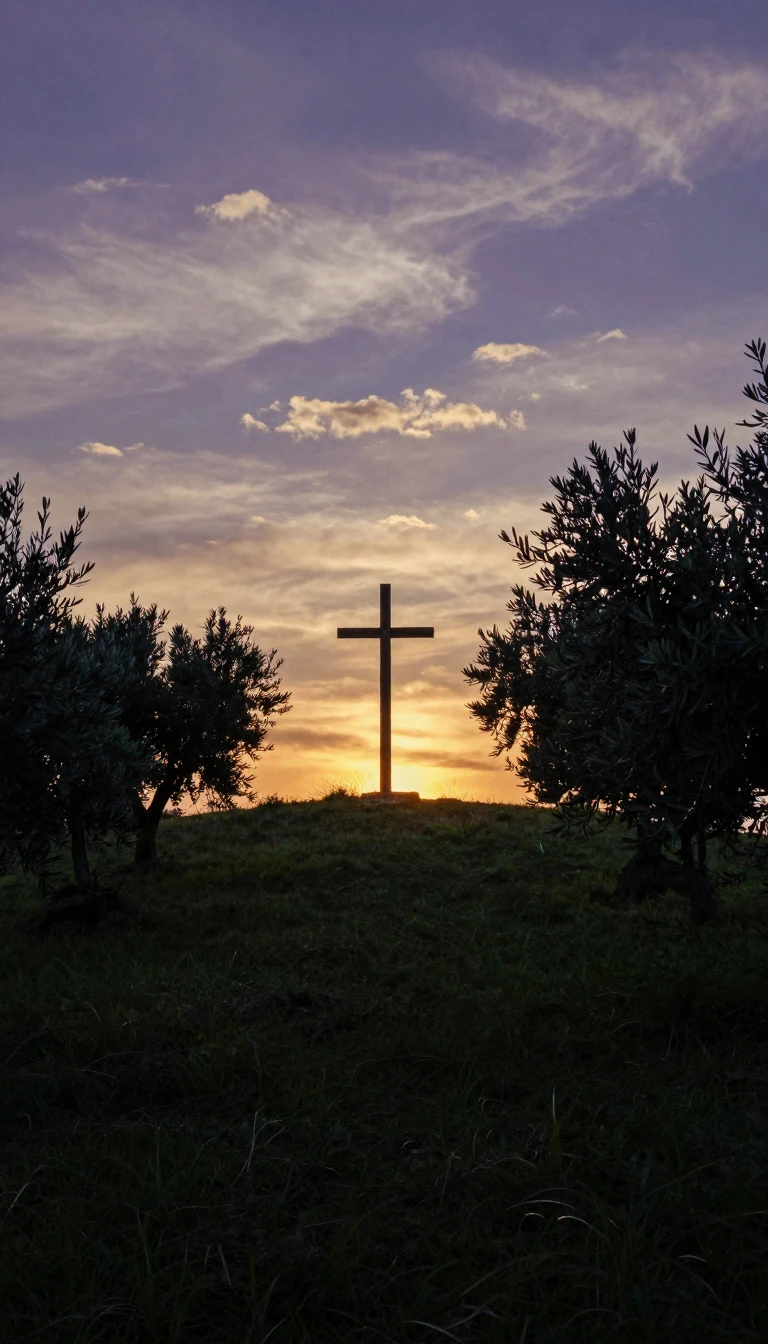
In short: In a dream, a cross recounts its role in Christ's crucifixion, blending pagan and Christian imagery to tell a story of sacrifice and triumph. This ancient poem, written in Old English, reveals how early Christians reinterpreted their faith through the lens of their own traditions.
The Dream of the Rood is a unique Christian poem from the Old English period, preserved in the tenth-century Vercelli Book. It tells the story of a cross that speaks in a dream, recounting its role in Christ's crucifixion. The poem is divided into three parts, with the cross narrating its experiences during the Passion of Christ. The cross is portrayed as a loyal retainer, suffering alongside Jesus and being resurrected with honor. The cross is depicted as both a divine instrument and a loyal companion to Christ, enduring the same suffering and ultimately being glorified alongside him.
The poem's structure is complex, with scholars like Faith H. Patten and Constance B. Hieatt offering different ways to divide it. Some see it as a dream vision, while others highlight its thematic progression. The cross is not just a passive object but an active participant in the crucifixion, sharing in Christ's suffering and being rewarded with glory. This blending of Christian and pre-Christian imagery reflects the cultural tensions of early medieval England. The poem's use of alliterative verse and its complex structure reflect the literary traditions of the time, blending Christian doctrine with elements of pre-Christian heroic poetry.
The poem's origins are debated, with some suggesting it may have been inspired by the Ruthwell Cross, an eighth-century stone cross with a vernacular poem. The cross's narrative is also found in runic inscriptions and other medieval artifacts, showing its influence across different forms of media. The poem's legacy lies in its ability to merge pagan and Christian traditions, offering a unique perspective on the crucifixion that resonates with both religious and cultural contexts. The Ruthwell Cross, an eighth-century monument, shares similar themes and imagery, suggesting a shared cultural and religious context for the poem's creation. Scholars continue to debate the poem's authorship, with some arguing for multiple contributors and others linking it to specific poets like Cynewulf or Cædmon.
Opens the Intellect+ feed with this card first. Swipe up for the next one.
Sources
- Summary by Intellect · source: The Dream of the Rood
To cite this card, link to https://intellectplus.co.uk/app/ideas-the-dream-of-the-rood.
How we source, check and correct cards: Editorial standards.
General information, not professional advice. Spotted an error? Flag the card or see corrections and complaints.
Intellect Plus is a visual educational discovery platform for exploring fascinating facts and ideas. Brain Food, Not Brain Rot. What is Intellect Plus?
Related
More in Abrahamic religions · More in Ideas & Philosophy · Latest · A–Z · All topics
