Who was the mysterious master composer behind the soaring sounds of Notre-Dame?
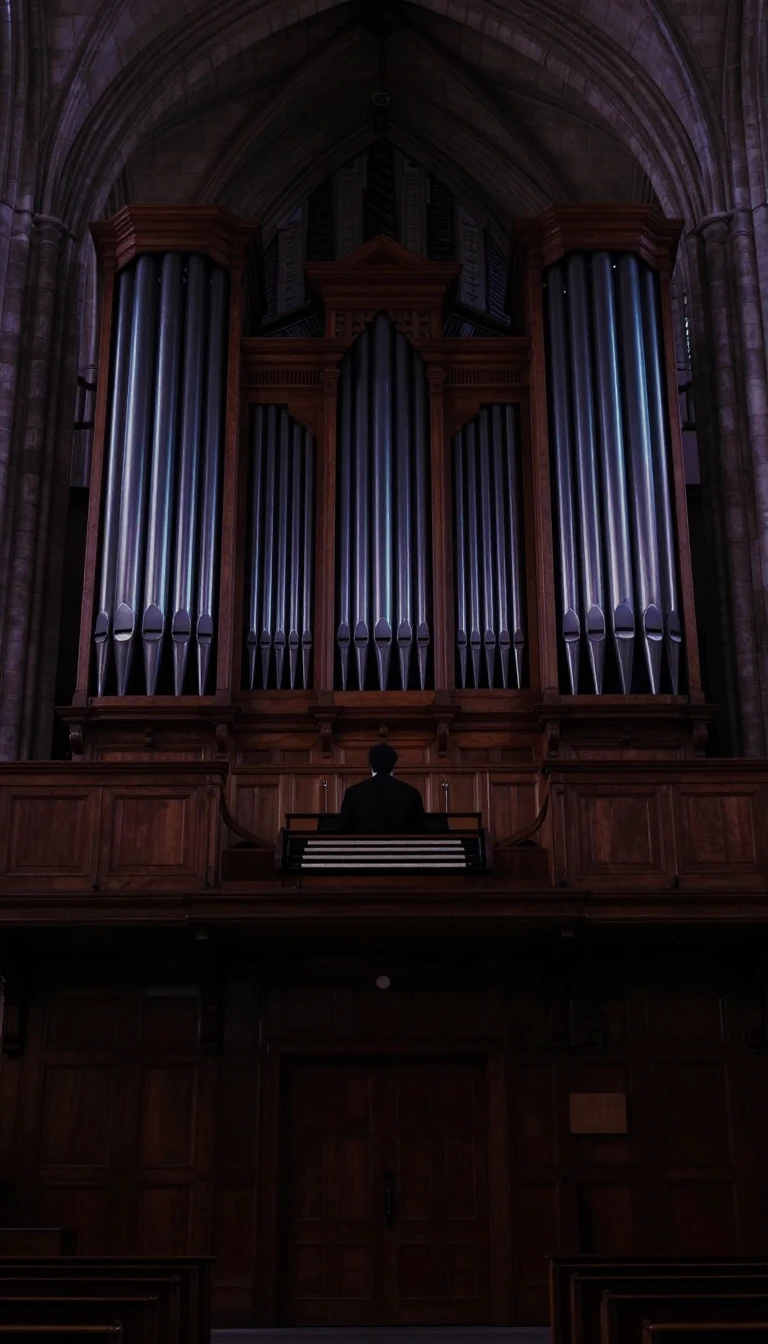
In short: Pérotin is a ghost in the history of music. Credited with pioneering complex four-part polyphony at Paris’s Notre-Dame Cathedral, his identity remains a riddle. We know him only through the accounts of students and theorists who revered him as a master, leaving behind a legacy of revolutionary sacred sound.
Pérotin, often called Magister Perotinus, stands as the most significant figure of the Notre Dame school of polyphony. While his life remains shrouded in mystery, he is believed to have worked at the Cathedral of Notre-Dame in Paris during the late 12th and early 13th centuries. His primary contribution to Western music was the expansion of polyphonic composition, specifically the introduction of three- and four-part harmonies. This evolution in choral writing marked a departure from the earlier, simpler styles of his predecessor, Léonin.
Our knowledge of Pérotin is almost entirely derived from secondary accounts rather than contemporary records. A student known as Anonymous IV provided the most detailed information, identifying Pérotin as the composer of masterpieces such as Viderunt omnes and Sederunt principes. This student described him as the best composer of descant, noting his use of striking musical embellishments. Another music theorist, Johannes de Garlandia, also referenced him, cementing his reputation as a master licensed to teach. Despite various attempts to link him to specific cathedral officials, such as a succentor named Petrus, no definitive historical identity has been established.
The cathedral itself, initiated by Bishop Maurice de Sully around 1160, provided the architectural and liturgical backdrop for Pérotin’s work. As the foundation stone was laid in 1163 and the high altar consecrated in 1189, the building became a hub for the ars antiqua style. Pérotin’s work flourished within this environment, likely between 1155 and 1205. His absence from the later development of the French motet, which gained prominence after 1210, suggests his active period concluded early in the 13th century. Today, he remains a singular figure whose name was preserved by colleagues who bestowed upon him the title of Magister, a mark of enduring respect for his technical brilliance.
Opens the Intellect+ feed with this card first. Swipe up for the next one.
Sources
- Summary by Intellect · source: Pérotin | Medieval Music, Notre Dame School, Polyphony | Britannica
- Also: Pérotin
To cite this card, link to https://intellectplus.co.uk/app/music-p-rotin.
How we source, check and correct cards: Editorial standards.
General information, not professional advice. Spotted an error? Flag the card or see corrections and complaints.
Intellect Plus is a visual educational discovery platform for exploring fascinating facts and ideas. Brain Food, Not Brain Rot. What is Intellect Plus?
Related
More in Musicians and composers · More in Music · Latest · A–Z · All topics
