These bizarre, spherical geological formations are often mistaken for alien artifacts or dinosaur eggs.
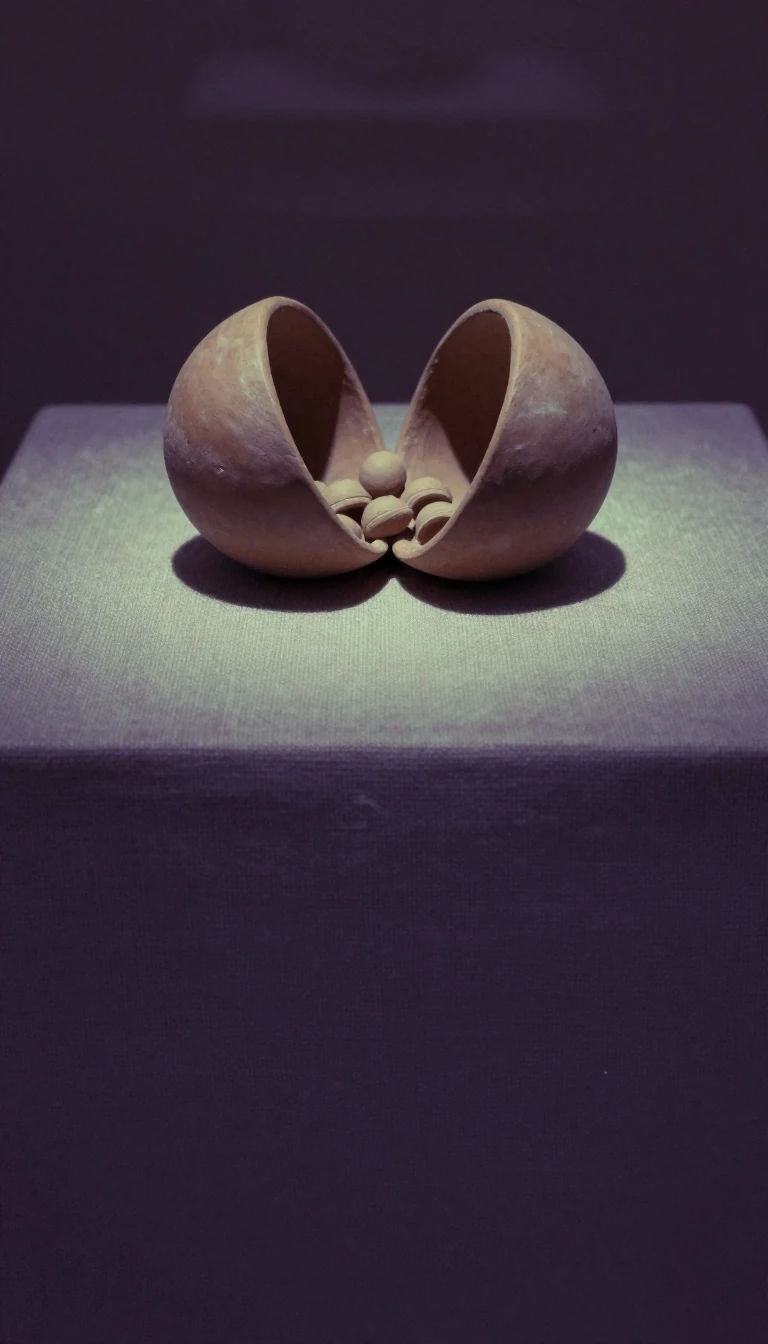
In short: Concretions are compact mineral masses that grow within sedimentary rock, often forming around a nucleus like a fossil or shell. Because they appear in strange, sometimes perfectly spherical shapes, they have been historically misinterpreted as extraterrestrial debris or ancient human artifacts, though they are purely natural geological phenomena.
Concretions originate when mineral-rich water precipitates cement into the spaces between sediment particles. This process occurs after the sediment is buried but before it fully hardens into rock, a phase known as diagenesis. While they are often confused with nodules—which are replacement bodies—concretions typically grow around a specific core, or nucleus. This nucleus can be organic, such as a leaf, tooth, or piece of shell, which is why fossil hunters often crack them open in search of preserved specimens.
The growth of these masses can be concentric, where layers of mineral build up around the core, or pervasive, where cementation occurs throughout the entire volume simultaneously. They exhibit immense diversity in size and form, ranging from microscopic objects to massive boulders reaching up to 9 meters in diameter, such as those found in Egypt’s Faiyum depression. Their composition is equally varied, often reflecting the host rock's mineralogy; for example, sandstones may host calcite concretions, while black shales often contain pyrite.
Some varieties, like septarian concretions, feature complex internal cracks filled with minerals, creating a distinct, partitioned appearance. Theories regarding their formation range from dehydration-induced shrinkage to brittle fracturing caused by seismic activity. Others, like the 'cannonball' concretions of North Dakota or the 'fairy stones' of Scandinavia, demonstrate how environmental conditions dictate their unique shapes. Even on Mars, the Opportunity rover has identified hematite spherules, proving that these geological curiosities are not unique to Earth.
Beyond their aesthetic appeal, concretions serve as vital records for geologists. They provide insights into early diagenesis, groundwater flow, and local permeability trends. Whether they are the iron-oxide 'Moqui marbles' of Utah or the sculpture-like 'gogottes' of France, these formations remain a testament to the complex, often rapid chemical processes occurring deep beneath the surface of our planet.
Opens the Intellect+ feed with this card first. Swipe up for the next one.
Sources
- Summary by Intellect · source: Concretion
To cite this card, link to https://intellectplus.co.uk/app/nature-concretion.
How we source, check and correct cards: Editorial standards.
General information, not professional advice. Spotted an error? Flag the card or see corrections and complaints.
Intellect Plus is a visual educational discovery platform for exploring fascinating facts and ideas. Brain Food, Not Brain Rot. What is Intellect Plus?
Related
More in Geology · More in Nature · Latest · A–Z · All topics
