How ancient coal forests and tectonic shifts triggered a 100-million-year global deep freeze.
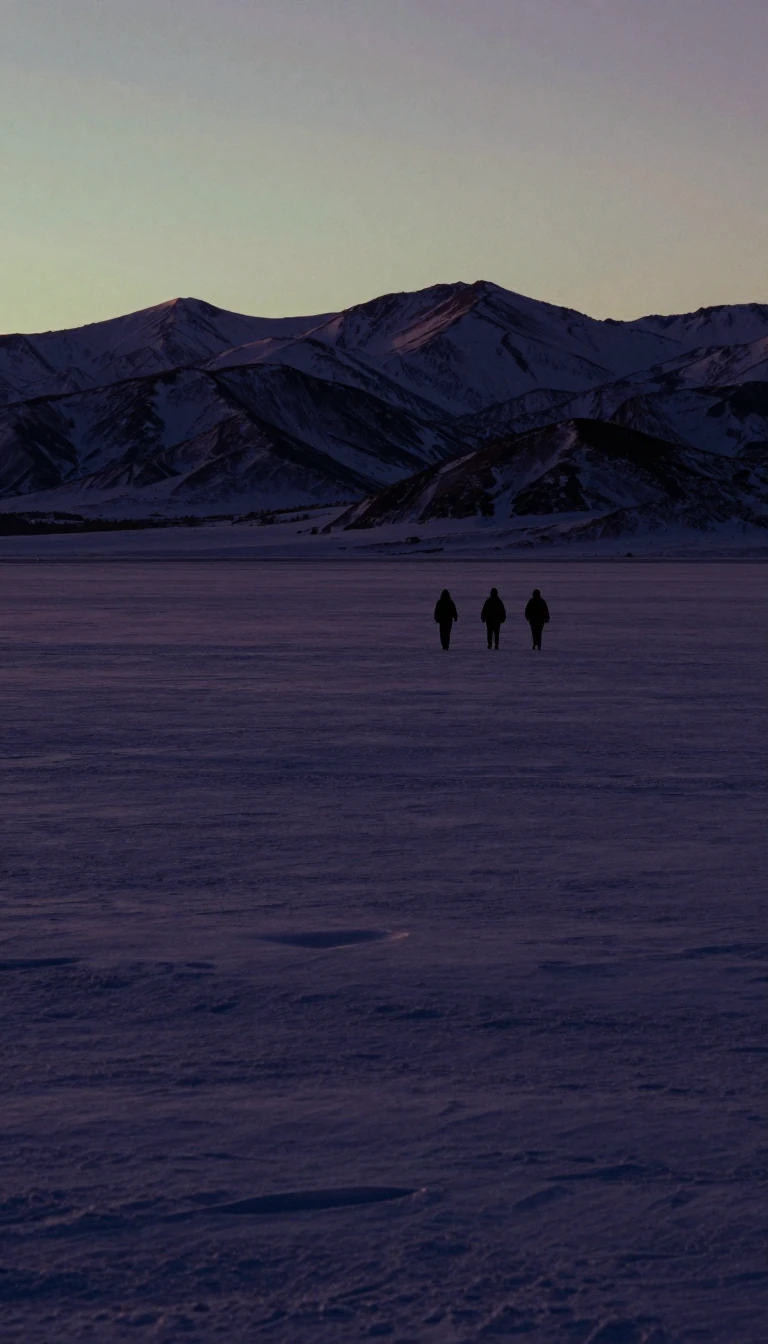
In short: Between 360 and 255 million years ago, Earth entered a prolonged icehouse period. Driven by massive carbon sequestration in equatorial swamps and tectonic shifts that altered ocean currents, this era saw Gondwana covered in shifting ice sheets, fundamentally reshaping the planet's climate, sea levels, and the evolution of life itself.
The Late Paleozoic Icehouse, once known as the Karoo Ice Age, was a complex, multi-stage event that spanned the Carboniferous and Permian periods. Rather than a single, continuous freeze, researchers suggest it consisted of up to 25 independent ice sheets that waxed and waned across the supercontinent Gondwana. As the landmass drifted relative to the South Pole, the centers of glaciation migrated from western South America toward Africa and eventually Australia. These glacial episodes were not uniform; they were punctuated by warmer interglacial intervals, such as the Alykaevo Climatic Optimum.
The transition into this icehouse was largely fueled by a dramatic reduction in atmospheric carbon dioxide. The rapid radiation of vascular plants, particularly the massive arborescent lycopods of the Carboniferous coal forests, sequestered vast amounts of carbon. When these plants died, they were buried in swamps, effectively locking carbon away as coal. This process, combined with increased silicate weathering caused by the assembly of the supercontinent Pangaea, lowered CO2 levels—possibly to as low as 180 ppm—and pushed global temperatures down. Simultaneously, atmospheric oxygen levels surged to 35%, enabling the evolution of giant arthropods like the 1.8-meter-long Arthropleura.
The icehouse was governed by Milankovitch cycles, which drove high-amplitude sea-level changes of up to 120 meters. These fluctuations created unique sedimentary sequences known as cyclothems and profoundly impacted marine biodiversity. The system eventually hit a tipping point: as ice sheets expanded, they increased planetary albedo, but rising oxygen levels also increased the frequency of firestorms, which released stored carbon back into the atmosphere. By the Early and Middle Permian, these feedback loops, alongside shifting tectonic and volcanic activity, caused glacial periods to shorten and interglacials to lengthen, eventually ending the icehouse around 255 million years ago.
Opens the Intellect+ feed with this card first. Swipe up for the next one.
Sources
- Summary by Intellect · source: Late Paleozoic icehouse
To cite this card, link to https://intellectplus.co.uk/app/nature-late-paleozoic-icehouse.
How we source, check and correct cards: Editorial standards.
General information, not professional advice. Spotted an error? Flag the card or see corrections and complaints.
Intellect Plus is a visual educational discovery platform for exploring fascinating facts and ideas. Brain Food, Not Brain Rot. What is Intellect Plus?
Related
More in Geology · More in Nature · Latest · A–Z · All topics
