Why the mule deer's unique escape strategy is both its greatest strength and weakness
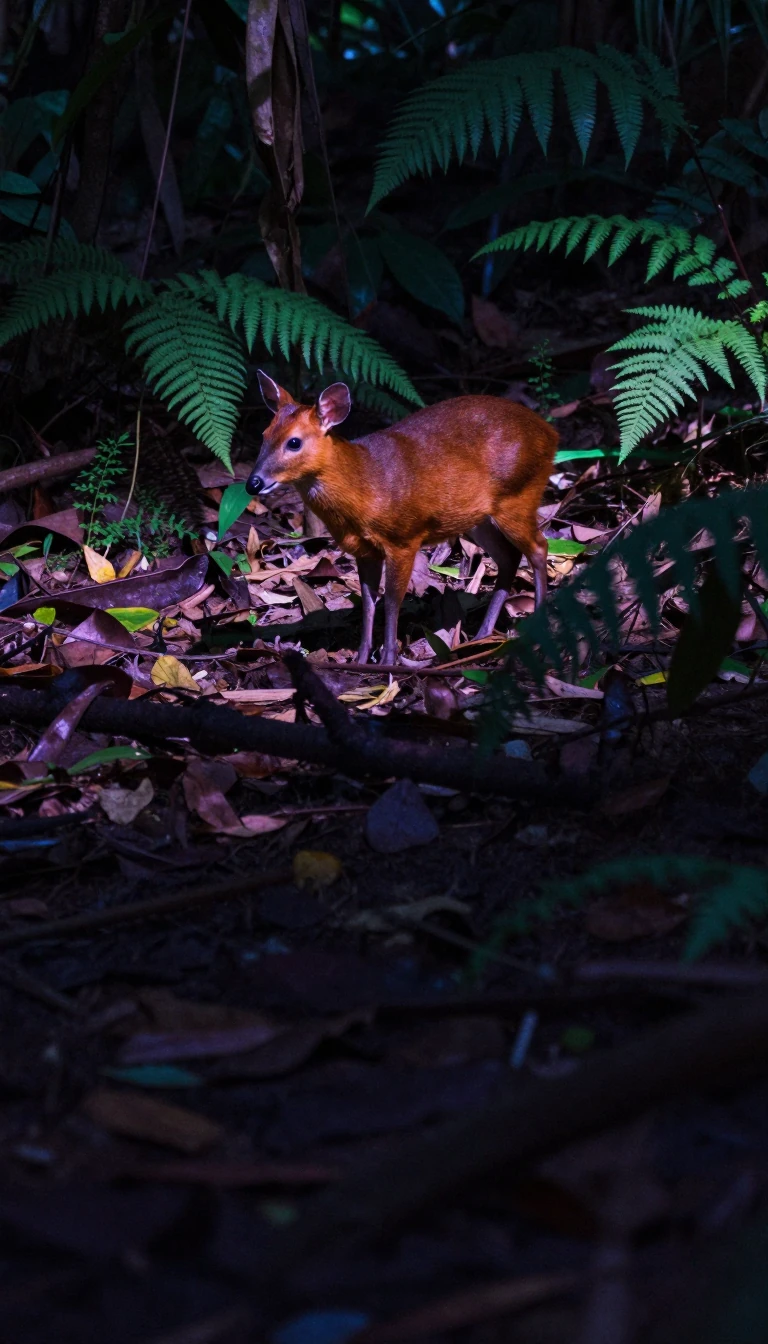
In short: Named for ears that resemble a mule's, these western North American deer have evolved a peculiar way to outrun predators. Instead of sprinting, they leap with all four legs, a high-jumping gait that helps them navigate rugged, steep terrain but leaves them vulnerable when they cross paths with other species.
Mule deer (Odocoileus hemionus) are medium-sized members of the Cervidae family, ranging from the Arctic Circle down to northern Mexico. While they are the same species as the black-tailed deer, their genetic history is complex. Mitochondrial DNA suggests they are a relatively recent evolutionary development, likely arising from the hybridization of female white-tailed deer and male black-tailed deer. This lineage gives them a distinct profile, characterized by large antlers, scent glands, and their namesake ears.
Their survival strategy is built for the rugged, open landscapes of the American West. When threatened, mule deer employ a unique bounding gait, leaping and landing on all four feet simultaneously. While this method is slower than a traditional gallop, it allows them to ascend steep slopes and clear large obstacles that would stop a predator in its tracks. However, this specialized movement is not universally effective. When mule deer interbreed with white-tailed deer, the resulting hybrids often suffer from impaired antipredator behavior, failing to jump or flee with the necessary speed and agility to survive.
The life cycle of the mule deer is marked by distinct seasonal behaviors. During the rut, which occurs from early November to December, males engage in frequent, aggressive antler wrestling and may even gore females that do not respond to their advances. After the rut, exhausted males retreat into hiding to recover from injuries. While populations were severely depleted by market hunting at the end of the 19th century, they have since been restored in many areas. Today, they face new pressures from habitat loss, drought, and competition with the expanding white-tailed deer population, which continues to threaten their genetic and behavioral integrity.
Opens the Intellect+ feed with this card first. Swipe up for the next one.
Sources
- Summary by Intellect · source: Mule deer | Behavior, Habitat & Diet | Britannica
- Also: Mule deer
To cite this card, link to https://intellectplus.co.uk/app/nature-mule-deer.
How we source, check and correct cards: Editorial standards.
General information, not professional advice. Spotted an error? Flag the card or see corrections and complaints.
Intellect Plus is a visual educational discovery platform for exploring fascinating facts and ideas. Brain Food, Not Brain Rot. What is Intellect Plus?
Related
More in Organisms · More in Nature · Latest · A–Z · All topics
