The Nilgiri tahr is not actually a goat, but a distant cousin of sheep.
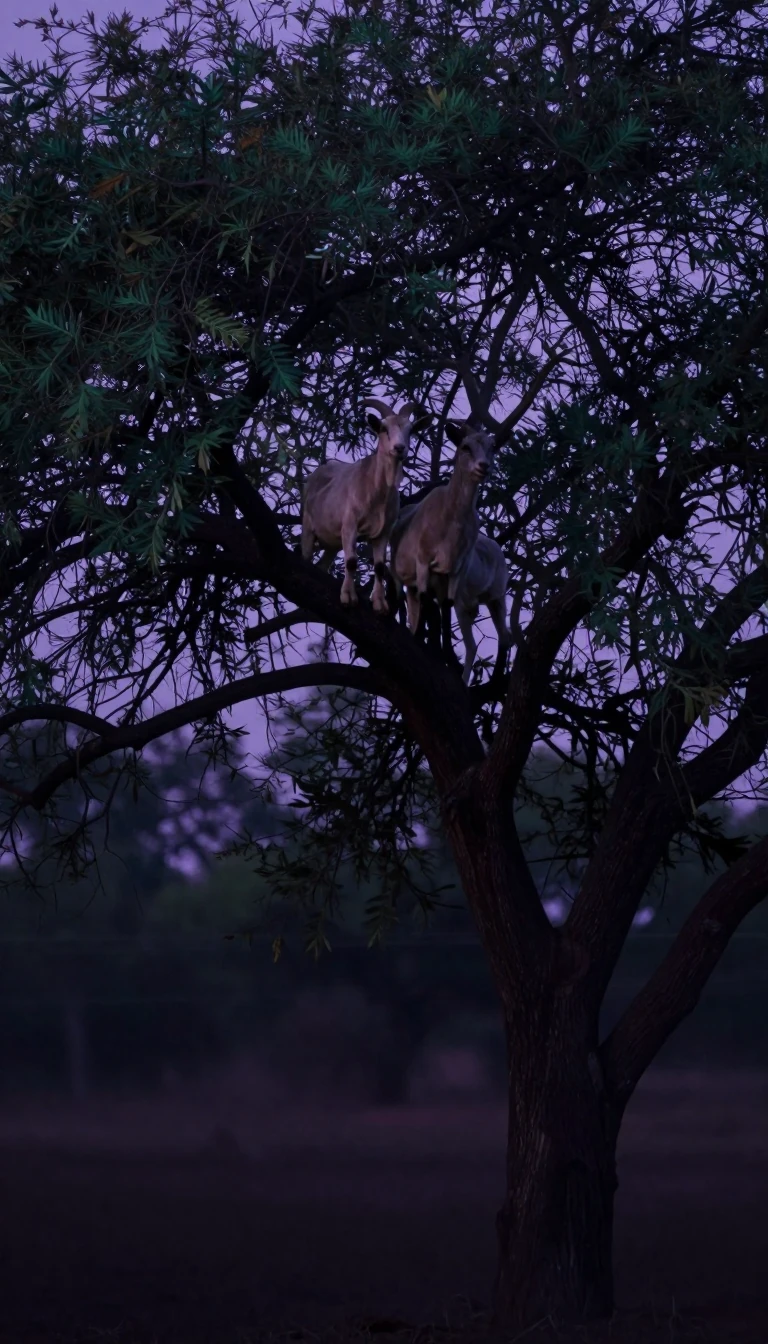
In short: Endemic to the high-altitude grasslands of India's Western Ghats, the Nilgiri tahr was long misclassified as a typical mountain goat. Modern genetic analysis reveals a surprising evolutionary history, proving this agile climber is more closely related to the genus Ovis, which includes domestic sheep, than to true wild goats.
The Nilgiri tahr (Nilgiritragus hylocrius) is a stocky, mountain-dwelling ungulate found only in the Nilgiri and Anamalai Hills of Tamil Nadu and Kerala. Historically, these animals were grouped with Arabian and Himalayan tahrs under the genus Hemitragus. However, a 2005 phylogenetic study fundamentally changed our understanding of their lineage. Researchers discovered that while other tahrs are sister species to the genus Capra, the Nilgiri tahr diverged from a common ancestor shared with sheep approximately 2.7 to 5.2 million years ago. This led to its reclassification into the monotypic genus Nilgiritragus, a name derived from the Sanskrit words for blue and hills.
Physically, these animals are built for the steep, rocky terrain of the South Western Ghats. Adult males, often called saddlebacks due to a dark patch on their backs, stand about 100 cm tall and can weigh up to 100 kg. Both sexes possess backward-curving horns, though males are significantly larger and sport a bristly mane. They are highly agile, navigating precipices at elevations between 1,200 and 2,600 meters, though a 2025 survey recorded an unusual sighting at a low altitude of 270 meters in Peyanar.
The species has faced a precarious existence. Once widespread, hunting and habitat loss in the 19th century decimated their numbers, leaving only a few hundred individuals by the end of the 20th century. Conservation efforts, including the 2022 launch of Project Nilgiri Tahr by the Tamil Nadu government, have since stabilized the population. The most recent synchronized survey in April 2025 recorded 2,655 individuals across Kerala and Tamil Nadu. Despite this recovery, the tahr remains endangered, threatened by landscape fragmentation, invasive species, and livestock grazing, necessitating ongoing monitoring and habitat restoration.
Opens the Intellect+ feed with this card first. Swipe up for the next one.
Sources
- Summary by Intellect · source: Nilgiri tahr
- Also: iNaturalist — Nilgiri Tahr (Nilgiritragus hylocrius) · CC BY-SA 4.0 (Wikipedia summary)
To cite this card, link to https://intellectplus.co.uk/app/nature-nilgiri-tahr.
How we source, check and correct cards: Editorial standards.
General information, not professional advice. Spotted an error? Flag the card or see corrections and complaints.
Intellect Plus is a visual educational discovery platform for exploring fascinating facts and ideas. Brain Food, Not Brain Rot. What is Intellect Plus?
Related
More in Organisms · More in Nature · Latest · A–Z · All topics
