How horizontal crustal movement creates deep, resource-rich depressions in the Earth's surface
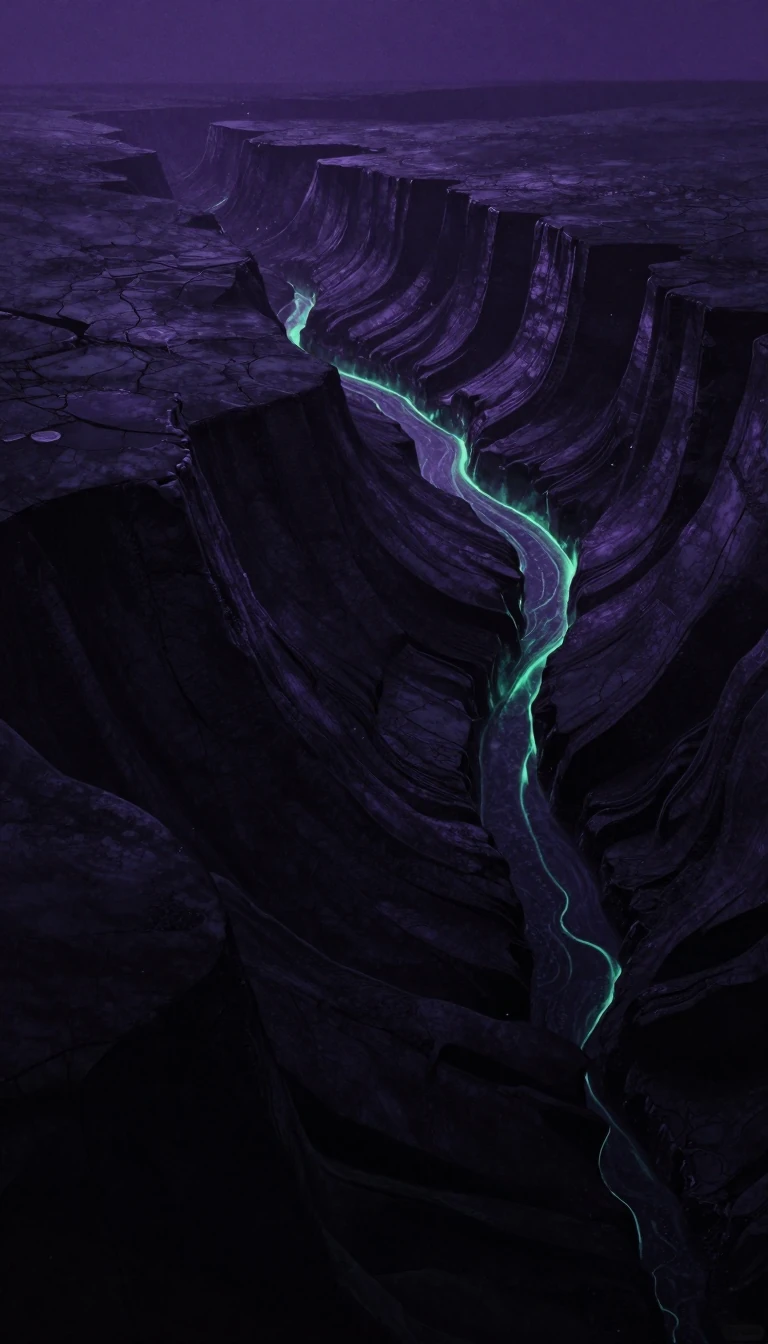
In short: When tectonic plates slide horizontally past one another, they rarely move in perfectly straight lines. These jagged paths create step-overs and bends that literally pull the crust apart. The result is a pull-apart basin—a rhombic depression that serves as a vital trap for oil, gas, and geothermal energy.
Pull-apart basins emerge in transtensional zones where strike-slip faults—fractures where crustal blocks slide horizontally—deviate from a straight course. As these faults overlap or bend, they generate extensional stress that causes the ground to sink. These basins are typically rhombic or rhomboidal in map view and often exhibit half-graben profiles in cross-section. Their formation is driven by complex interactions between primary faults and subsidiary fractures, such as Riedel shears and P-shears, which dictate the basin's internal architecture and sediment patterns.
The development of these basins is often episodic and relatively short-lived, typically lasting less than 10 million years. Despite their brief geological lifespan, they are characterized by high rates of tectonic subsidence, often exceeding 0.5 kilometers per million years. This rapid sinking creates significant accommodation space for sediment, which, combined with intense structural deformation, makes these basins prime locations for hydrocarbon accumulation. The thinning of the crust within these zones can also trigger salt diapirism and facilitate the rise of magma, which explains why pull-apart basins are frequently associated with geothermal fields and mineral deposits like copper.
Modern research relies on high-resolution seismic imaging and physical simulation experiments to decode these structures. By using scaled models—often with wet clay—geologists can visualize how basement fault activity propagates into overlying sedimentary strata. These experiments have revealed that the intersection of fault planes and pressurized deformation zones are critical for trapping fluids. Understanding these architectures is not just academic; it is essential for modern exploration, as these basins host famous geological features such as the Dead Sea, the Salton Trough, and the Sea of Marmara.
Opens the Intellect+ feed with this card first. Swipe up for the next one.
Sources
- Summary by Intellect · source: Strike-Slip Fault Systems and Pull-Apart Basin Evolution | Structural Geology and Tectonics | Geology | Earth & environmental sciences | Topics | Nature Index
- Also: Pull-apart basin
- Also: Pull-apart basin | geology | Britannica
To cite this card, link to https://intellectplus.co.uk/app/nature-pull-apart-basin.
How we source, check and correct cards: Editorial standards.
General information, not professional advice. Spotted an error? Flag the card or see corrections and complaints.
Intellect Plus is a visual educational discovery platform for exploring fascinating facts and ideas. Brain Food, Not Brain Rot. What is Intellect Plus?
Related
More in Geology · More in Nature · Latest · A–Z · All topics
