Despite their misleading name, these tiny African mammals are actually related to elephants
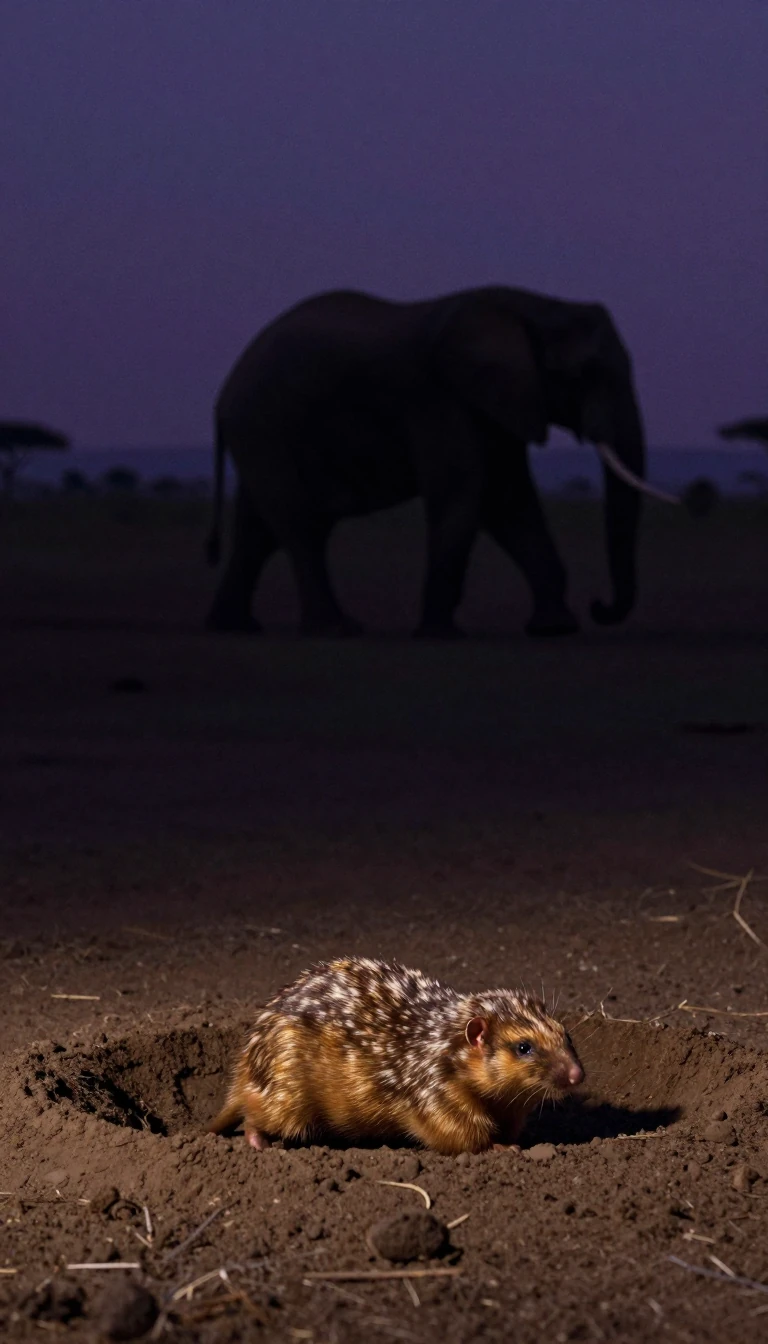
In short: Sengis, once misidentified as shrews due to their long, trunk-like noses, are actually members of the Afrotheria clade. These elusive, insectivorous creatures are among the fastest small mammals on Earth, reaching speeds of nearly 18 miles per hour while patrolling cleared pathways through the African undergrowth to hunt for prey.
Sengis, or elephant shrews, have long been misunderstood. While their superficial appearance suggests a link to shrews or rodents, modern phylogenetic analysis places them within the Afrotheria clade, revealing a surprising evolutionary connection to elephants. This classification, solidified in 1998, followed a 1997 proposal to adopt the name 'sengi'—derived from Bantu languages—to replace the misleading 'elephant shrew' moniker. Their evolutionary history is deep, with the divergence between macroscelids and afrosoricidans estimated at roughly 57.5 million years ago during the late Paleocene.
These mammals are remarkably specialized for their environment. Ranging from 10 to 30 centimeters in length, they utilize flexible proboscises to forage for insects, spiders, and worms. To navigate their territories, many species maintain cleared pathways that serve as high-speed escape routes. Their physiology is equally distinct; they are among the few non-primate mammals to undergo a menstrual cycle, a trait that led to their use in 1940s human reproductive research. Despite living in monogamous pairs, they are solitary by nature, maintaining separate nests and interacting primarily for reproduction.
The survival of these creatures is a testament to their adaptability. Found across diverse African habitats—from the arid Namib Desert to dense forests—they regulate their body temperature at 35 °C, balancing heat through evaporative water loss. While they are wary and difficult to observe, their resilience is clear. The Somali sengi, for instance, was famously rediscovered in 2020 after remaining unobserved for over 50 years. As they continue to be studied, these small, brainy insectivores offer a unique window into the evolutionary diversification of the African continent.
Opens the Intellect+ feed with this card first. Swipe up for the next one.
Sources
- Summary by Intellect · source: Sengi
To cite this card, link to https://intellectplus.co.uk/app/nature-sengi.
How we source, check and correct cards: Editorial standards.
General information, not professional advice. Spotted an error? Flag the card or see corrections and complaints.
Intellect Plus is a visual educational discovery platform for exploring fascinating facts and ideas. Brain Food, Not Brain Rot. What is Intellect Plus?
Related
More in Organisms · More in Nature · Latest · A–Z · All topics
