The mysterious ram's horn squid is a deep-sea ghost with a glowing secret
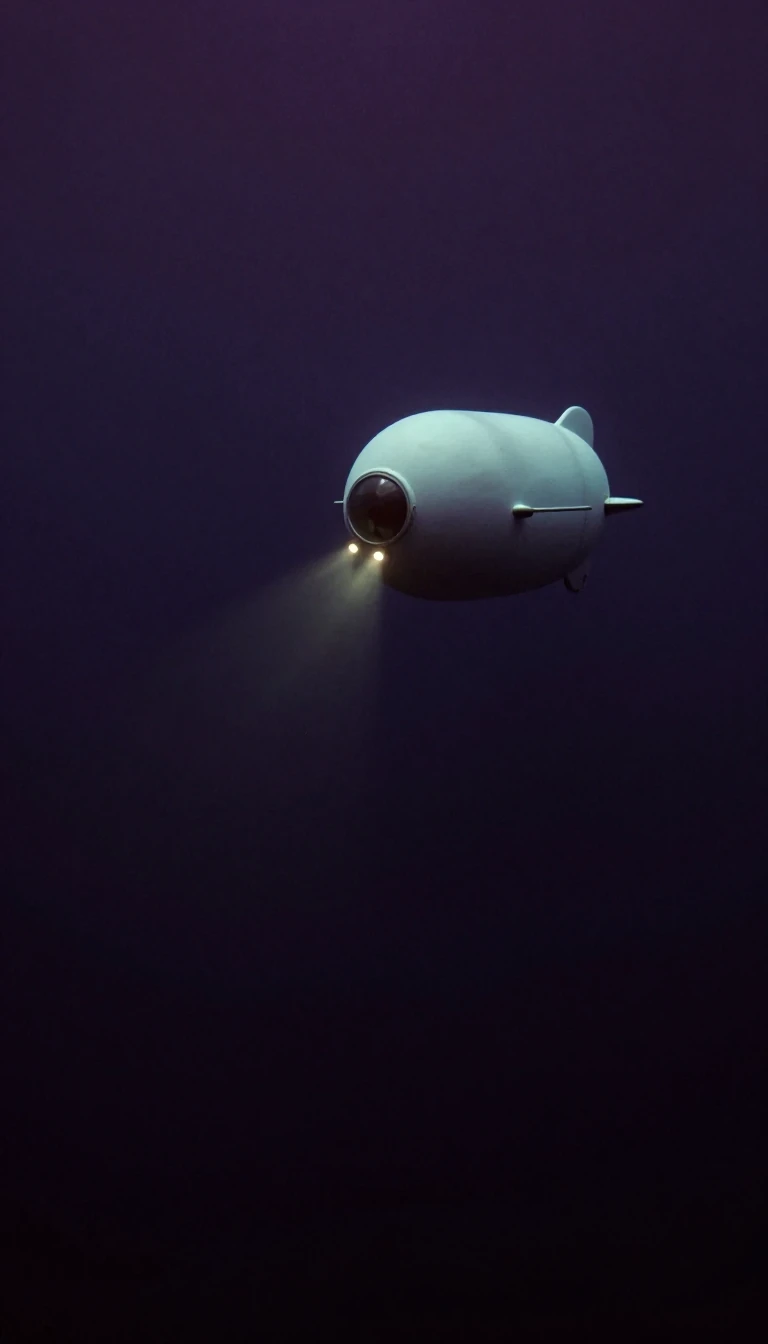
In short: You have likely held its shell on a beach, but you have almost certainly never seen the animal itself. Spirula spirula is a rare, deep-water cephalopod that spends its days in the dark abyss and its nights rising toward the surface, guided by a glowing light at its tail.
Spirula spirula, commonly known as the ram's horn squid, is a biological outlier. As the sole surviving member of the order Spirulida, it represents a unique lineage that likely shares a close evolutionary history with extinct belemnites and aulacocerids. While its internal, chambered shell is a familiar treasure to beachcombers worldwide due to its extreme buoyancy and durability, the live animal remains elusive. It was only in 2020 that researchers from the Schmidt Ocean Institute captured the first-ever footage of the creature in its natural habitat near the northern Great Barrier Reef.
The squid's most striking feature is its internal, planispiral shell, which functions as a sophisticated buoyancy organ. Unlike the nautilus, which maintains gas-filled chambers, the spirula can osmotically control its depth by moving fluid into all of its chambers. This mechanism allows the animal to navigate the vertical water column, dwelling at depths of up to 1,000 meters during the day and ascending to between 100 and 300 meters at night. To survive in these dark environments, it utilizes a photophore at the tip of its mantle to emit a green light, a strategy believed to be used for counter-illumination while the animal hangs in a vertical, head-up stance.
Despite its global distribution—with sightings ranging from the Canary Islands to the Arabian Sea—much of the spirula's life history remains a mystery. Scientists believe they spawn in deep water during the winter, yet no spawnlings have ever been documented. Their physical structure is equally distinct, featuring a small body between 35 and 45 millimeters in length, eight arms, and two longer tentacles. They lack a functional radula, setting them apart from many other mollusks. While their shells wash up on shores from South Africa to New Zealand, the living organism remains a rare, deep-ocean phantom, occasionally revealed only by the contents of an albatross's stomach or the lens of a remote-operated vehicle.
Opens the Intellect+ feed with this card first. Swipe up for the next one.
Sources
- Summary by Intellect · source: Spirula
- Also: iNaturalist — Ram's Horn Squid (Spirula spirula) · CC BY-SA 4.0 (Wikipedia summary)
To cite this card, link to https://intellectplus.co.uk/app/nature-spirula.
How we source, check and correct cards: Editorial standards.
General information, not professional advice. Spotted an error? Flag the card or see corrections and complaints.
Intellect Plus is a visual educational discovery platform for exploring fascinating facts and ideas. Brain Food, Not Brain Rot. What is Intellect Plus?
Related
More in Mollusks · More in Nature · Latest · A–Z · All topics
