How do the world's largest invertebrates survive in the lightless, crushing deep ocean?
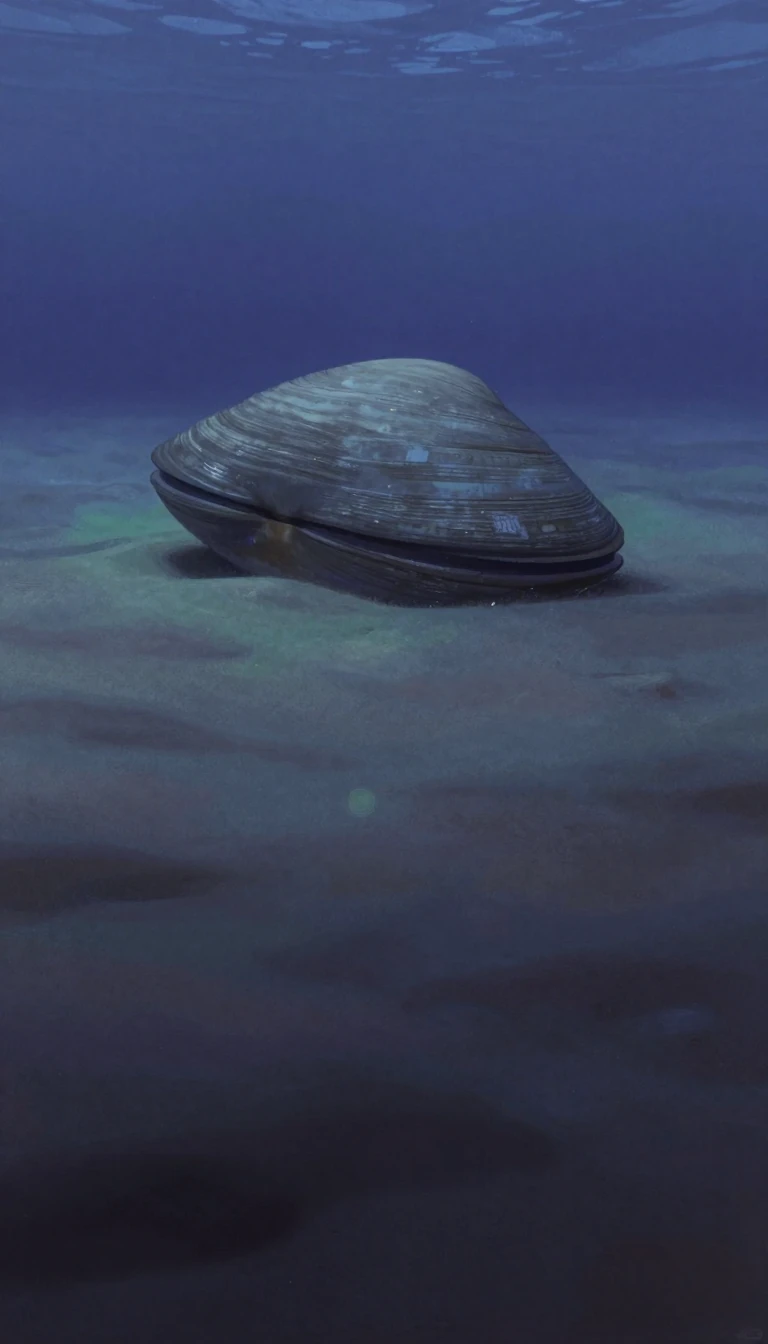
In short: The giant squid is a creature of legend, yet it remains one of Earth's most elusive mysteries. Despite its massive size, this deep-sea inhabitant was rarely seen alive until the 21st century. Scientists are now uncovering how its unique biology allows it to thrive in the planet's most inhospitable environments.
The giant squid, Architeuthis dux, is a master of the abyss, utilizing a sophisticated suite of adaptations to survive in the deep ocean. Unlike fish that rely on gas-filled swim bladders, these cephalopods maintain neutral buoyancy using an ammonium chloride solution distributed throughout their bodies. This chemical composition, which tastes like salty liquorice, keeps them afloat but renders them unappealing for human consumption. To navigate the lightless depths, they possess the largest eyes in the animal kingdom, measuring up to 10 or 11 inches in diameter, allowing them to detect bioluminescence and subtle tonal shifts where other creatures see nothing.
Locomotion and hunting are equally specialized. While they possess fins, their primary movement is driven by jet propulsion, forcing water through a siphon to maneuver their massive frames. They are equipped with eight arms and two elongated feeding tentacles, which feature suckers lined with sharp, serrated chitinous rings. These tools are essential for capturing prey, which includes fish, shrimp, and other squid. There is even speculation that they may occasionally engage with sperm whales, a theory supported by the circular scars frequently found on the heads of whales that have encountered them.
For decades, the giant squid was known only through carcasses washed ashore or recovered by fishermen. Our understanding shifted significantly in 2004, when researchers in Japan captured the first images of a live specimen in its natural habitat. By 2006, scientists successfully brought a 24-foot female to the surface. Despite these breakthroughs, much remains debated, including their exact range and lifespan. Researchers now use growth rings found within the statoliths of their statocysts—organs used to sense orientation—to estimate age, much like counting the rings of a tree. While genetic evidence suggests there is only one species, the giant squid continues to challenge our understanding of abyssal gigantism.
Opens the Intellect+ feed with this card first. Swipe up for the next one.
Sources
- Summary by Intellect · source: Giant Squid | National Geographic
- Also: Giant squid
To cite this card, link to https://intellectplus.co.uk/app/nature-giant-squid.
How we source, check and correct cards: Editorial standards.
General information, not professional advice. Spotted an error? Flag the card or see corrections and complaints.
Intellect Plus is a visual educational discovery platform for exploring fascinating facts and ideas. Brain Food, Not Brain Rot. What is Intellect Plus?
Related
More in Mollusks · More in Nature · Latest · A–Z · All topics
