Glacial till is the unsorted, rocky debris left behind by the world's moving ice.
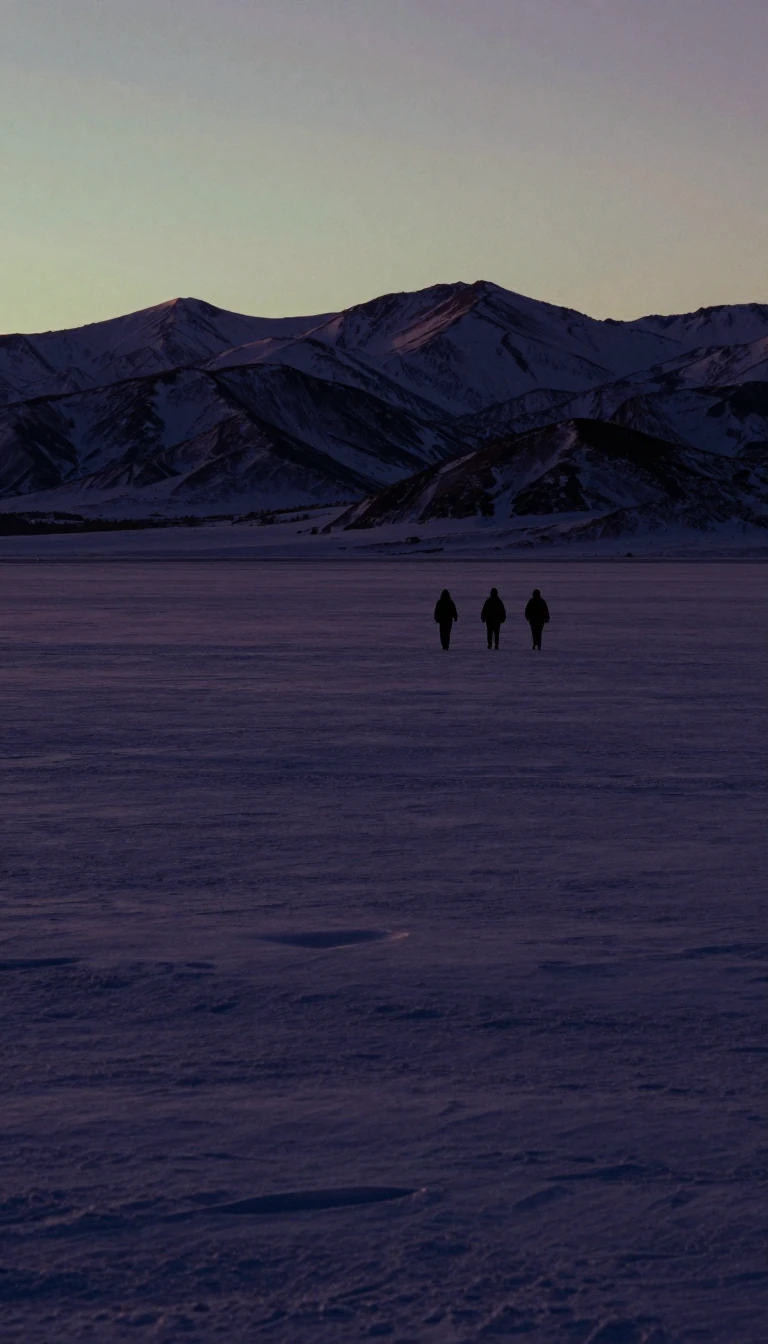
In short: When glaciers grind across the landscape, they act as massive conveyor belts, picking up everything from fine clay to massive boulders. The resulting sediment, known as till, is a chaotic, unstratified mixture that offers geologists a roadmap to the past, revealing the hidden history of ancient ice flows and continental movement.
Till is defined as unsorted, unstratified glacial sediment deposited directly by ice without the reworking influence of meltwater. Unlike deposits shaped by turbulent rivers, which winnow away finer particles, till retains a bimodal mix of clay, silt, sand, and larger clasts. These fragments often bear the scars of their journey, including striations, polish, and facets caused by glacial abrasion against the bedrock below.
The composition of till is remarkably diverse, frequently containing rock types sourced from outcrops hundreds of kilometers away. Geologists use this to their advantage through till prospecting, sampling wide areas to trace valuable minerals—such as gold, diamonds, or nickel—back to their original bedrock source. When this sediment is eventually buried and lithified into solid rock, it becomes known as tillite.
These ancient rocks have played a pivotal role in major scientific breakthroughs. Matching beds of tillite found on opposite sides of the South Atlantic provided early, tangible evidence for the theory of continental drift. Furthermore, these deposits offer critical support for the Snowball Earth hypothesis, which suggests that the planet underwent extreme global glaciation during the Precambrian era.
Classifying till remains a subject of debate. While traditional methods categorized deposits based on their specific method of deposition—such as lodgement, where clasts are forced into the bed, or meltout, where debris is released by thawing—some modern researchers argue for a simpler classification focused on deformation. This shift reflects the inherent difficulty in interpreting complex, overprinted landforms that have been reworked by centuries of glacial activity.
Opens the Intellect+ feed with this card first. Swipe up for the next one.
Sources
- Summary by Intellect · source: Till
To cite this card, link to https://intellectplus.co.uk/app/nature-till.
How we source, check and correct cards: Editorial standards.
General information, not professional advice. Spotted an error? Flag the card or see corrections and complaints.
Intellect Plus is a visual educational discovery platform for exploring fascinating facts and ideas. Brain Food, Not Brain Rot. What is Intellect Plus?
Related
More in Geology · More in Nature · Latest · A–Z · All topics
