Earth's mantle transition zone acts as a complex gatekeeper for deep planetary heat.
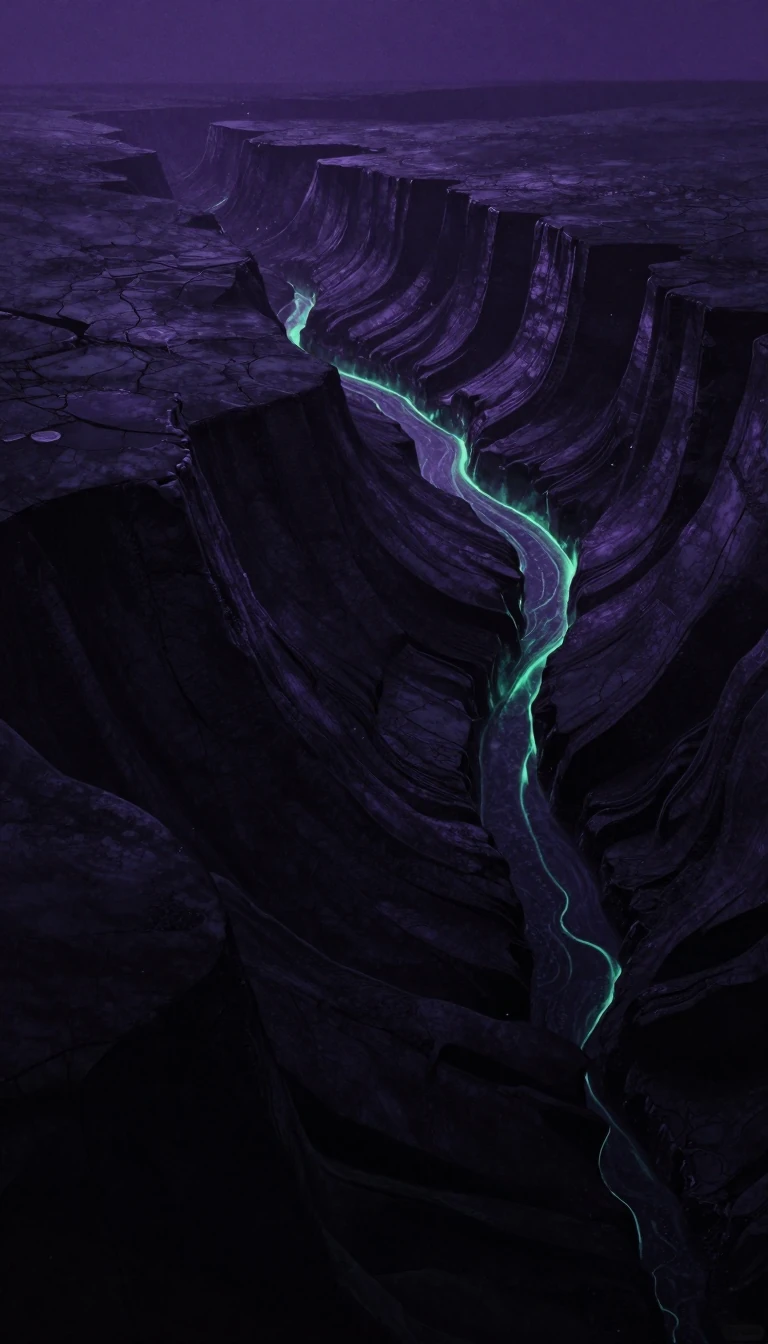
In short: Deep beneath our feet, between 410 and 660 kilometers down, lies a mysterious region called the mantle transition zone. This layer is not just a static boundary; it is a dynamic, shifting filter that dictates how heat and material move between the upper and lower layers of our planet.
The mantle transition zone is defined by seismic discontinuities, where the speed of earthquake waves changes abruptly. These shifts are driven by mineral phase transitions, where intense pressure forces rock structures to rearrange into denser forms. At roughly 410 kilometers, olivine transforms into wadsleyite, while at 660 kilometers, ringwoodite breaks down into bridgmanite and periclase. A secondary transition is also predicted near 520 kilometers, though it is only sporadically detected in seismic data.
These boundaries are highly sensitive to temperature. In cold regions, such as where subducting oceanic slabs penetrate the mantle, the phase transitions occur at different depths than in warmer regions, like those influenced by mantle plumes. Because these transitions are temperature and density-dependent, they act as a regulatory mechanism for mantle convection. The 660-kilometer boundary, in particular, is associated with an endothermic reaction and a viscosity jump, which can cause cold downwelling material to pond, effectively slowing the exchange of material between the upper and lower mantle.
Geologists study these regions using seismic observations and mineral physics models to understand the Earth's internal composition. While early models often assumed a uniform pyrolitic mantle, modern research reveals significant compositional heterogeneity. Seismic imaging, including the analysis of SS and PP precursors, suggests that the transition zone is poorly mixed. By mapping these discontinuities, scientists can infer the thermal state of the deep mantle and track how subducted crustal material contributes to the chemical complexity of the Earth's interior over geological time.
Opens the Intellect+ feed with this card first. Swipe up for the next one.
Sources
- Summary by Intellect · source: Compositional heterogeneity in the mantle transition zone - Nature Reviews Earth & Environment
- Also: Transition zone (Earth)
To cite this card, link to https://intellectplus.co.uk/app/nature-transition-zone-earth.
How we source, check and correct cards: Editorial standards.
General information, not professional advice. Spotted an error? Flag the card or see corrections and complaints.
Intellect Plus is a visual educational discovery platform for exploring fascinating facts and ideas. Brain Food, Not Brain Rot. What is Intellect Plus?
Related
More in Geology · More in Nature · Latest · A–Z · All topics
