The African bush elephant is the largest living land animal on Earth today.
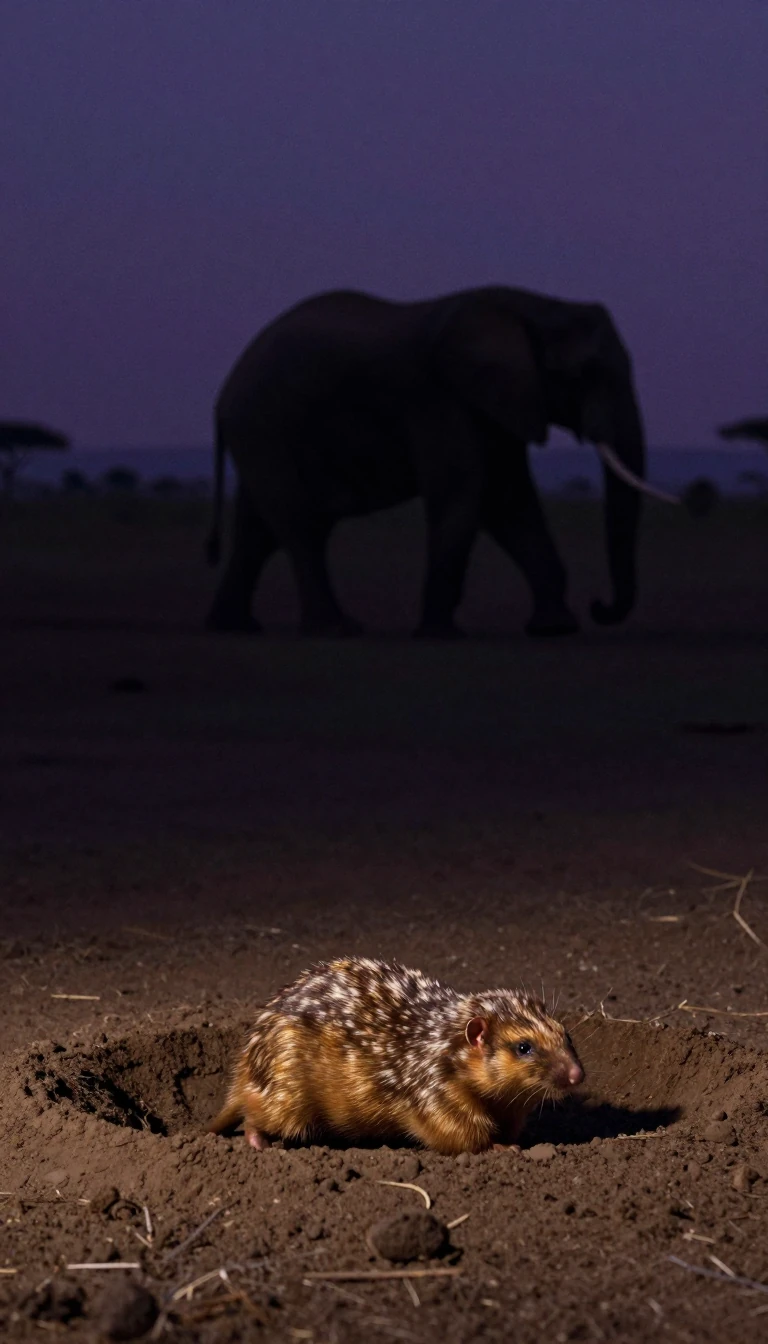
In short: As the world's heaviest terrestrial creature, the African bush elephant is a master of survival. From its highly sensitive, dexterous trunk to the unique thermoregulation provided by its massive ears and skin cracks, this species has evolved remarkable physical traits to thrive across the diverse landscapes of sub-Saharan Africa.
The African bush elephant (Loxodonta africana) is a social giant, with mature bulls reaching average shoulder heights of over 3 meters and weights exceeding 5 tons. These animals are defined by their iconic, large ears, which serve as vital cooling mechanisms. By flapping these ears, elephants expose large blood vessels to air currents, effectively dissipating heat in hot climates. Their skin, marked by characteristic bending cracks, further aids in temperature control by retaining moisture, helping the elephant maintain a stable internal body temperature.
Central to the elephant's interaction with its environment is the trunk, or proboscis. This powerful yet delicate organ, comprising nearly 150,000 muscle fascicles, allows the elephant to perform tasks ranging from uprooting trees to picking up tiny objects with a precision pinch. Beyond physical utility, the trunk is essential for communication, used in tactile greetings and social bonding. The species lives in complex family units led by a matriarch, though adult bulls often lead solitary lives or form bachelor groups, only joining herds during the mating season when they experience musth—a period of heightened testosterone and aggression.
Despite their size, these elephants face significant threats. Listed as Endangered since 2021, they have suffered from habitat loss and poaching for ivory. Conservation efforts have seen mixed results; while some populations in areas like Kruger National Park have grown, others have faced sharp declines. Research into their social structure has revealed that older bulls play a critical role in guiding younger males, and the removal of these elders can lead to erratic, aggressive behavior. Understanding these complex social and biological needs is essential for the future of the species.
Opens the Intellect+ feed with this card first. Swipe up for the next one.
Sources
- Summary by Intellect · source: African bush elephant
- Also: African bush elephant | Size, Habitat, & Facts | Britannica
- Also: Wikidata — African bush elephant · CC0
- Also: Wikidata — African bush elephants respond to a honeybee alarm pheromone blend · CC0
To cite this card, link to https://intellectplus.co.uk/app/places-african-bush-elephant.
How we source, check and correct cards: Editorial standards.
General information, not professional advice. Spotted an error? Flag the card or see corrections and complaints.
Intellect Plus is a visual educational discovery platform for exploring fascinating facts and ideas. Brain Food, Not Brain Rot. What is Intellect Plus?
Related
More in Countries and other regions · More in Countries & Cities · Latest · A–Z · All topics
