Is this Belarusian church a house of God or a medieval fortress in disguise?
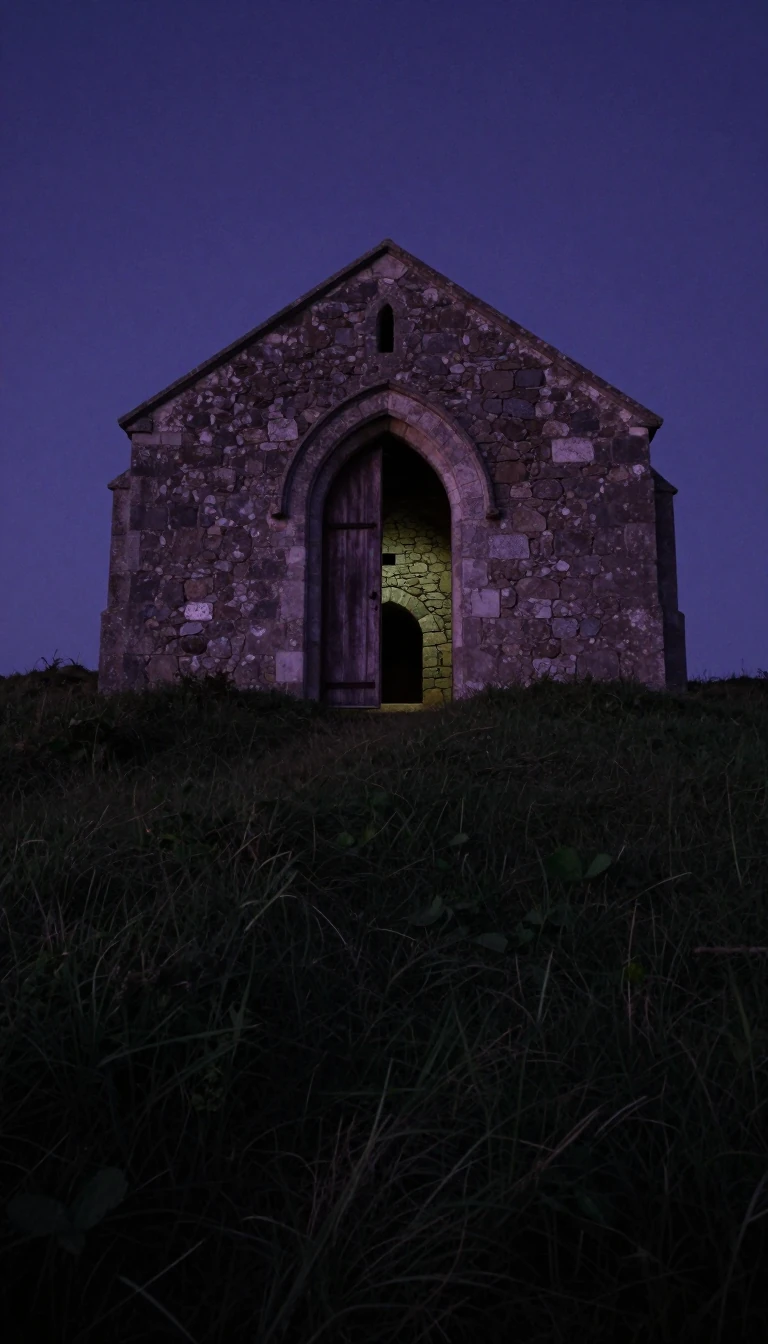
In short: The Church of St. Michael in Synkavichy stands as a rare relic of Belarusian Gothic architecture. With walls one and a half meters thick and four defensive towers, it blurs the line between a place of worship and a military stronghold, concealing a history that may date back to 1320.
Located on the outskirts of Synkavichy, Belarus, the Church of St. Michael is a striking example of a fortified church. Its architecture is defined by a nearly square plan, three eastern apses, and thick masonry designed to withstand assault. The structure features four corner towers: two cylindrical eastern towers and two western towers that transition into octagonal shapes, all equipped with arrowslits. This defensive design has fueled legends that it was built by Vytautas, Grand Duke of Lithuania, as a sanctuary after he escaped his cousin, Jogaila.
While some historical accounts once attributed the church to Konstanty Ostrogski in the early 16th century, modern research suggests much older origins. In 2018, assistant professor Gennady Lavretsky analyzed graffiti found on the site, dating it to the 1320s. Lavretsky posits that the current church may have been reconstructed from a pre-existing castle where Vytautas once sought refuge. This theory aligns with the building's clear military characteristics, which distinguish it as one of the earliest fortified churches in the Grand Duchy of Lithuania.
The church's survival is largely due to the efforts of the local priest Efstafy Mikhailovsky. By 1837, the structure had fallen into severe decay. Mikhailovsky spent years documenting its cultural significance and soliciting funds, eventually securing over four thousand roubles from the Imperial Archeological Commission in 1886–1887. His successful restoration campaign, completed by 1890, preserved the site through a turbulent history that saw it shift between Eastern Orthodox and Catholic control following the Union of Brest, the partitions of the Polish-Lithuanian Commonwealth, and the November Uprising. Today, it remains a site of immense historical interest, having been added to the UNESCO World Heritage Tentative List in 2004.
Opens the Intellect+ feed with this card first. Swipe up for the next one.
Sources
- Summary by Intellect · source: Church of St. Michael, Synkavichy
To cite this card, link to https://intellectplus.co.uk/app/places-church-of-st-michael-synkavichy.
How we source, check and correct cards: Editorial standards.
General information, not professional advice. Spotted an error? Flag the card or see corrections and complaints.
Intellect Plus is a visual educational discovery platform for exploring fascinating facts and ideas. Brain Food, Not Brain Rot. What is Intellect Plus?
Related
More in World Heritage Sites · More in Countries & Cities · Latest · A–Z · All topics
