Why did 16th-century architects build a church that looks like a fortress?
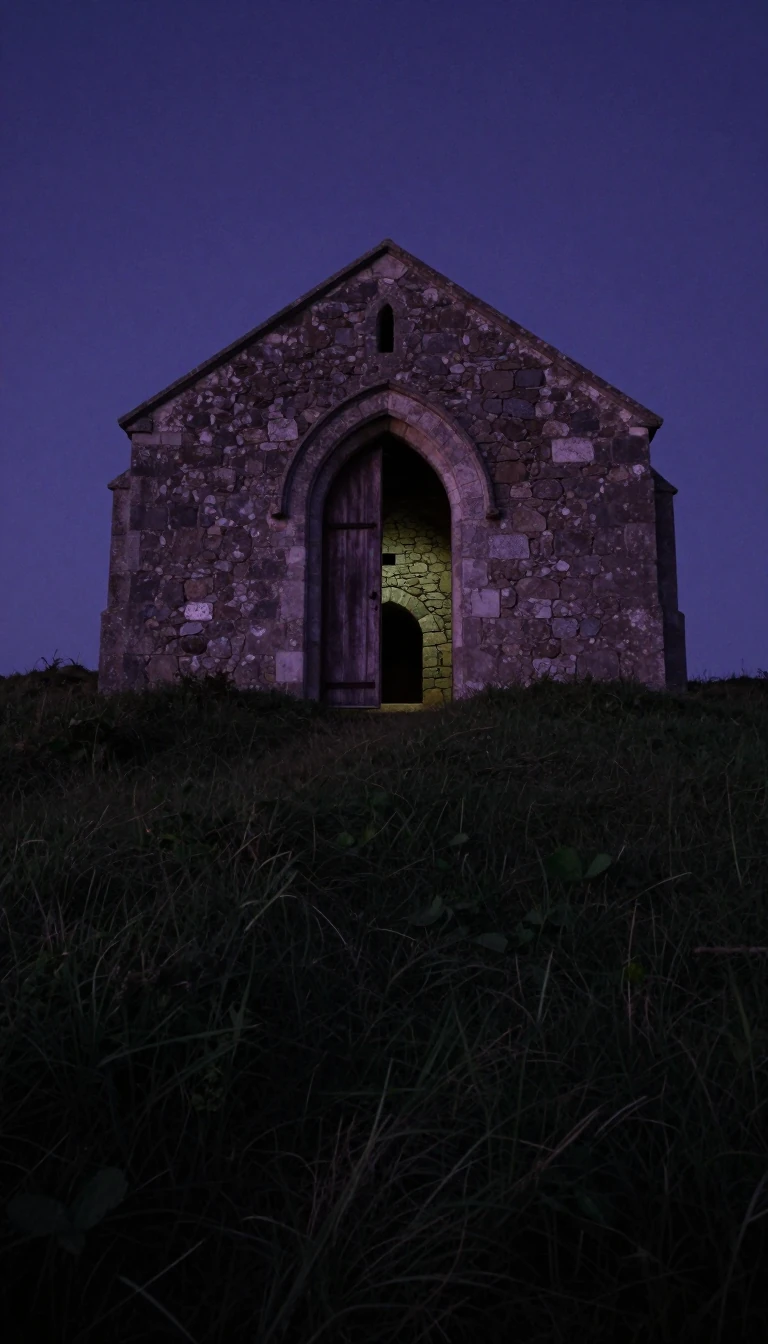
In short: In the heart of Belarus stands the Church of the Nativity of the God's Mother, a rare survivor of the Grand Duchy of Lithuania. Built as a fortified temple, its thick walls and corner towers were designed to withstand conflict, blending Gothic and Renaissance styles into a unique architectural hybrid.
Constructed between 1524 and 1542, the Muravanka Church represents a fascinating intersection of faith and defense. As one of the earliest fortified churches in the region, it shares its architectural lineage with the Church of St. Michael in Synkavichy. The building is compact, measuring roughly 15 by 13.5 meters, yet it commands attention with four massive corner towers. These towers, each about 4.5 meters in diameter with walls nearly 1.8 meters thick, were clearly built with security in mind, reflecting the volatile nature of the era.
The church's history is a testament to its resilience against the tides of war. It suffered severe damage during the 1656 conflict with Russia and again during the Great Northern War in 1706. Following these events, the structure sat empty for decades before undergoing restoration in the mid-19th century. Its utility shifted repeatedly over the centuries; during World War I, the German army repurposed the sacred space as a warehouse for provisions, and during the Interwar period, it functioned as a Roman Catholic church. It was not until 1990 that the Soviet government returned the site to Orthodox believers.
Despite these turbulent centuries and various restoration efforts, the church retains an appearance remarkably close to its original 16th-century design. The interior is divided into three naves, each reaching 12 meters in height, supported by sturdy columns. Today, the Republic of Belarus recognizes the site as a location of nationwide cultural and historical value. Its significance was further acknowledged on January 30, 2004, when it was added to the UNESCO World Heritage Tentative List, cementing its status as a vital piece of European architectural heritage that bridges the gap between the medieval and the modern.
The church stands as a rare example of how defensive engineering was integrated into religious life. By combining Gothic and Renaissance elements with military-grade fortifications, the architects created a structure that served both the spirit and the body, ensuring that even in times of siege, the community had a place of refuge.
Opens the Intellect+ feed with this card first. Swipe up for the next one.
Sources
- Summary by Intellect · source: Muravanka Church
To cite this card, link to https://intellectplus.co.uk/app/places-muravanka-church.
How we source, check and correct cards: Editorial standards.
General information, not professional advice. Spotted an error? Flag the card or see corrections and complaints.
Intellect Plus is a visual educational discovery platform for exploring fascinating facts and ideas. Brain Food, Not Brain Rot. What is Intellect Plus?
Related
More in World Heritage Sites · More in Countries & Cities · Latest · A–Z · All topics
