The Great Geysir is a temperamental Icelandic landmark that gave every geyser its name.
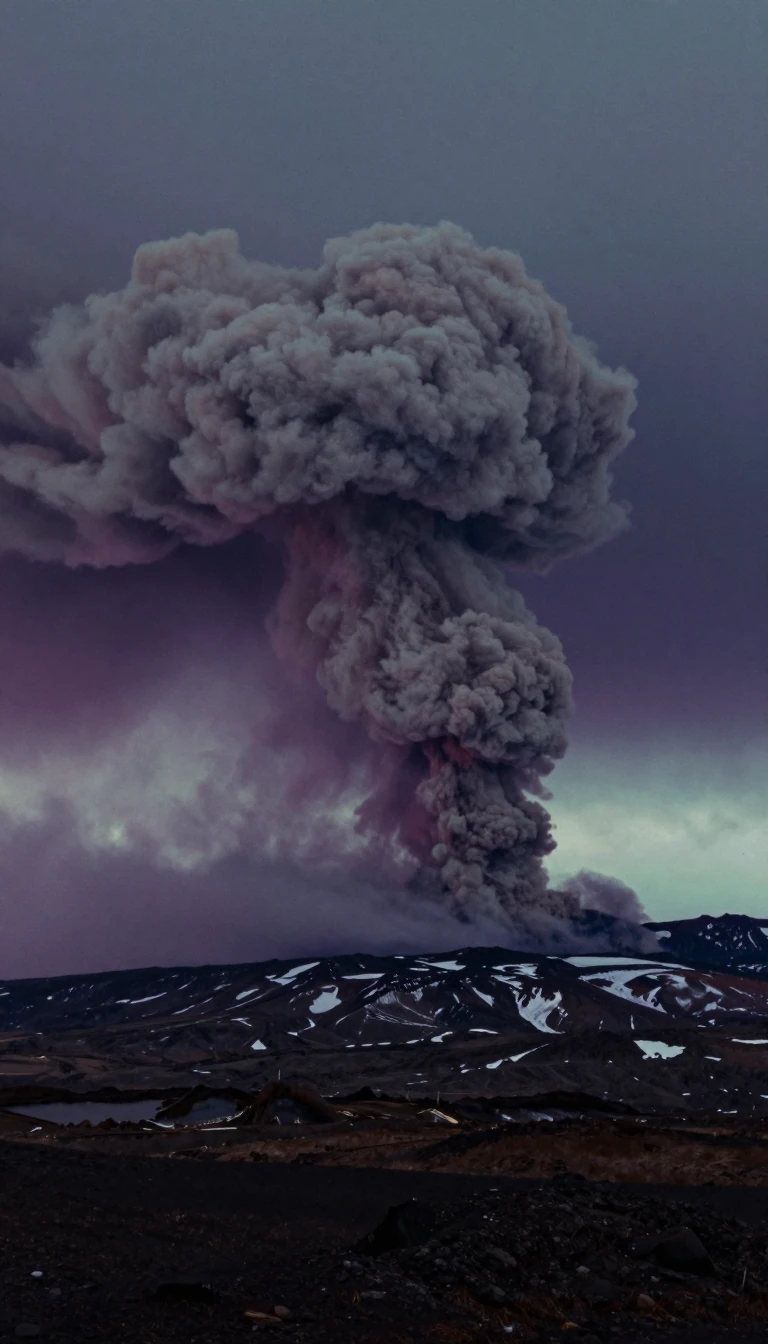
In short: Geysir, the namesake for all periodically spouting hot springs, is a geological enigma in Iceland’s Haukadalur valley. Though it has been active for roughly 900 years, its eruptions are notoriously unpredictable, often silenced for decades until seismic activity jolts its complex, fracture-filled plumbing back into a spectacular, boiling life.
Geysir began forming around 1150 CE, a timeline supported by both written accounts and the analysis of siliceous sinter deposits. While the Haukadalur geothermal field has hosted hot springs for approximately 10,000 years, the specific geyser activity we recognize today emerged later, following a period where earlier deposits were buried by volcanic tephra. The site’s behavior is intrinsically linked to the earth beneath it; earthquakes frequently trigger periods of renewed activity, while the intervening years often see the geyser fall into a dormant state.
The mechanics behind these eruptions were first explored in 1811 by geologist George Mackenzie, who proposed that steam expansion within subsurface cavities drove the water upward. Later, in 1846, chemist Robert Bunsen refined this understanding, providing a model that remains foundational to modern geyser science. Unlike the famous Old Faithful, Geysir functions as a pool geyser. Its conduit, which reaches depths of about 23 meters, features a complex, irregular structure with multiple branches below 16 meters. Because it sits at a lower elevation than most of the world's 1,000-plus geysers, the water erupting from its funnel-like vent maintains a higher temperature than typical counterparts.
Ownership of the site has shifted significantly over the centuries. Once held by local farmers, the land was purchased in 1894 by James Craig, a future Prime Minister of Northern Ireland, who briefly implemented entrance fees. It eventually passed through several hands before being donated to the Icelandic public in 1935. Today, Geysir remains a protected natural monument. While its neighbor, Strokkur, erupts with clockwork regularity, the Great Geysir remains a fickle giant, its rare, massive eruptions serving as a reminder of the volatile, shifting geothermal forces that continue to shape the Icelandic landscape.
Opens the Intellect+ feed with this card first. Swipe up for the next one.
Sources
- Summary by Intellect · source: Geysir
- Also: Wikidata — Great Geysir · CC0
- Also: Wikidata — Geysir · CC0
To cite this card, link to https://intellectplus.co.uk/app/places-geysir.
How we source, check and correct cards: Editorial standards.
General information, not professional advice. Spotted an error? Flag the card or see corrections and complaints.
Intellect Plus is a visual educational discovery platform for exploring fascinating facts and ideas. Brain Food, Not Brain Rot. What is Intellect Plus?
Related
More in Other hydrological features · More in Countries & Cities · Latest · A–Z · All topics
