Is Tokyo one city or a sprawling, shifting collection of millions of lives?
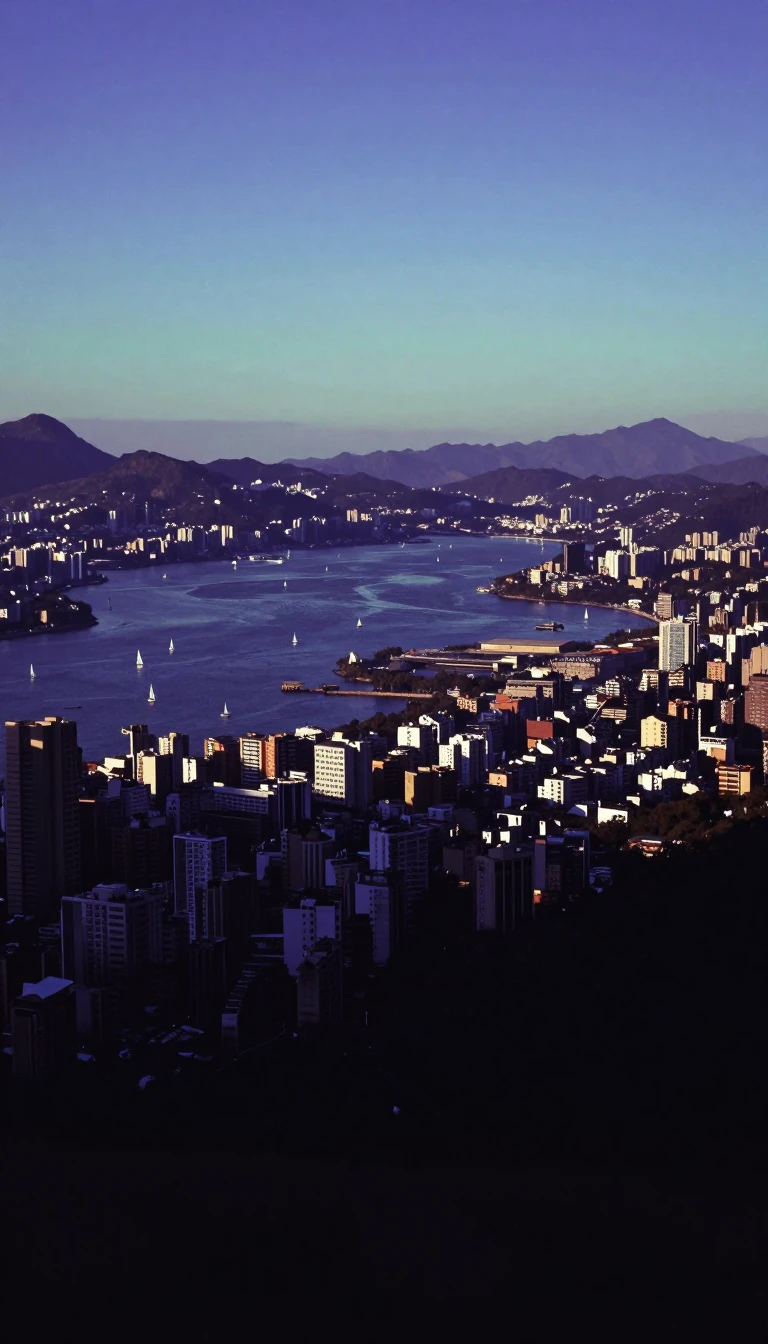
In short: The Greater Tokyo Area is the world's third-most populous urban region, yet defining its borders is a bureaucratic puzzle. Depending on whether you measure by legal ordinance, commuting patterns, or geography, Tokyo shifts from a dense cluster of special wards to a massive, multi-prefecture expanse of nearly 39 million people.
The Greater Tokyo Area defies a single, simple definition. Officially, the Metropolitan Area Readjustment Act of 1956 defines the National Capital Region as Tokyo Metropolis plus six surrounding prefectures, including Yamanashi. However, this legal boundary captures vast, sparsely populated mountain ranges and remote islands that bear little resemblance to the urban core. Other definitions, used for research or economic analysis, focus on commuting flows or distance from Central Tokyo, leading to varying population counts and spatial extents.
At the heart of this region lie the 23 special wards, which were once incorporated as Tokyo City before its dissolution during World War II. Today, these wards function as independent municipalities with their own mayors and councils, yet they are frequently aggregated into a single entity for statistical purposes. Surrounding this core is a seamless, continuous built-up area that stretches toward the Route 16 loop, a broken circle roughly 40 kilometres from the center. This periphery includes major cities like Yokohama, Hachiōji, and Chiba, all integrated into a massive, relatively flat landscape of low hills.
The scale of the region's infrastructure is staggering. Tokyo maintains the world's largest railway network, spanning approximately 2,578 kilometres of track and facilitating over 40 million daily trips. Shinjuku Station alone handles an average of 3.34 million people daily, cementing its status as the world's busiest train hub. Economically, the region is a global powerhouse, generating around US$1.8 trillion in GDP—the second-largest metropolitan economy behind New York. Whether viewed as a singular metropolis or a complex web of interconnected cities, Greater Tokyo remains a leading global cluster for science and technology.
The ambiguity of the region's boundaries often leads to confusion. Terms like 'South Kantō' can refer to different administrative blocks depending on whether one is discussing election districts or geography. Furthermore, if one includes adjacent metropolitan areas like Utsunomiya or the Maebashi-Takasaki-Ōta-Ashikaga corridor, the population estimate climbs toward 39 million. This fluidity highlights the challenge of mapping a modern megacity that has outgrown traditional administrative categories.
Opens the Intellect+ feed with this card first. Swipe up for the next one.
Sources
- Summary by Intellect · source: Greater Tokyo Area
- Also: Wikidata — Greater Tokyo Area · CC0
To cite this card, link to https://intellectplus.co.uk/app/places-greater-tokyo-area.
How we source, check and correct cards: Editorial standards.
General information, not professional advice. Spotted an error? Flag the card or see corrections and complaints.
Intellect Plus is a visual educational discovery platform for exploring fascinating facts and ideas. Brain Food, Not Brain Rot. What is Intellect Plus?
Related
More in Cities · More in Countries & Cities · Latest · A–Z · All topics
