Why your boarding pass code and your pilot's flight plan code never match
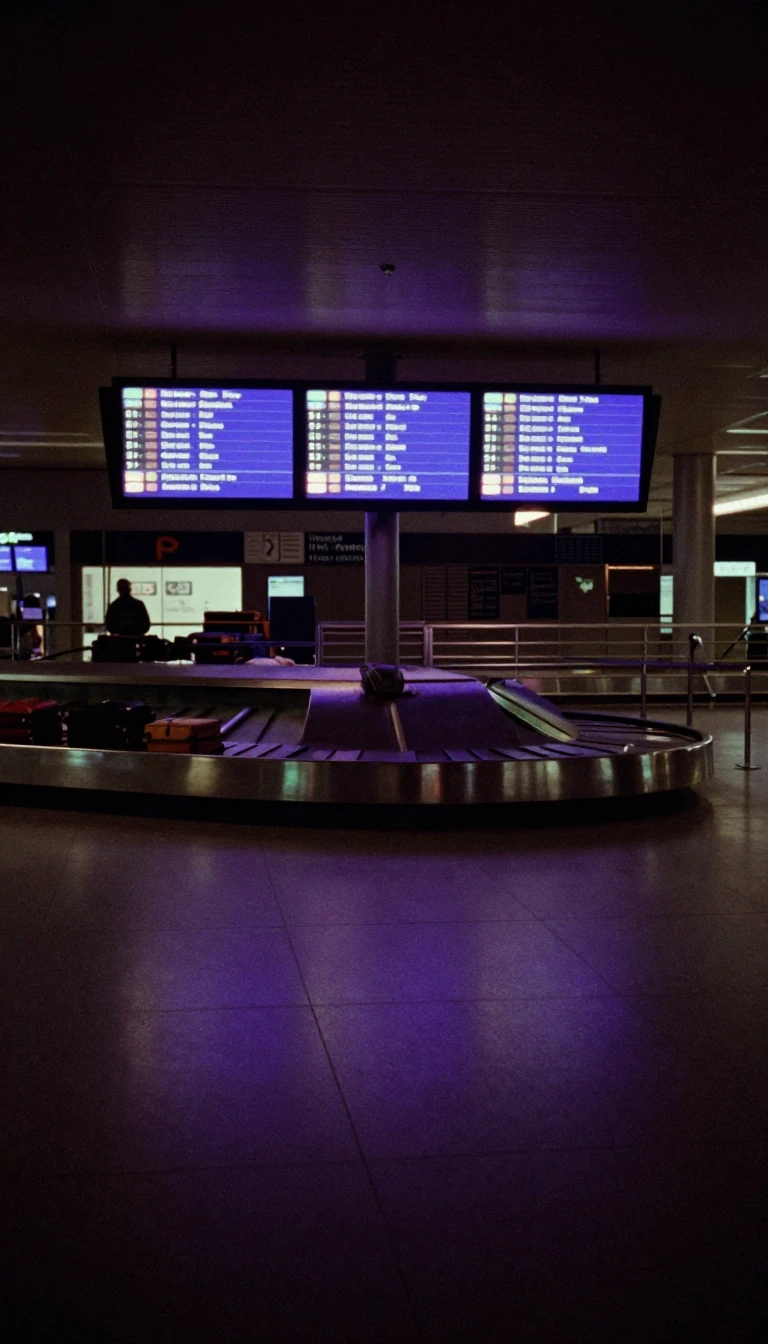
In short: You likely know your airport by a three-letter code like LHR or JFK. But behind the scenes, pilots and air traffic controllers use a four-letter ICAO code. While IATA codes are for passengers and baggage, ICAO codes are geographic, regional, and designed for the complex realities of global aviation.
The International Civil Aviation Organization (ICAO) established its four-letter location indicators on 24 March 1959, with full implementation following on 1 October 1959. Unlike IATA codes, which are often derived from city or airport names and lack a consistent geographic structure, ICAO codes are systematically distributed by country and region. The first one or two letters typically identify the nation or a large territory, while the remaining characters pinpoint the specific facility. This allows aviation professionals to deduce an airport's approximate location simply by reading its code.
The system is not without political and administrative quirks. Some airports are assigned codes based on their controlling nation rather than their physical geography. For example, RAF Mount Pleasant in the Falkland Islands uses the UK prefix 'EG', while Saint Pierre and Miquelon airports use the French 'LF' prefix. In instances where an airport serves both civilian and military functions, such as Brussels Airport and Melsbroek Air Base, separate codes are often assigned to each facility. Even space exploration has touched the system: the Mars helicopter Ingenuity was ceremonially assigned the code 'JZRO' for its Jezero Crater takeoff site, utilizing the otherwise unassigned 'J' prefix.
ICAO codes are also more expansive than their IATA counterparts, covering weather stations and area control centers alongside traditional airports. Because the four-letter format is finite, some nations have developed creative workarounds. France, for instance, uses a 'pseudo-code' system for smaller aerodromes, while the code 'ZZZZ' is used in flight plans for locations lacking an official designation. These codes are not static; they can evolve alongside the facilities they represent, as seen when Johannesburg's Jan Smuts International Airport became O. R. Tambo International Airport, necessitating a change from FAJS to FAOR.
Opens the Intellect+ feed with this card first. Swipe up for the next one.
Sources
- Summary by Intellect · source: ICAO airport code
- Also: Wikidata — ICAO airport code · CC0
To cite this card, link to https://intellectplus.co.uk/app/places-icao-airport-code.
How we source, check and correct cards: Editorial standards.
General information, not professional advice. Spotted an error? Flag the card or see corrections and complaints.
Intellect Plus is a visual educational discovery platform for exploring fascinating facts and ideas. Brain Food, Not Brain Rot. What is Intellect Plus?
Related
More in Cities · More in Countries & Cities · Latest · A–Z · All topics
