Khabarovsk Krai is a vast, industrial Russian territory defined by extreme climate and history.
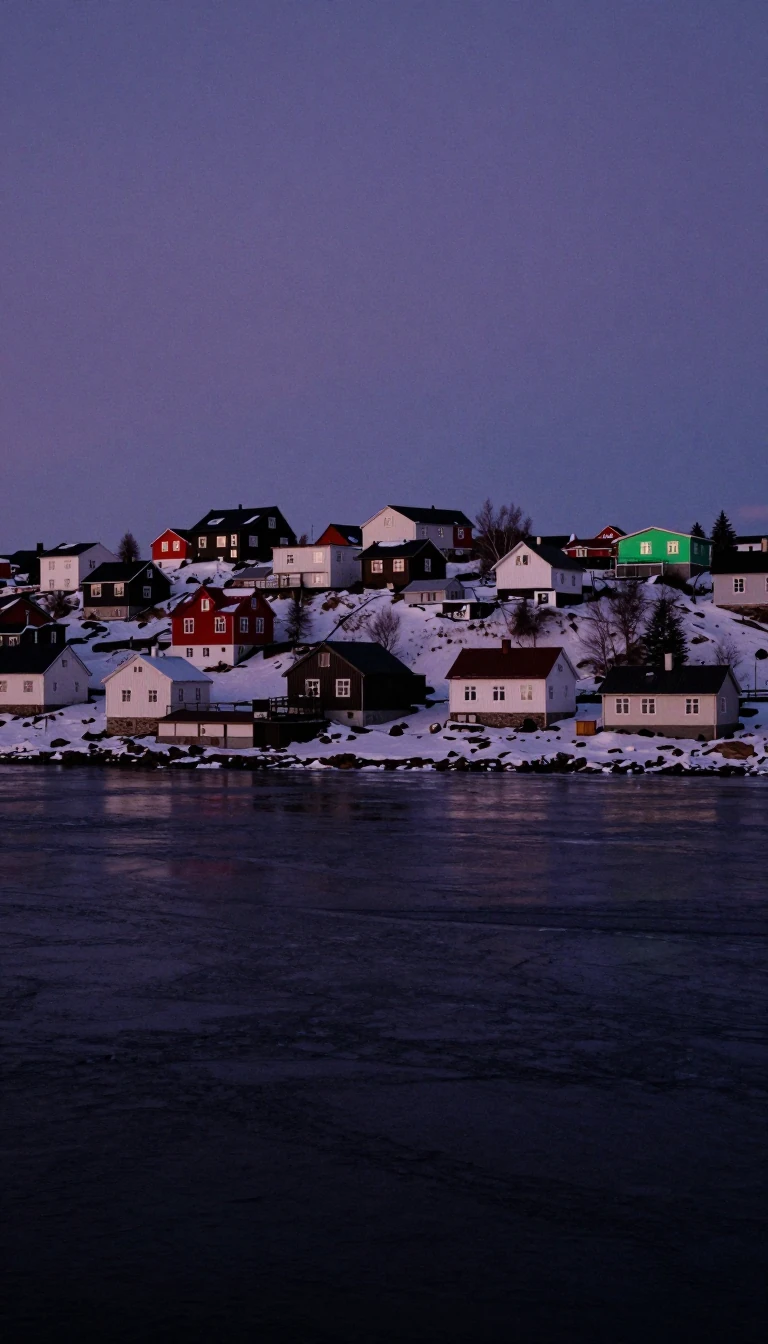
In short: Spanning the Russian Far East, this massive federal subject balances subarctic northern tundra with humid southern summers. Once a contested frontier between empires, it is now the industrial heart of the region, anchored by the Amur River and a complex history of shifting administrative borders and political transformation.
Khabarovsk Krai is the third-largest federal subject in Russia, occupying a vast expanse that stretches from the mountainous coastline of the Sea of Okhotsk to the basin of the lower Amur River. Its geography is defined by extreme environmental contrasts; while the north experiences subarctic conditions, the southern interior faces intense annual temperature swings, ranging from hot, humid summers to bitterly cold winters dominated by the Siberian High.
The region's history is marked by centuries of geopolitical friction. In the 17th century, Russian Cossacks led by Yerofey Khabarov attempted to secure the Amur banks, but were forced to retreat following Chinese resistance and the 1689 Treaty of Nerchinsk. It was not until the mid-19th century, under the aggressive expansionist policies of Nikolay Muravyov, that Russia solidified its control over the lower Amur, eventually formalizing the border through the Treaties of Aigun and Peking.
Administratively, the modern krai took shape through a series of partitions during the 20th century. Established in 1938 after the division of the Far Eastern Krai, its borders were repeatedly redrawn as areas like Sakhalin, Amur, and Magadan were separated into distinct entities. Today, it serves as the most industrialized territory in the Russian Far East, with a economy heavily reliant on military-industrial manufacturing, including major aircraft and shipbuilding enterprises, alongside gold mining and timber production.
The population, which has seen a decline from over 1.8 million in 1989 to approximately 1.29 million by 2021, is primarily ethnic Russian, though it remains home to numerous indigenous groups such as the Nanai, Evenks, and Nivkhs. The region's cultural and political life remains centered in Khabarovsk, a city strategically located where the Trans-Siberian Railway meets the Amur River, serving as a hub for both regional governance and the krai's professional sports leagues.
Opens the Intellect+ feed with this card first. Swipe up for the next one.
Sources
- Summary by Intellect · source: Khabarovsk Krai
- Also: Wikidata — Khabarovsk Krai · CC0
- Also: Wikidata — flag of Khabarovsk Krai · CC0
To cite this card, link to https://intellectplus.co.uk/app/places-khabarovsk-krai.
How we source, check and correct cards: Editorial standards.
General information, not professional advice. Spotted an error? Flag the card or see corrections and complaints.
Intellect Plus is a visual educational discovery platform for exploring fascinating facts and ideas. Brain Food, Not Brain Rot. What is Intellect Plus?
Related
More in Countries and other regions · More in Countries & Cities · Latest · A–Z · All topics
