How a challenging landscape forced an architectural revolution in the ancient Kingdom of Butua
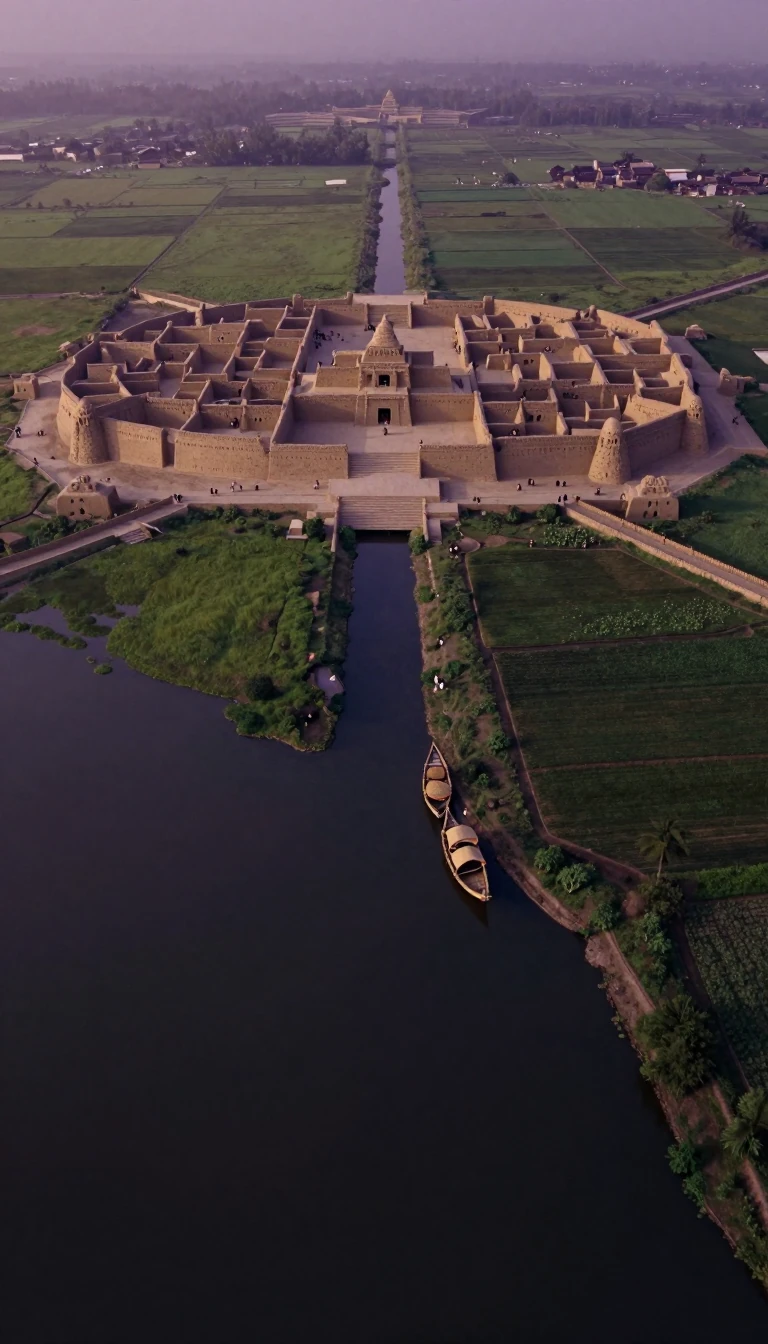
In short: When the Torwa dynasty built their capital at Khami, they faced a geological hurdle: the local laminar granite was too brittle for traditional free-standing walls. Their solution was an ingenious shift to gravity-retaining structures, creating elevated, decorated platforms that kept royalty cool and safe from malaria-carrying insects for two centuries.
Located 22 kilometres west of Bulawayo, Zimbabwe, Khami served as the capital of the Torwa dynasty for approximately 200 years, beginning around 1450. The site emerged following the decline of Great Zimbabwe, adopting its architectural foundations while adapting to a difficult environment. The local stone—a mix of laminar granite and dolerite—was notoriously difficult to quarry, with over 60% of the material failing to meet building standards. Rather than attempting to construct traditional free-standing walls, the builders pioneered the use of gravity-retaining walls built without mortar.
These structures were more than just a workaround for poor materials; they were a sophisticated environmental response. By constructing elevated platforms, the royal inhabitants lived above the hot, malaria-prone valley floor. The Hill Complex, which housed the king, was built upon terraces of rough walling, later finished with high-quality dressed stone. These terraces were engineered to lean inward to prevent collapse and were adorned with intricate patterns, including checkerboard, herringbone, and cord designs. Some foundations utilized massive blocks, requiring at least four people to lift into place.
The site’s layout reflected a clear social hierarchy, with seven royal platforms overlooking the valley where commoners resided in clay huts. The capital remained a seat of power until 1683, when Changamire Dombo and his Rozvi army conquered the site, subsequently shifting their capital to Danamombe. In the 1830s, Ndebele raiders further displaced the inhabitants. Today, Khami is a UNESCO World Heritage Site, recognized for its unique architectural innovation. Recent conservation efforts, particularly between 2000 and 2007, have focused on stabilizing these historic terrace walls to ensure the site's preservation for future study.
Opens the Intellect+ feed with this card first. Swipe up for the next one.
Sources
- Summary by Intellect · source: Khami
- Also: Wikidata — Khamis · CC0
To cite this card, link to https://intellectplus.co.uk/app/places-khami.
How we source, check and correct cards: Editorial standards.
General information, not professional advice. Spotted an error? Flag the card or see corrections and complaints.
Intellect Plus is a visual educational discovery platform for exploring fascinating facts and ideas. Brain Food, Not Brain Rot. What is Intellect Plus?
Related
More in World Heritage Sites · More in Countries & Cities · Latest · A–Z · All topics
