The Northeast megalopolis is a massive, interconnected supercity of 53 million people
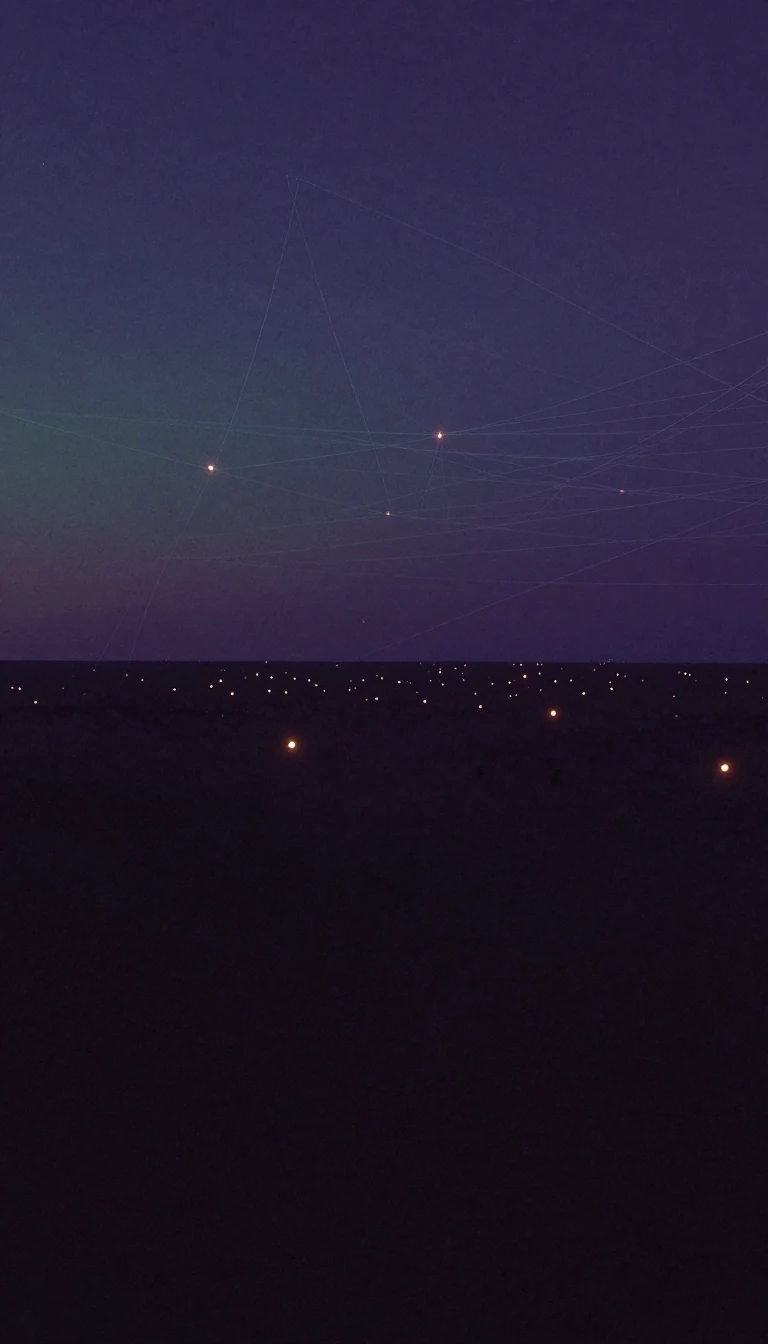
In short: Stretching from Boston to Washington, D.C., the Northeast megalopolis is more than just a cluster of cities. It is a singular, integrated economic powerhouse that produces over 20% of the U.S. GDP. This dense corridor functions like one massive, sprawling metropolis, despite being composed of distinct, independent urban centers.
The concept of the megalopolis was popularized by French geographer Jean Gottmann in his 1961 study. He argued that the cities between Boston and Washington, D.C., had become uniquely linked through their intermeshing suburbs. Rather than acting as isolated entities, these cities form a cohesive, polynuclear structure where independent urban nuclei share deep, integrated connections. Gottmann borrowed the term from an ancient Greek town that aspired to greatness, suggesting that the American Northeast had finally realized that dream on a global scale.
This region is home to over 53 million people, representing roughly 15% of the U.S. population despite occupying less than 2% of the nation's land. The corridor's development was historically anchored by a 'railroad spine' that predated modern highways like I-95. Today, this infrastructure remains vital, with the Northeast Corridor serving as the busiest passenger rail line in the country. The region's interconnectedness is so profound that, as Neil Gustafson observed in 1961, most telecommunications traffic within the area remains local to the corridor rather than reaching out to the rest of the country.
Economically, the megalopolis is a titan. With a GDP of $5.6 trillion as of 2023, it would rank as the world's third-largest economy if it were an independent nation. It serves as the primary hub for U.S. finance, politics, and media, housing institutions ranging from the New York Stock Exchange to the federal government in Washington, D.C. While some researchers have proposed broader definitions that extend to Maine or Virginia, the core identity of the region remains tied to its dense, historic coastal development and its role as a landing point for generations of immigrants.
Futurists like Herman Kahn and Anthony Wiener coined the nickname 'BosWash' in 1967 to describe this gargantuan urban strip. While the term is often considered informal or even contrived by some modern analysts, it captured a reality that Isaac Asimov predicted as early as 1964: the transformation of the Eastern Seaboard into a singular, densely populated urban entity. Today, the region continues to grow, with projections suggesting the population could reach 58.1 million by 2050.
Opens the Intellect+ feed with this card first. Swipe up for the next one.
Sources
- Summary by Intellect · source: Northeast megalopolis
- Also: Wikidata — Northeast megalopolis · CC0
To cite this card, link to https://intellectplus.co.uk/app/places-northeast-megalopolis.
How we source, check and correct cards: Editorial standards.
General information, not professional advice. Spotted an error? Flag the card or see corrections and complaints.
Intellect Plus is a visual educational discovery platform for exploring fascinating facts and ideas. Brain Food, Not Brain Rot. What is Intellect Plus?
Related
More in Cities · More in Countries & Cities · Latest · A–Z · All topics
