A massive limestone monolith in Quebec is slowly vanishing into the sea
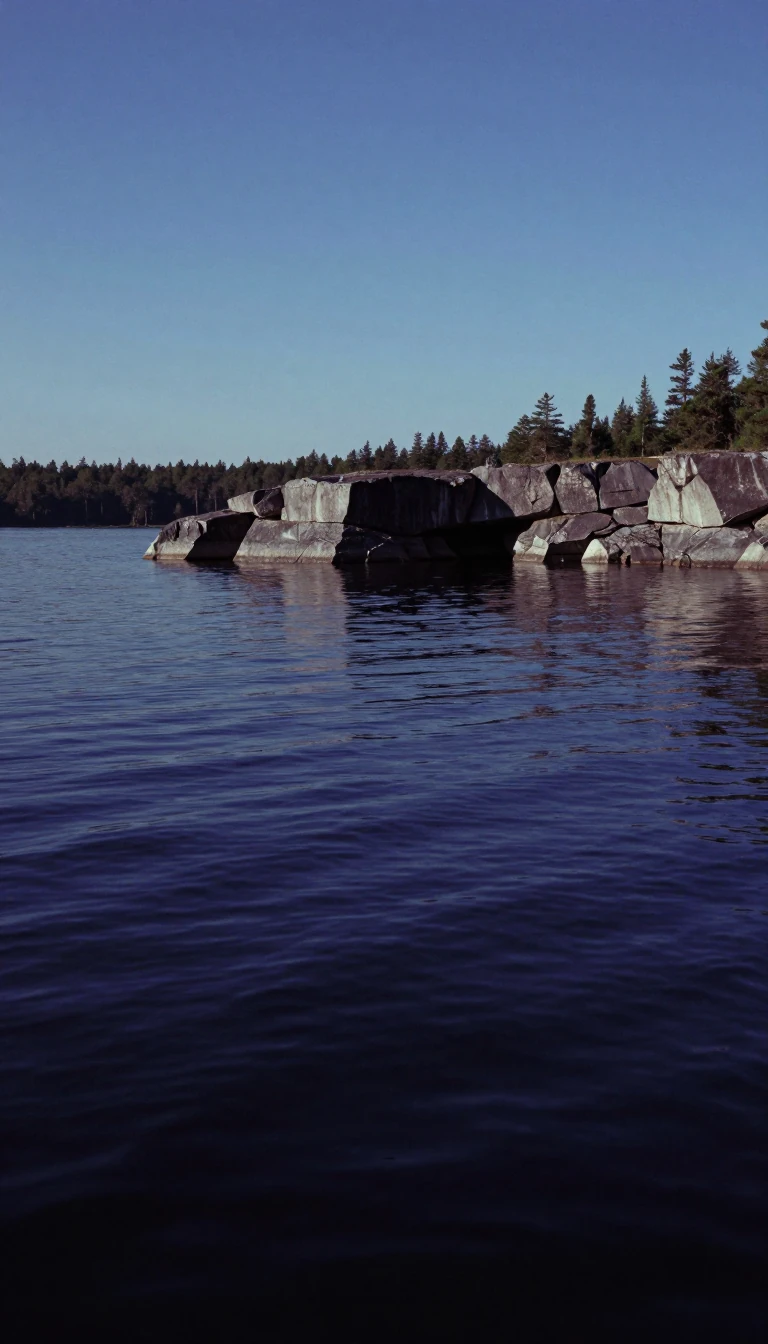
In short: Rising from the Gulf of Saint Lawrence, Percé Rock is a geological titan and a sanctuary for over 100,000 nesting birds. Named for its signature arch, this five-million-tonne limestone formation is a shifting icon that has inspired poets and explorers for centuries, even as the elements steadily reclaim it.
Located at the tip of the Gaspé Peninsula, Percé Rock is a massive siliceous limestone stack measuring 433 metres long and 88 metres high. Geologically, the formation dates back to the Devonian period, roughly 375 to 400 million years ago. It serves as a rich fossil site, containing approximately 150 species, including trilobites, corals, and marine worms. The rock is part of a larger geological landscape that was first mapped in 1844 by Sir William Edmond Logan, the father of Canadian geology.
The rock's appearance has changed dramatically over time. When Jacques Cartier arrived in 1534, he observed three distinct arches. By the time Samuel de Champlain visited in 1603, only one remained. Historical records, including a 1760 drawing by Captain Hervey Smyth, show that two arches existed until June 17, 1845, when one collapsed, leaving behind an obelisk-like pillar. Today, the remaining arch stands 15 metres high, serving as a landmark that allows small boats to pass through during high tide.
Beyond its physical structure, the rock is a vital ecological hub. Together with nearby Bonaventure Island, it forms a national park established in 1985. It hosts one of the world's largest colonies of northern gannets, with estimates ranging from 110,000 to 121,000 birds. The site also holds cultural significance; in October 1944, the surrealist poet André Breton visited the area. In his work Arcanum 17, he described the rock as a "marvelous iceberg of moon stone," finding in its permanence a symbol of nature's capacity for renewal amidst the turmoil of war-torn Europe.
The future of this monolith is finite. Estimated to weigh 5 million tonnes, the rock loses about 300 tonnes of mass annually due to wind and water erosion. Scientists infer that at this rate, the entire formation will disappear in approximately 16,000 years. Because of this constant instability and the risk of collapse, visitors are warned against approaching the base too closely, even when the tide recedes to reveal the sandbar that connects the rock to the mainland.
Opens the Intellect+ feed with this card first. Swipe up for the next one.
Sources
- Summary by Intellect · source: Percé Rock
- Also: Wikidata — Percé Rock · CC0
- Also: Wikidata — Percé Rock · CC0
To cite this card, link to https://intellectplus.co.uk/app/places-perc-rock.
How we source, check and correct cards: Editorial standards.
General information, not professional advice. Spotted an error? Flag the card or see corrections and complaints.
Intellect Plus is a visual educational discovery platform for exploring fascinating facts and ideas. Brain Food, Not Brain Rot. What is Intellect Plus?
Related
More in Other terrestrial features · More in Countries & Cities · Latest · A–Z · All topics
