How a wartime airfield evolved into a major international gateway for the Research Triangle.
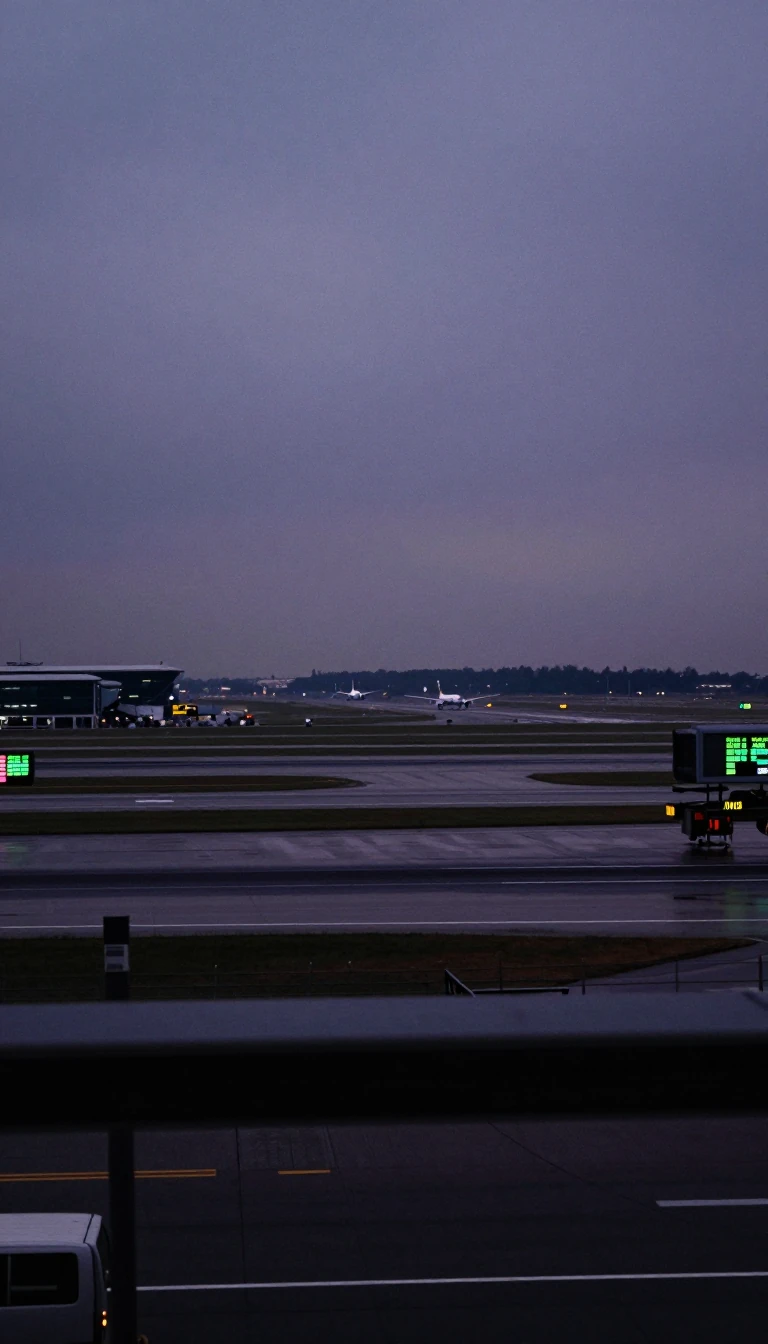
In short: Raleigh-Durham International Airport began as a modest project built from surplus military barracks in 1943. Today, it serves as a vital hub for the Research Triangle, handling record-breaking passenger traffic and expanding its global reach with new international routes, all while managing a massive infrastructure transformation for 2040.
The airport's origins trace back to the North Carolina General Assembly's 1939 charter to establish a facility between Raleigh and Durham, championed by Eastern Air Lines chairman Eddie Rickenbacker. Opened on May 1, 1943, the original terminal was constructed using materials salvaged from Army Air Forces barracks. For decades, the facility operated as a segregated site until student protests in the 1960s forced desegregation. By the 1970s, it served as a regional connector, but the landscape shifted dramatically with the arrival of American Airlines in 1985.
American Airlines transformed the airport by establishing a major hub between 1985 and 1987, which at its peak in 1992 offered 211 daily departures to 64 destinations. Despite this activity, the hub struggled against competition from nearby cities like Charlotte and Atlanta, leading to its closure in 1995. Midway Airlines briefly attempted to fill the void, but the airport eventually pivoted toward a focus city model, notably under Delta Air Lines, which solidified its presence in 2018. This strategy helped the airport weather the economic downturn of 2008 and the global travel disruptions of 2020.
Today, RDU is undergoing a significant evolution under its Vision 2040 Master Plan. This ambitious project includes expanding both terminals—aiming for 24 gates in Terminal 1 and 53 in Terminal 2—and constructing a new 10,639-foot runway, which began in October 2023. As passenger numbers hit a record 15.6 million in 2025, the airport continues to attract international carriers, including recent additions like Aer Lingus and Lufthansa. Beyond commercial aviation, the site remains a hub for military activity, housing the North Carolina Army National Guard's 449th Combat Aviation Brigade and their AH-64 helicopters.
The airport's history is also marked by a series of aviation accidents, ranging from the 1953 crash of a USAF Douglas C-47 to the 2024 incident involving a UNC Air Operations Socata TBM 850. These events, investigated by the NTSB, have provided critical insights into air traffic control procedures and pilot safety. As RDU looks toward 2040, it balances its role as a regional economic engine with the complexities of managing modern, high-volume international travel.
Opens the Intellect+ feed with this card first. Swipe up for the next one.
Sources
- Summary by Intellect · source: Raleigh–Durham International Airport
To cite this card, link to https://intellectplus.co.uk/app/places-raleigh-durham-international-airport.
How we source, check and correct cards: Editorial standards.
General information, not professional advice. Spotted an error? Flag the card or see corrections and complaints.
Intellect Plus is a visual educational discovery platform for exploring fascinating facts and ideas. Brain Food, Not Brain Rot. What is Intellect Plus?
Related
More in World Heritage Sites · More in Countries & Cities · Latest · A–Z · All topics
