Ulanqab: A vast Inner Mongolian prefecture defined by extreme climate and strategic transit
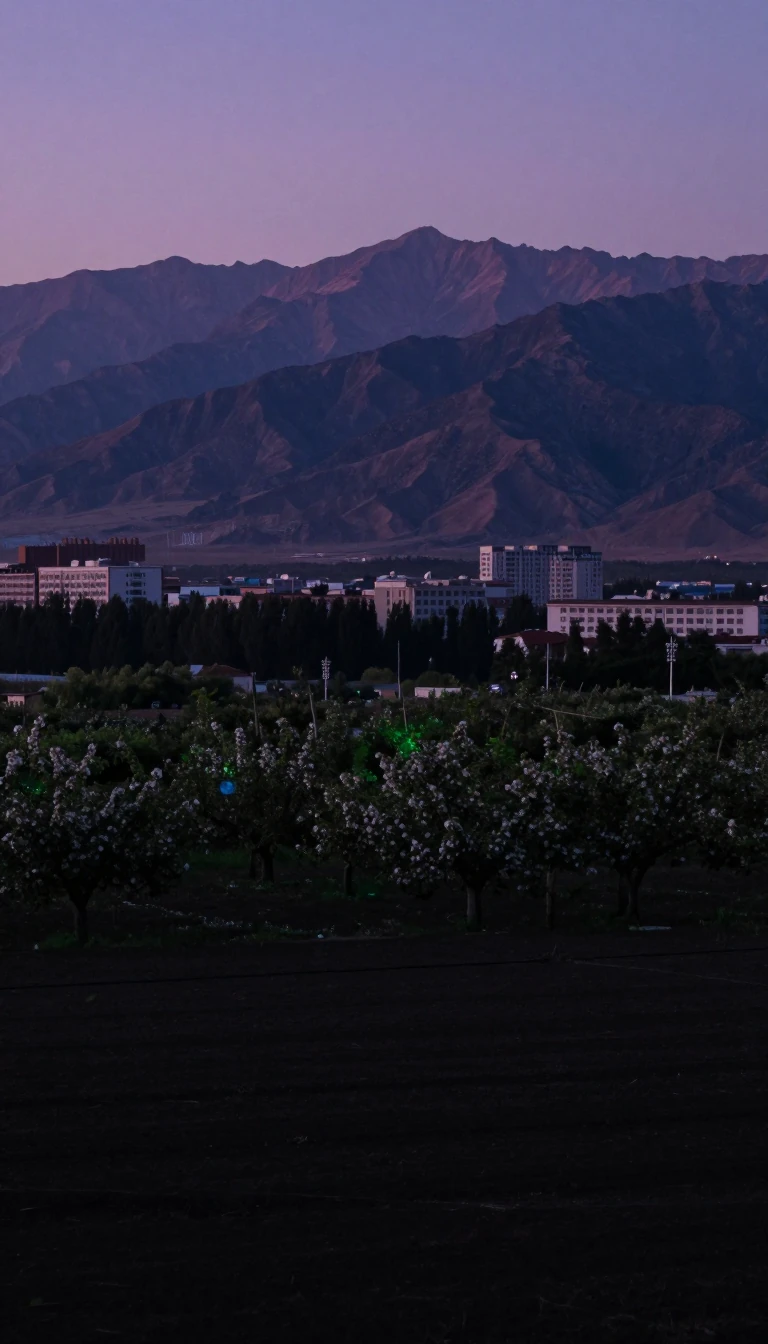
In short: Spanning over 54,000 square kilometers in south-central Inner Mongolia, Ulanqab is a prefecture-level city that serves as a vital transit hub. From its cold, semi-arid climate to its role in connecting major Chinese provinces, this region balances a rugged environment with a complex, evolving administrative and demographic landscape.
Established as a prefecture-level city on December 1, 2003, Ulanqab emerged from the former Ulanqab League. Its administrative heart resides in the Jining District, which previously functioned as a county-level city. The region is geographically expansive, covering 54,473.6 square kilometers and sharing borders with Hohhot, Hebei, Shanxi, the Xilin Gol League, and the nation of Mongolia. Historically, the western portion of this territory was once part of the Suiyuan province.
The city's climate is classified as cold semi-arid, characterized by harsh, dry winters and warm summers. Most of its annual precipitation, which totals approximately 340 millimeters, is concentrated within the months of July and August. The region is also noted for its persistent, strong winds, particularly during the spring season. Despite these environmental challenges, Ulanqab maintains a robust transportation infrastructure, serving as a critical junction for several major railways, including the Beijing-Baotou, Jining-Erlianhot, and Jining-Tongliao lines, alongside key expressways like the G6 Beijing-Lhasa route.
Demographically, the region has seen a notable shift in its population density. According to the 2020 census, the total population reached 1,706,328, a decline from the 2,143,590 recorded in 2010 and the 2,284,414 reported in the 2000 census. Today, the administrative structure is diverse, comprising eleven distinct divisions that include a district, a county-level city, five counties, and four banners. Within this built-up metro area, which encompasses the Jining District and the Qahar Right Front Banner, approximately 550,231 residents reside, highlighting the concentrated nature of the local urban development.
Beyond its geography and infrastructure, Ulanqab is occasionally noted for its cultural and historical associations. It was the home of He Pingping, who lived from 1988 to 2010 and was recognized as the smallest walking man at 73 centimeters. Furthermore, the region has been linked to prominent figures such as the banker and politician Guo Shuqing, who served as the Governor of Shandong, illustrating the city's connection to broader national spheres of influence.
Opens the Intellect+ feed with this card first. Swipe up for the next one.
Sources
- Summary by Intellect · source: Ulanqab
- Also: Wikidata — Ulanqab · CC0
- Also: Wikidata — Ulanqab · CC0
To cite this card, link to https://intellectplus.co.uk/app/places-ulanqab.
How we source, check and correct cards: Editorial standards.
General information, not professional advice. Spotted an error? Flag the card or see corrections and complaints.
Intellect Plus is a visual educational discovery platform for exploring fascinating facts and ideas. Brain Food, Not Brain Rot. What is Intellect Plus?
Related
More in Cities · More in Countries & Cities · Latest · A–Z · All topics
