How chemical engineers break the rules of boiling to separate impossible mixtures
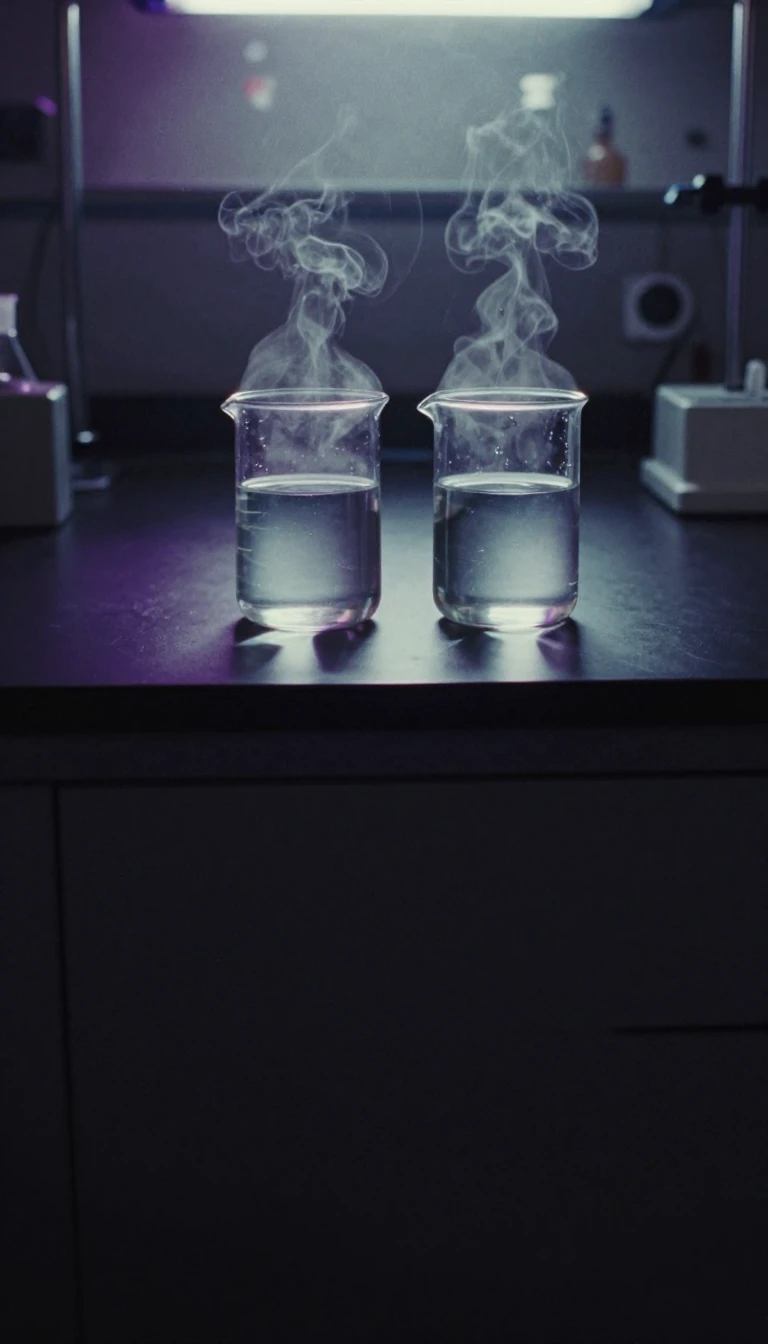
In short: Some liquid mixtures are chemically stubborn, forming azeotropes that refuse to separate through standard distillation. To overcome this, engineers introduce a third component called an entrainer. By altering molecular interactions and volatility, this clever additive forces the mixture to yield, allowing for the precise separation of complex chemical compounds.
At the heart of distillation lies the challenge of the azeotrope—a specific concentration where the liquid and vapor phases share the same composition, rendering standard boiling ineffective. In chemical engineering, the primary strategy to bypass this is azeotropic distillation. By introducing a material separation agent, or entrainer, engineers manipulate the activity coefficients of the mixture. This addition creates a new, lower-boiling azeotrope, often one that separates into two immiscible liquid phases, making it possible to extract the desired components.
The choice of entrainer is critical and depends on the specific chemistry of the feed. Historically, benzene was the go-to agent for dehydrating ethanol and water mixtures. However, due to its status as a carcinogen, industry standards have shifted toward safer alternatives like toluene, cyclohexane, or heptane. Once the entrainer has performed its role, it must be recovered through processes like decantation or further distillation and recycled back into the system to maintain efficiency.
Beyond adding chemicals, engineers can also exploit the pressure sensitivity of azeotropes through pressure-swing distillation. Because an azeotrope is defined by the point where activity coefficients cross, changing the internal pressure of the vessel can allow the process to 'jump' over the azeotropic point. While this method is robust, it typically demands higher energy inputs and requires more expensive, high-pressure equipment. For even more challenging separations, non-distillation methods like 3A molecular sieves—which can dry ethanol to 99.999% ABV—provide an alternative, particularly when dealing with unfavorable chemical equilibria where water removal is essential to drive a reaction forward.
Opens the Intellect+ feed with this card first. Swipe up for the next one.
Sources
- Summary by Intellect · source: Azeotropic distillation
To cite this card, link to https://intellectplus.co.uk/app/science-azeotropic-distillation.
How we source, check and correct cards: Editorial standards.
General information, not professional advice. Spotted an error? Flag the card or see corrections and complaints.
Intellect Plus is a visual educational discovery platform for exploring fascinating facts and ideas. Brain Food, Not Brain Rot. What is Intellect Plus?
Related
More in Separation processes · More in Science · Latest · A–Z · All topics
