 Intellect Plus
Separation processes
61 cards. Each one is a 40-second story with a five-minute read behind it.
 Mastering the basics of chemical separation without the confusionChemistry often feels daunting until you see the mechanics behind it. This video breaks down essential separation techniques like evaporation and decantation, moving beyond rote m…
 The chemistry of unmixing: how we isolate components from mixturesWhile compounds are chemically bonded, mixtures can be pulled apart using their physical properties. This video explores the practical methods used to separate various substances …
 The Critical First Step in Refining Raw Natural GasBefore natural gas can be used, it must undergo a fundamental physical transformation. This video explains the mechanics of field-processing operations that isolate usable energy …
 Mastering the Chemistry of SeparationUnderstand how scientists isolate substances from complex mixtures. This video breaks down essential separation techniques required for Edexcel IGCSE chemistry, providing a clear …
 Why understanding mixtures is fundamental to chemistryThis video introduces the core concepts of matter purity and the methods used to isolate specific components from complex mixtures.
 The physics of purity: how dairies separate cream from milkEver wonder how industrial-scale dairy processing achieves such precise separation? This lecture breaks down the mechanical principles that turn raw liquid into refined products, …
 How scientists untangle the complex building blocks of our worldMost substances around us are mixtures, not pure elements. This video explores the fundamental physical and chemical techniques used to isolate specific components from a combined…
 How the world unmixes: the physics of separating substancesFrom extracting cream from milk to refining gold, separation is a fundamental chemical process. This video introduces five core techniques used to isolate components based on thei…
 Adsorption is the invisible process that keeps our air clean and our water pure.Adsorption is a surface phenomenon where molecules from gases or liquids cling to the exterior or interior walls of a solid. Unlike absorption, which involves deep penetration int…
 How industrial plants turn thin air into rocket fuel and life-saving medical oxygenTo extract pure gases from the atmosphere, engineers do not just filter the air; they liquefy it. By cooling air to extreme cryogenic temperatures, they exploit the unique boiling…
 Why some liquid mixtures refuse to separate, no matter how much you boil them.An azeotrope is a chemical paradox: a liquid mixture that boils at a constant temperature, producing vapor with the exact same composition as the liquid itself. Because boiling fa…
- How chemical engineers break the rules of boiling to separate impossible mixturesSome liquid mixtures are chemically stubborn, forming azeotropes that refuse to separate through standard distillation. To overcome this, engineers introduce a third component cal…
- How do you measure the surface area of a solid you cannot see?To determine the specific surface area of a material, scientists use the BET theory to track how gas molecules coat a solid surface in layers. By measuring how much gas adsorbs at…
- Unlike simple sticking, chemisorption rewrites the surface of a material through chemical bonding.When molecules land on a surface, they can either sit there loosely or undergo a transformative chemical reaction. Chemisorption creates new ionic or covalent bonds, effectively a…
 How column chromatography separates complex chemical mixtures using simple gravity and selective adsorptionColumn chromatography is a fundamental analytical technique that sorts chemical mixtures by passing them through a packed stationary phase. By exploiting the different rates at wh…
- The laboratory condenser is a masterclass in managing heat and phase transitions.From simple air-cooled tubes to complex columns, condensers are the silent workhorses of chemistry. They turn volatile vapors back into liquids, enabling essential processes like …
 How continuous distillation transforms raw crude oil into the fuels powering modern civilizationUnlike batch processing, continuous distillation runs indefinitely, feeding mixtures into towering columns to separate them into usable fractions. By maintaining a steady state of…
- Why cross-flow filtration is the secret to continuous, high-efficiency industrial separation processesTraditional filtration often fails when solids clog the filter surface, forcing frequent shutdowns. Cross-flow filtration solves this by sweeping the feed tangentially across the …
 How spinning air replaces filters to clean the world's most demanding industrial exhaustCyclonic separation uses nothing but rotational force and gravity to strip particles from gas or liquid. By forcing a stream into a high-speed spiral, it flings dense matter again…
- How a simple glass trap uses physics to drive chemical reactions to completionIn synthetic chemistry, removing water is often the key to success. The Dean-Stark apparatus, a clever piece of glassware, achieves this by continuously distilling and separating …
- The silent chemistry keeping your world dry, from food packets to natural gas pipelines.You likely know them as the small, mysterious packets tucked into new shoes or beef jerky. But desiccants are far more than moisture-absorbing silica beads. They are the industria…
 Dialysis: The elegant chemistry of separating molecules by size through a porous membraneDialysis is more than a life-saving medical procedure; it is a fundamental chemical technique for separating substances. By exploiting the difference in diffusion rates through se…
 Why some metal alloys melt at a single, sharp temperature like pure elementsMost mixtures melt over a range of temperatures, turning into slush before fully liquefying. But a eutectic system behaves differently. At a precise ratio, these mixtures transiti…
 Extraction is the ancient chemical art of separating substances by their unique solubility preferencesExtraction is a fundamental chemical process that isolates specific components from a mixture by exploiting how they dissolve in different solvents. Whether purifying medicine fro…
 When pressure drops, liquid explodes into vapor: the physics of flash evaporationFlash evaporation occurs when a saturated liquid suddenly loses pressure, causing part of it to instantly vaporize. This simple process powers everything from industrial refrigera…
 Flocculation is the invisible force that cleans our water and makes our beer.From the clarity of your drinking water to the perfect pint of ale, flocculation is the essential process of clumping microscopic particles into larger clusters. By encouraging th…
 Why cooling a liquid is the cleanest way to purify complex chemical mixturesFractional crystallization purifies substances by exploiting the way they freeze. By slowly cooling a mixture, you can coax pure crystals to form while leaving impurities behind i…
- How to separate liquids with nearly identical boiling points using simple glass tubesWhen two liquids boil at almost the same temperature, standard distillation fails. Fractional distillation solves this by forcing vapors through a column filled with glass beads o…
- Why freezing liquids can be a more effective way to purify them than boilingFractional freezing separates substances by exploiting their different melting points, rather than their boiling points. By cooling a mixture until one component crystallizes, you…
- How industrial towers use repeated cycles to separate complex liquid mixtures into pure fractions.Fractionating columns are the workhorses of modern chemistry, turning crude oil and other mixtures into usable products. By forcing vapors through repeated cycles of condensation …
- Why freeze-drying is the gold standard for preserving everything from vaccines to strawberriesFreeze-drying, or lyophilization, transforms perishable goods into stable, long-lasting products by removing water through sublimation. By bypassing the liquid phase entirely, thi…
- Why this century-old empirical formula still predicts how surfaces capture molecules from fluidsIn 1909, Herbert Freundlich introduced an equation to describe how gases and solutes stick to solid surfaces. Though entirely empirical, this mathematical relationship remains a f…
 How gel permeation chromatography sorts molecules by size without any chemical interaction at all.Unlike other chromatography methods that rely on chemical attraction, gel permeation chromatography separates polymers purely by their physical size. By forcing molecules through …
- How high-pressure pumps revolutionized our ability to identify and quantify complex chemical mixtures.High-performance liquid chromatography (HPLC) transformed analytical chemistry by replacing gravity with high-pressure pumps. By forcing samples through tightly packed columns, th…
 Hygroscopy is the natural ability of materials to pull water directly from the air.From salt shakers that clump in humid weather to the complex mechanisms that allow pinecones to open and seeds to bury themselves, hygroscopy is a fundamental physical process. It…
 How ion chromatography uses electrostatic attraction to purify everything from water to proteinsIon chromatography separates molecules by exploiting their electrical charge. By passing a sample through a column filled with charged beads, researchers can selectively bind and …
 How Irving Langmuir mathematically mapped the invisible dance of molecules on solid surfacesIn 1916, Irving Langmuir revolutionized surface chemistry by proving that gas molecules don't just bounce off materials—they settle into a precise, single-layer formation. His ele…
- Liquid–liquid extraction uses the simple chemistry of solubility to purify everything from metals to DNA.By shaking two immiscible liquids together, chemists can force specific compounds to migrate from one phase to another. This fundamental technique, ranging from simple separatory …
 Membranes are the selective gatekeepers of both living cells and industrial chemical plants.Whether shielding a cell from toxins or purifying water for cities, membranes function as precise, selective barriers. By controlling what passes through—from simple ions to compl…
 Microfiltration uses physical barriers to purify liquids without the need for harsh chemicalsBy passing fluids through membranes with pores sized between 0.1 and 10 micrometers, industries can strip away bacteria, protozoa, and sediment. This mechanical separation offers …
 Nanofiltration membranes are vital for clean water, but their production creates massive environmental waste.Nanofiltration is essential for purifying water and recycling resources, yet the industry relies on hazardous, non-biodegradable chemicals. With 73,000 tonnes of waste membranes g…
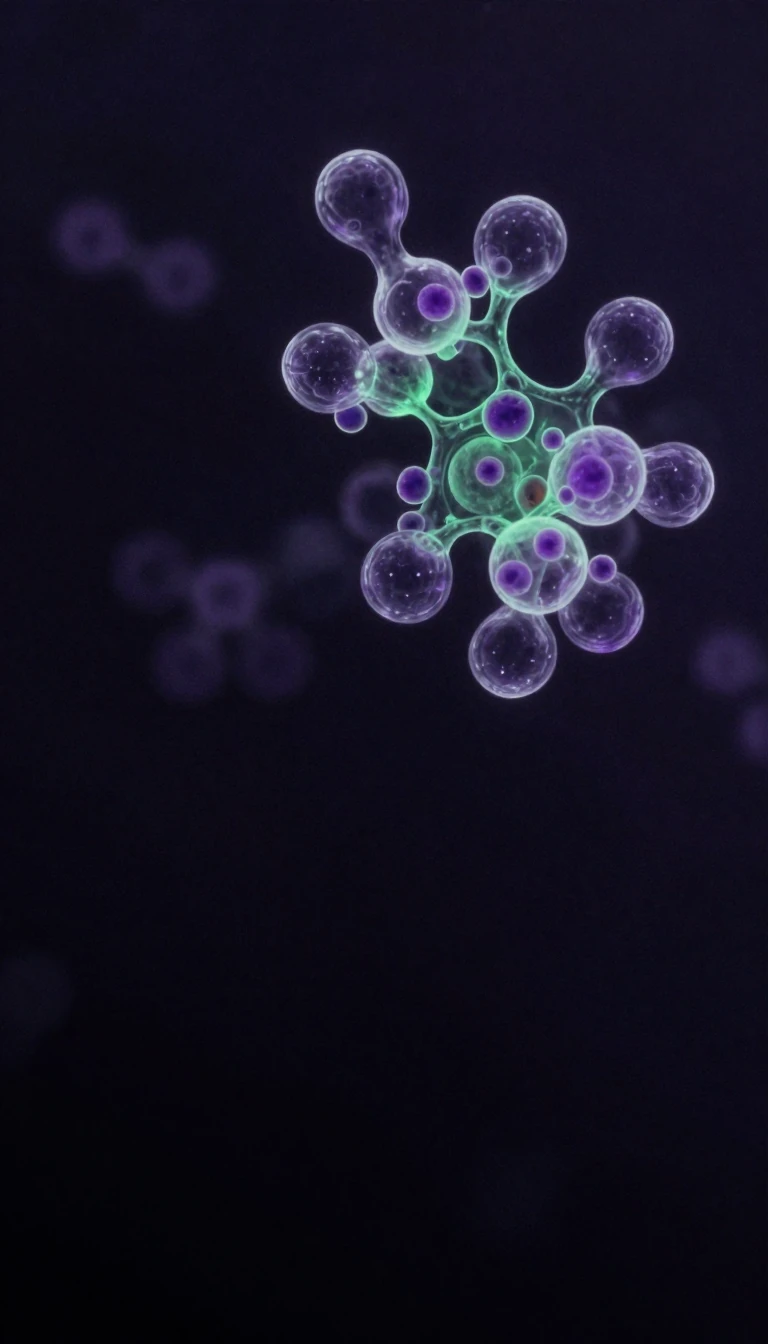 Cells are not just bags of soup, they are complex, organized, liquid-like droplets.Inside your cells, components do not just float randomly. They undergo phase separation, demixing into distinct, functional droplets called biomolecular condensates. This process …
 How weak Van der Waals forces allow geckos to scale vertical walls with easePhysisorption is a subtle dance of atoms where electronic structures remain largely unchanged. Driven by weak Van der Waals forces, this phenomenon is responsible for everything f…
 How random piles of rings revolutionized the efficiency of industrial chemical separation processesTo optimize chemical reactions, engineers often rely on random column packing. By filling distillation towers with irregular materials like rings, they maximize the surface area a…
 How chemistry uses the natural order of crystals to achieve perfect purityRecrystallization is a fundamental purification technique that exploits the molecular preference for order. By dissolving an impure substance and carefully manipulating conditions…
- How applying extreme pressure to salt water creates the world's drinking supplyReverse osmosis turns unusable salt water into fresh water by forcing it through a semipermeable membrane. By applying pressure that overcomes natural osmotic forces, this process…
 Why everything from sand to proteins eventually finds its way to the bottomSedimentation is the fundamental process where particles fall out of suspension to form solid layers. Whether driven by gravity, centrifugal force, or electromagnetism, this movem…
- Why the modern industrial economy relies entirely on the art of taking things apartNature rarely provides us with pure materials. From the crude oil in our cars to the aluminum in our devices, almost everything we use requires complex separation processes. By ex…
- Why do particles fall through liquid at a constant, predictable speed?When a particle drops through a fluid, it accelerates until the upward drag force perfectly balances the downward pull of gravity. This equilibrium creates a terminal velocity, a …
 How a 19th-century invention automates the extraction of complex chemical compoundsInvented in 1879, the Soxhlet extractor remains a laboratory staple for isolating compounds from solid materials. By recycling a small volume of solvent through a continuous cycle…
- How spray drying turns liquids into fine powders in a single, rapid step.Spray drying is a transformative industrial process that converts liquid slurries into free-flowing powders by atomizing them into a hot gas stream. This technique is essential fo…
- How steam distillation extracts delicate oils without destroying them with high heatSteam distillation allows scientists to extract volatile compounds that would otherwise decompose under intense heat. By using steam to carry vapors to a condenser, this ancient t…
- How industrial chemistry uses vapor to scrub contaminants from our liquid waste streamsStripping is a fundamental separation process that forces components out of liquids by passing them through a vapor stream. By manipulating mass transfer at the gas-liquid interfa…
- Why vacuum filtration is the gold standard for separating solids from liquids in labs.Vacuum filtration accelerates the separation of solids from liquids by creating a pressure differential that pulls fluid through a filter. This technique not only speeds up the pr…
- Why chemical engineers design imaginary plates to build real industrial distillation columnsIn the world of chemical separation, the theoretical plate is a hypothetical benchmark for perfection. It represents a zone where two phases reach total equilibrium. Because physi…
- How a simple glass plate and solvent reveal the hidden components of any mixtureThin-layer chromatography is a deceptively simple technique that separates complex chemical mixtures using nothing more than capillary action. By dragging a sample across a coated…
- Ultrafiltration: The invisible sieve transforming water, dairy, and pharmaceutical production worldwideUltrafiltration uses pressure to force liquids through semipermeable membranes, separating microscopic particles from solvents. From purifying drinking water to concentrating chee…
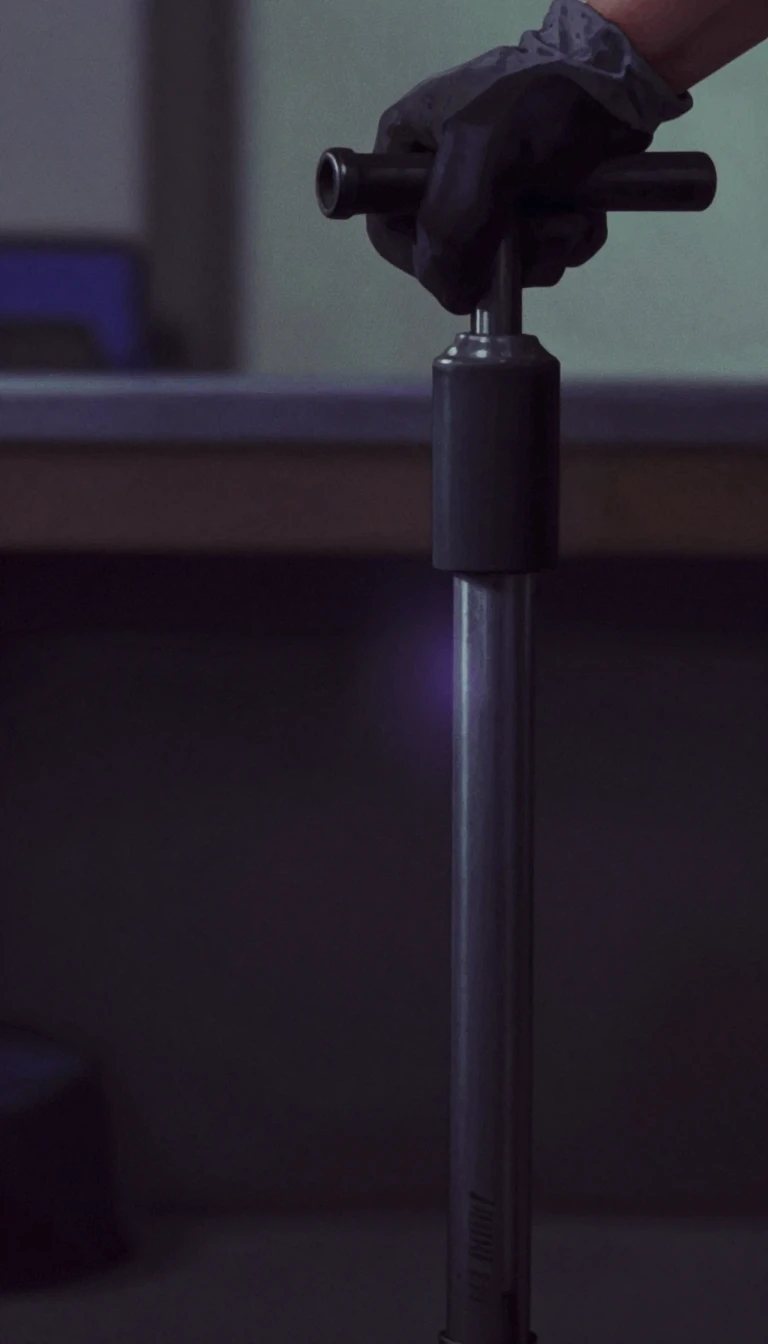 Why industrial giants use vacuum pressure to boil liquids without extreme heatDistilling complex mixtures often risks thermal damage, as high temperatures can cause unwanted chemical reactions or decomposition. By lowering the atmospheric pressure inside a …
- Why reducing pressure is the secret to drying delicate food and medicineVacuum drying transforms how we preserve heat-sensitive materials. By lowering the pressure inside a sealed chamber, it forces moisture to boil away at temperatures far below norm…
- Why chromatography columns have a sweet spot for speed and precisionIn chemistry, moving a sample through a column too fast or too slow ruins the results. The Van Deemter equation identifies the perfect flow velocity to minimize peak broadening. B…