The laboratory condenser is a masterclass in managing heat and phase transitions.
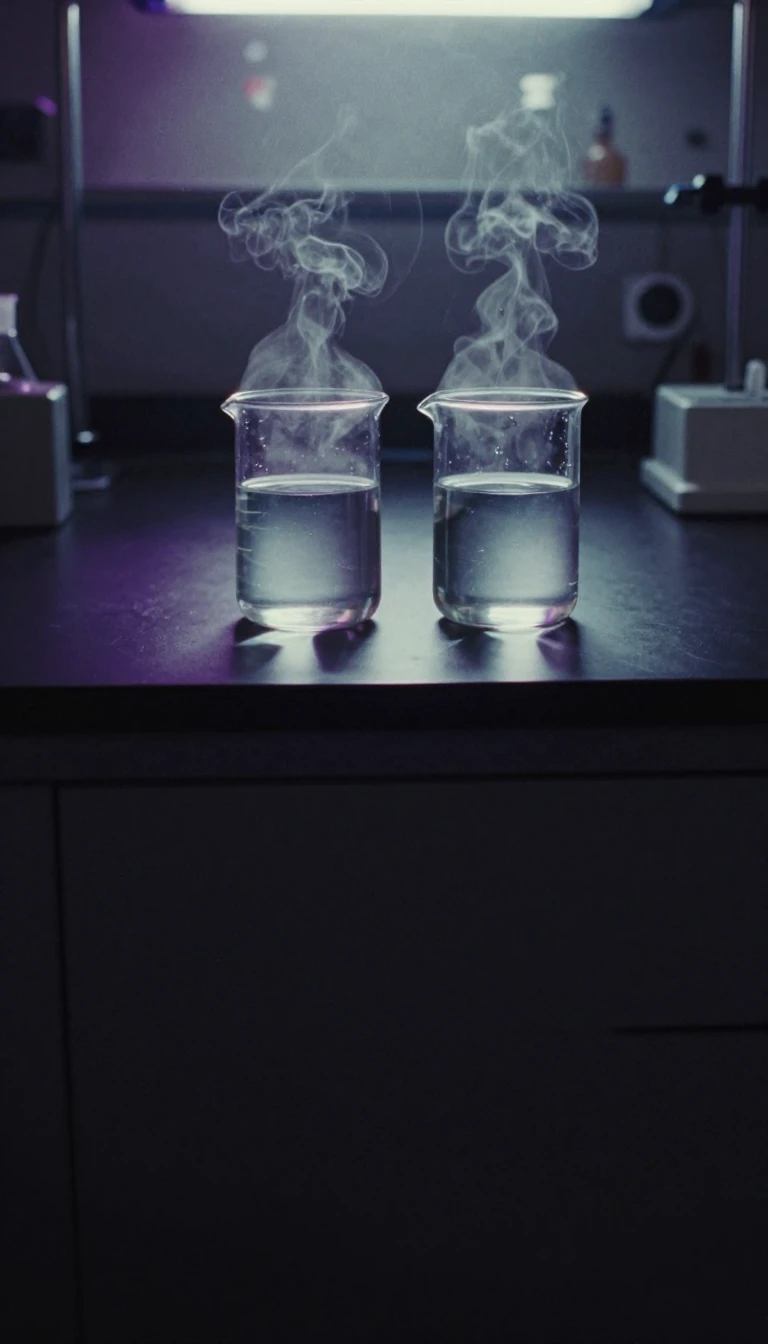
In short: From simple air-cooled tubes to complex columns, condensers are the silent workhorses of chemistry. They turn volatile vapors back into liquids, enabling essential processes like distillation and reflux. By balancing surface area, cooling efficiency, and vapor flow, these devices allow scientists to isolate substances with remarkable precision and control.
At its core, a condenser is a device designed to remove the heat of vaporization from a gas, forcing it to return to a liquid state. The fundamental requirement is that the condenser's internal surface must remain below the boiling point of the substance being processed. As vapor condenses, it releases significant heat, which must be dissipated quickly to prevent the surface temperature from rising. Designers achieve this by increasing the surface area, thinning the glass walls, or employing effective heat sinks like circulating water.
The evolution of these tools reflects the growth of chemistry as a discipline. While ancient methods relied on simple air-cooled tubes or globular still heads, the late 18th century saw the invention of water-cooled designs by figures like Weigel, Poisonnier, and Gadolin, later popularized by Justus von Liebig. Today, specialized designs abound. The Allihn condenser uses bulbs to maximize surface area for reflux, while the Davies condenser employs three concentric tubes to improve cooling efficiency. More complex systems, such as the Friedrichs condenser, use helical paths to force prolonged contact between vapor and cooling surfaces.
Beyond simple cooling, condensers are critical for fractional distillation, where mixtures of liquids must be separated. Columns like the Vigreux, which uses internal glass fingers, or the Snyder, which employs floating glass beads, enhance the mixing of vapor and condensate. The Widmer column, developed in the 1920s, uses concentric tubes to create a complex path for vapor. Whether using packed columns filled with materials like Fenske rings or spinning band technology, the goal remains the same: to manage thermal gradients and material flows with the precision of an engineering science.
Opens the Intellect+ feed with this card first. Swipe up for the next one.
Sources
- Summary by Intellect · source: Condenser (laboratory)
To cite this card, link to https://intellectplus.co.uk/app/science-condenser-laboratory.
How we source, check and correct cards: Editorial standards.
General information, not professional advice. Spotted an error? Flag the card or see corrections and complaints.
Intellect Plus is a visual educational discovery platform for exploring fascinating facts and ideas. Brain Food, Not Brain Rot. What is Intellect Plus?
Related
More in Separation processes · More in Science · Latest · A–Z · All topics
