How your cells constantly rewrite their own genetic code to survive and evolve
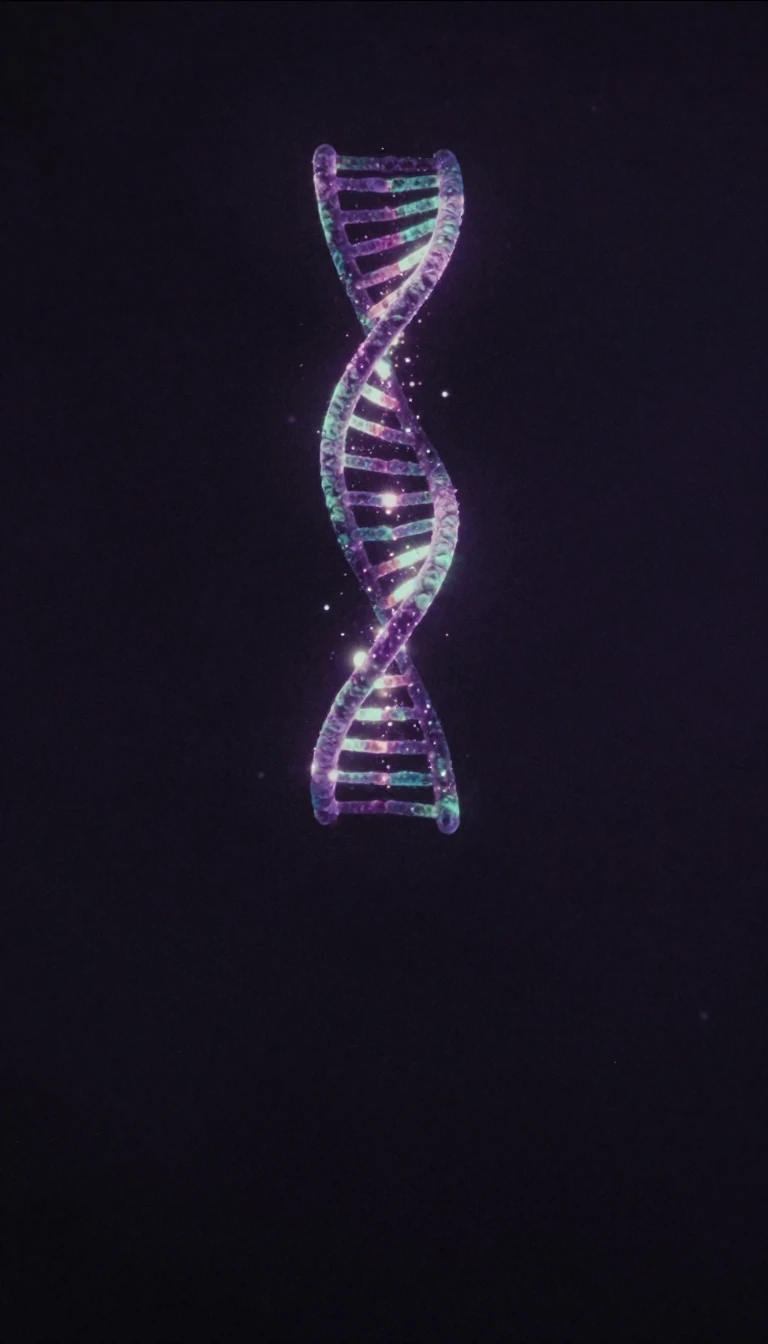
In short: Genetic recombination is not just a driver of evolution; it is a vital cellular repair mechanism. By swapping DNA segments between chromosomes, cells fix broken strands and prevent replication errors. This complex, enzyme-driven process ensures genomic integrity while simultaneously shuffling maternal and paternal genes to create unique, diverse offspring.
At its core, genetic recombination is the exchange of genetic material between chromosomes. In diploid eukaryotes, this process is most prominent during meiosis, where it ensures that gametes contain a mix of maternally and paternally derived information. This shuffling guarantees that offspring inherit genes from all four grandparents, maximizing genetic diversity. Beyond reproduction, recombination is a fundamental tool for DNA repair, particularly for fixing double-stranded breaks, and it assists during replication to prevent the stalling of replication forks.
The process is highly precise, generally requiring homologous regions of DNA to align through complementary base-pairing. In the double-stranded break pathway, the DNA ends are converted into single-stranded tails that invade a donor chromosome, forming a structure known as a Holliday junction. This junction can travel along the DNA—a process called branch migration—before being resolved. Depending on how this resolution occurs, the result is either a crossover, where flanking regions are exchanged, or a non-crossover, where the parental configuration remains largely intact.
This intricate machinery relies on a suite of specialized enzymes. In E. coli, the RecA protein is essential for strand invasion, while the RecBCD complex unwinds and cleaves DNA. Other enzymes like RuvA and RuvB catalyze branch migration, and RuvC acts as a resolvase. Eukaryotic organisms utilize analogous systems, such as the Rad genes in budding yeast, which are also sensitive to radiation. While recombination is a natural and necessary phenomenon, it is also a powerful tool in research, enabling scientists to map chromosomes and manipulate genetic material, though such experimental interventions raise significant ethical and environmental questions.
Opens the Intellect+ feed with this card first. Swipe up for the next one.
Sources
- Summary by Intellect · source: Genetic Recombination | Learn Science at Scitable
- Also: Genetic recombination
To cite this card, link to https://intellectplus.co.uk/app/science-genetic-recombination.
How we source, check and correct cards: Editorial standards.
General information, not professional advice. Spotted an error? Flag the card or see corrections and complaints.
Intellect Plus is a visual educational discovery platform for exploring fascinating facts and ideas. Brain Food, Not Brain Rot. What is Intellect Plus?
Related
More in Genetics and molecular biology · More in Science · Latest · A–Z · All topics
