Helicases are the molecular motors that unzip the blueprint of life itself.
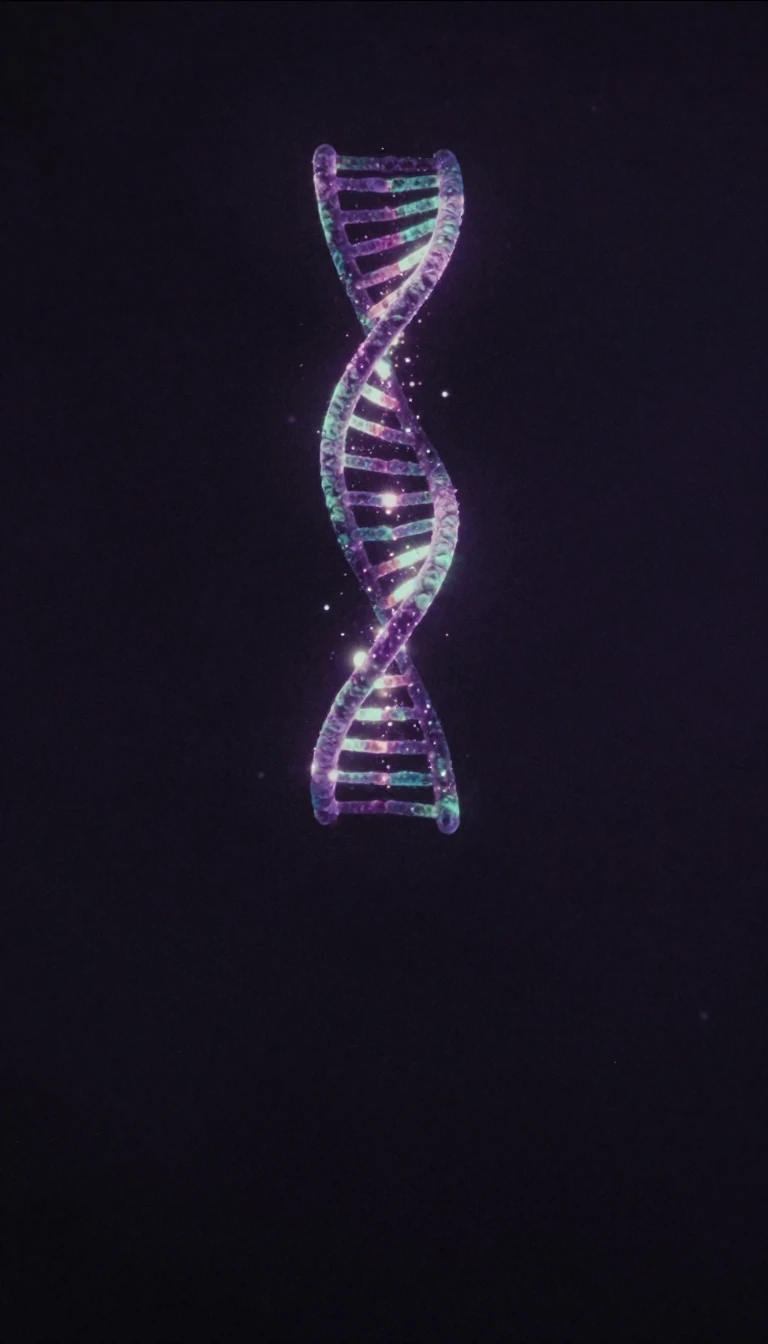
In short: Every living organism relies on helicases, specialized enzymes that act as microscopic motors to pry apart the tightly wound strands of DNA and RNA. By consuming ATP, these proteins perform the essential work of unzipping genetic material, enabling everything from DNA replication to the complex editing of cellular messages.
Helicases are fundamental to life, functioning as motor proteins that traverse nucleic acid strands to separate hybridized double helices. This process is powered by ATP hydrolysis, which provides the energy necessary to break the hydrogen bonds between nucleotide base pairs. Because they are involved in critical tasks like DNA replication, transcription, translation, and repair, approximately 1% of all eukaryotic genes are dedicated to coding for these enzymes. In humans alone, the genome contains 95 non-redundant helicases, split between 64 RNA and 31 DNA variants.
These enzymes operate through two distinct mechanical strategies. Passive helicases function like Brownian ratchets, relying on thermal fluctuations to progress, which makes their speed sensitive to the specific sequence of nucleic acids they encounter. In contrast, active helicases operate as stepping motors, utilizing a powerstroke mechanism—often described as an 'inch worm' or 'hand-over-hand' motion—to force apart the replication fork at a constant rate. Depending on the organism, these molecular machines can achieve rotational speeds between 5,000 and 10,000 R.P.M. while navigating the genetic lattice.
The classification of helicases is rooted in their structural motifs and translocation polarity. Scientists categorize them into six superfamilies based on shared amino acid sequences that facilitate ATP binding and movement. While some helicases form ring-shaped hexamers, others function as monomers or dimers. Their discovery began in 1976 with E. coli, and since then, researchers have identified diverse helicases across viruses, yeast, plants, and mammals. These proteins are not merely passive openers; they also remove associated proteins and catalyze recombination, acting as essential regulators of the genome's accessibility and integrity.
Opens the Intellect+ feed with this card first. Swipe up for the next one.
Sources
- Summary by Intellect · source: Helicase
To cite this card, link to https://intellectplus.co.uk/app/science-helicase.
How we source, check and correct cards: Editorial standards.
General information, not professional advice. Spotted an error? Flag the card or see corrections and complaints.
Intellect Plus is a visual educational discovery platform for exploring fascinating facts and ideas. Brain Food, Not Brain Rot. What is Intellect Plus?
Related
More in Genetics and molecular biology · More in Science · Latest · A–Z · All topics
